Artifacts
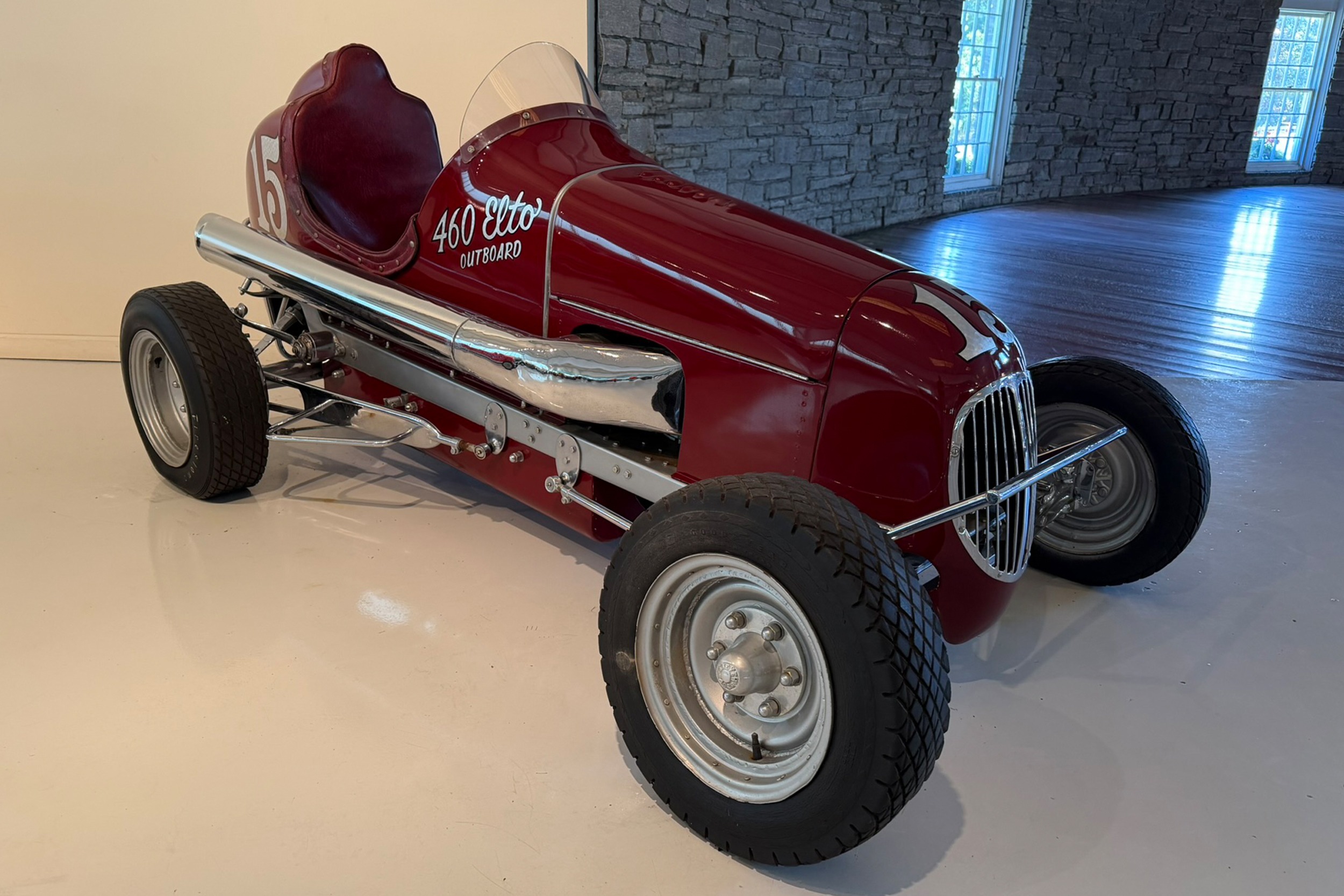
#15 460 Elto Outboard Midget Car
United States | 1930s–1940s | Golden Age of Midget Auto Racing
| General Information | |
|---|---|
| Model | #15 "460 Elto Outboard" – Maroon Midget Sprint Car |
| Class | Vehicle |
| Type | Race Car, Midget Sprint Car |
| Use | Civilian |
| Era | 1930-1940 |
| Gallery Focus | Sprint Cars |
| Manufacturer | Elto Outboard |
| Year | 1940 (~) |
| Country | United States |
| Ownership | CF Trust |
| Gallery Location | Vintage Race Car Collection |
| Status | Operational, Offline |
During the early years of American Midget auto racing, ingenuity and resourcefulness were often just as important as horsepower. The maroon Number 15 “460 ELTO Outboard” Midget Race Car is a fascinating example of this philosophy, combining a lightweight, purpose-built racing chassis with an engine originally developed for high-performance motorboats.
Powering this distinctive machine is a four-cylinder ELTO outboard-derived engine mounted vertically within the chassis. ELTO, originally an abbreviation for Evinrude Light Twin Outboard, was founded by pioneering marine engineer Ole Evinrude in 1921. Its high-performance engines soon attracted the attention of automobile racers seeking affordable alternatives to expensive purpose-built racing powerplants.
The ELTO 4-60 engine, named for its four cylinders and approximately 60-cubic-inch displacement, was a particularly popular choice during the 1930s. Its two-stroke design developed impressive power at high engine speeds, with period racing versions commonly rated around 60 horsepower and modified examples producing considerably more. However, the engine’s relatively limited low-speed torque compared with larger Ford V8 and four-cylinder Offenhauser engines presented challenges when accelerating out of corners or passing competitors. Once out in front, an ELTO-powered car could maintain remarkable speed if its driver kept the engine operating in its ideal power range.
One of Number 15’s most striking features is its enormous polished exhaust system, extending prominently along the side of the maroon bodywork. In competition, the high-revving two-stroke engine would have produced a distinctive, piercing exhaust note, adding to the extraordinary sights and sounds of early Midget racing.
Midget racing became enormously popular during the 1930s, with these small, open-wheel machines competing on short dirt, paved, and even indoor wooden tracks. In New England, the sport attracted enthusiastic audiences at venues including Boston Garden, where a specially constructed banked wooden track hosted Midget racing during the winter of 1937–1938.
ELTO-powered racers were a significant presence in early competition. At Pennsylvania’s Hershey Stadium in July 1939, ten ELTO-powered cars appeared on a single race program, demonstrating the engine’s widespread popularity.
Today, Number 15 represents an extraordinary period of grassroots American motorsports, when mechanical creativity, courageous drivers, and unconventional engineering helped establish the foundations of modern open-wheel racing.
Museum Display Location: The Third Floor Race Car Collection in the American Heritage Museum’s seasonal Storage Hangar Annex, accessible during select special event weekends in the summer and fall.