Artifacts
Ford V8 / Offenhauser Sprint Car
United States | 1958 | Postwar American Sprint Car Racing
| General Information | |
|---|---|
| Model | #5 Ford V8 / Offenhauser – Silver & Red Sprint Car |
| Class | Vehicle |
| Type | Race Car, Sprint Car |
| Use | Civilian |
| Era | 1940-1959 |
| Gallery Focus | Sprint Cars |
| Manufacturer | Ford/Offenhauser |
| Year | 1958 |
| Country | United States |
| Ownership | CF Trust |
| Gallery Location | Vintage Race Car Collection |
| Status | Operational, Offline |
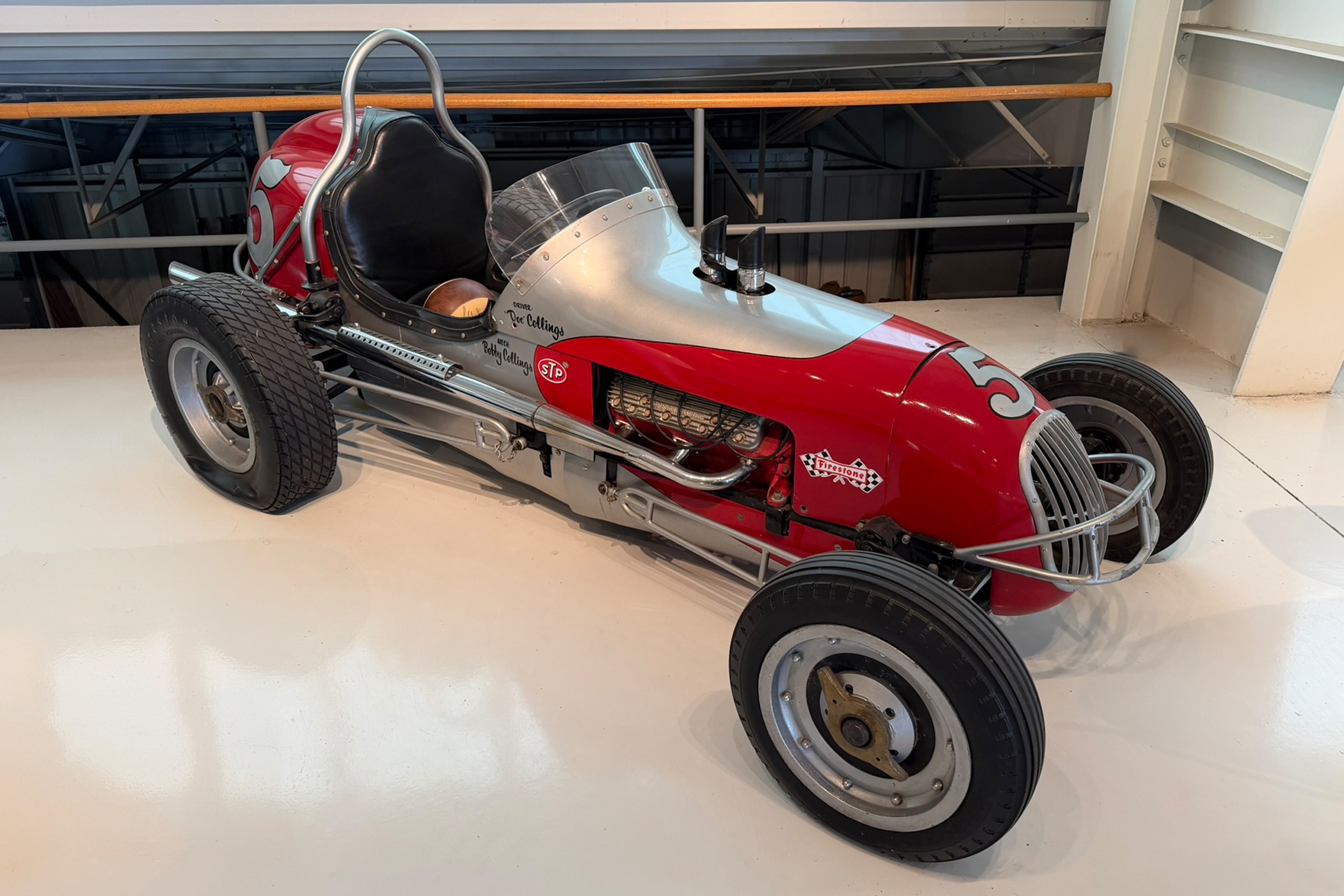
By the late 1950s, American Sprint Car racing had evolved considerably from its grassroots beginnings during the 1930s. Engines had become increasingly powerful, purpose-built chassis were more sophisticated, and growing concerns about driver safety were beginning to influence racing car design. The silver-and-red Number 5 Ford V8 / Offenhauser Sprint Car, dating to 1958, represents this important transitional period in American motorsports.
At the heart of this distinctive machine is a Ford V8 engine equipped with performance cylinder heads manufactured by Offenhauser, one of the most respected names in American racing. While Offenhauser was renowned for its legendary four-cylinder Indianapolis racing engines, the company also manufactured aftermarket performance equipment for production-based engines. Its aluminum cylinder heads improved heat dissipation and allowed higher compression ratios, helping mechanics extract additional horsepower from Ford’s dependable flathead V8 design.
The car’s lightweight construction, narrow bodywork, exposed suspension, polished exhaust, and compact single-seat cockpit reflect the engineering priorities of the era. Sprint Cars were built for acceleration, agility, and outright speed on dirt and paved oval tracks, where powerful engines and minimal weight created an extraordinary power-to-weight ratio. Drivers had to contend with unpredictable track conditions, close competition, and cars that offered little protection in the event of an accident.
Perhaps the most historically significant feature of Number 5 is the prominent tubular roll bar extending above the driver’s seat. Earlier Sprint Cars generally lacked substantial rollover protection, leaving drivers dangerously exposed during accidents. The introduction of roll bars during the 1950s marked an important step toward improved safety, although comprehensive roll cages would not become common until later decades.
Driver restraint systems were equally controversial. Many early racers resisted seatbelts, believing that being thrown clear of an overturned or burning automobile offered a better chance of survival. This dangerous misconception persisted for years before accident research demonstrated the life-saving advantages of properly engineered restraints and rollover protection.
By 1958, the United States Auto Club (USAC), established in 1956, was overseeing major American open-wheel racing championships. Sprint Car competition remained an important proving ground for ambitious drivers, including future Indianapolis 500 competitors and champions.
Today, the Number 5 Ford V8 / Offenhauser Sprint Car illustrates both the remarkable performance achieved by postwar racing engineers and the gradual evolution of safety practices that would ultimately transform American motorsports.
Museum Display Location: Third Floor Race Car Collection, American Heritage Museum’s seasonal Storage Hangar Annex. Accessible during select special event weekends in the summer and fall.