Artifacts
M3A1 Scout Car
United States | 1939–1944 | World War II – Italian Campaign
| General Information | |
|---|---|
| Model | M3A1 Scout Car |
| Class | Military Vehicle |
| Type | Armored Scout Car |
| Use | Military |
| Era | 1940-1945 |
| Gallery Focus | WWII European Theater |
| Manufacturer | White Motor Company |
| Year | 1941 |
| Country | United States |
| Ownership | CF Inc. |
| Gallery Location | Italian Campaign |
| Status | Operational, Offline |
Additional Photos
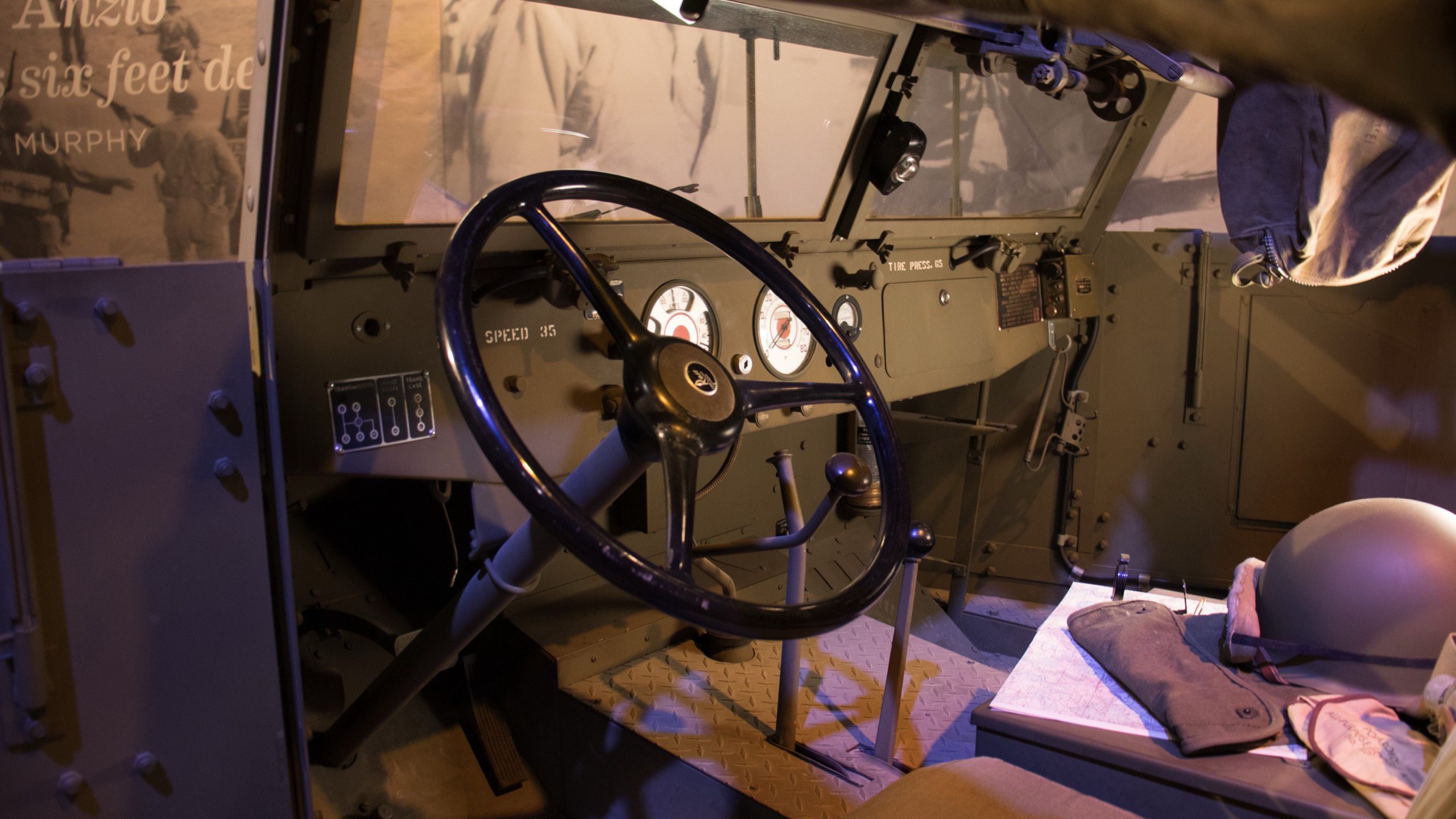
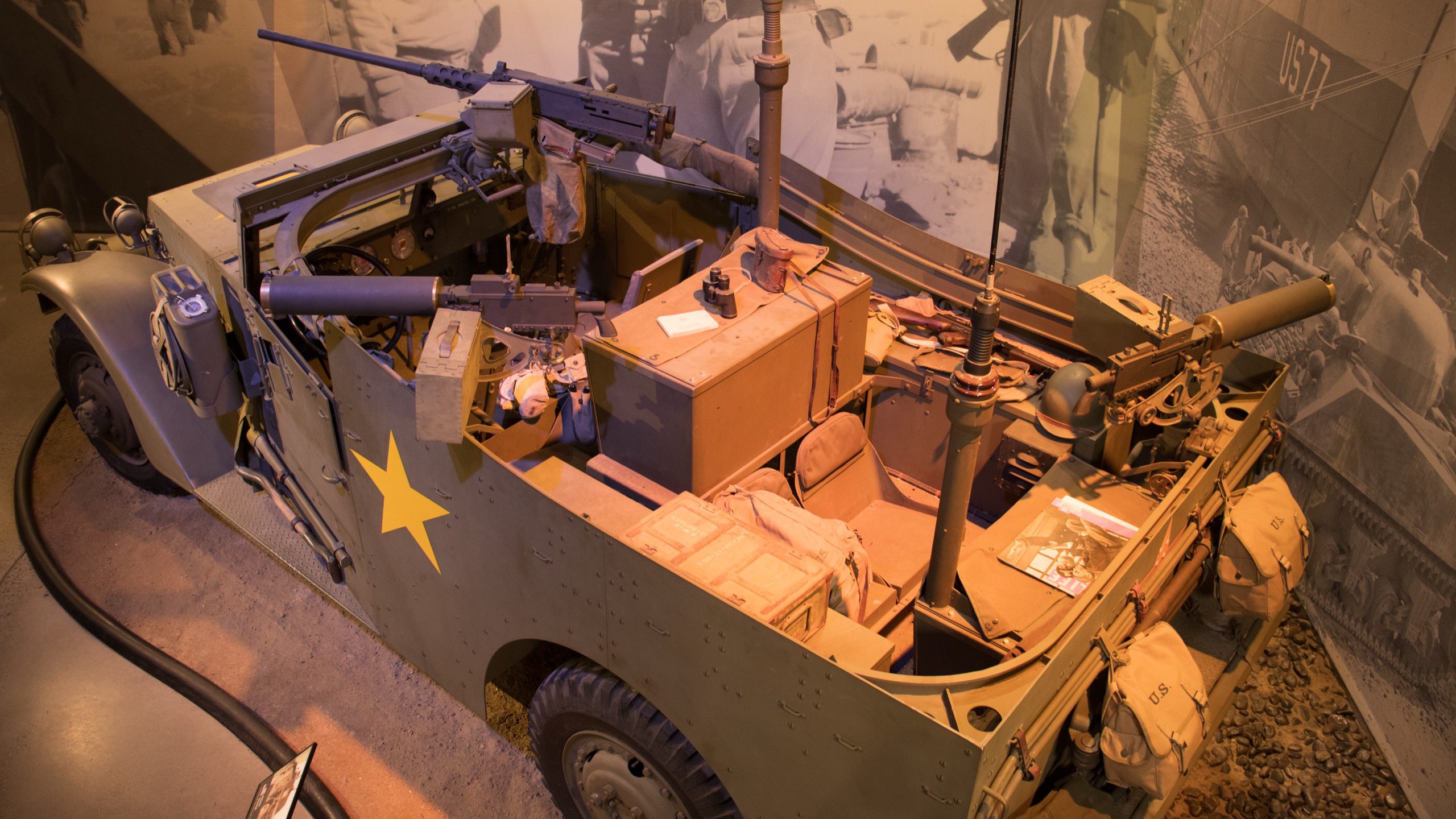
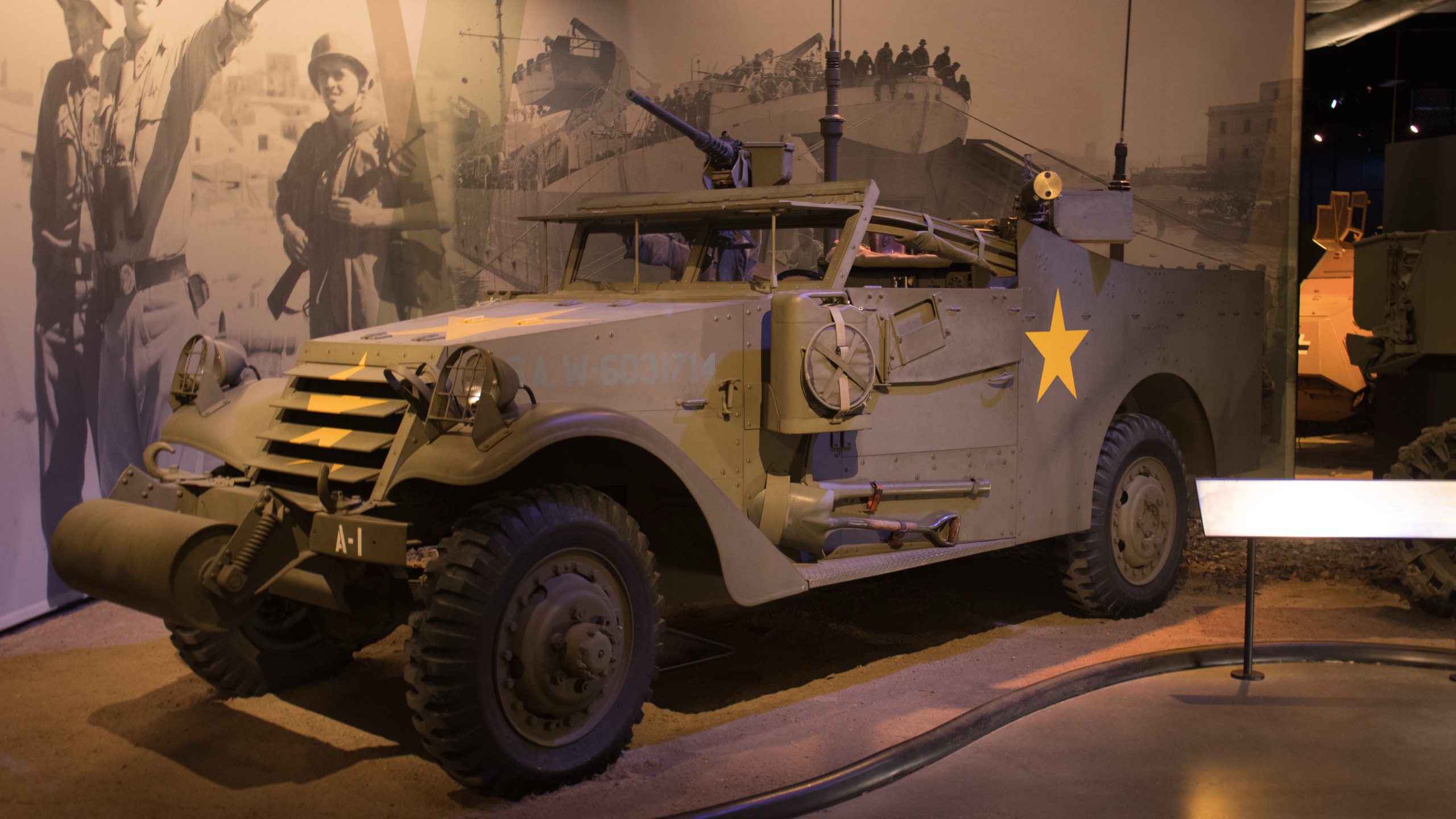
The American M3A1 Scout Car, commonly known as the “White Scout Car,” was a versatile, lightly armored reconnaissance vehicle employed by American and Allied forces during World War II. Designed to provide cavalry units with speed, mobility, and defensive firepower, the M3A1 played an important role during the North African Campaign and the Allied invasion of Sicily in July 1943.
Manufactured by the White Motor Company of Cleveland, Ohio, the M3A1 featured four-wheel drive, an open-topped armored body, and a powerful 110-horsepower Hercules six-cylinder engine capable of reaching speeds approaching 50 mph. Its two-man crew consisted of a driver and commander, with seating for six additional soldiers. The vehicle was typically armed with a .50-caliber Browning heavy machine gun and one or two .30-caliber machine guns mounted on a distinctive skate rail, allowing weapons to be repositioned around the passenger compartment.
The M3A1 represented the final development of a series of American scout cars introduced during the 1930s. Improvements included a wider armored body, a redesigned rear compartment, and a front-mounted roller to help the vehicle negotiate ditches and obstacles. Approximately 20,900 M3A1 Scout Cars were manufactured between 1939 and 1944.
During Operation Husky, the Allied invasion of Sicily in July 1943, American cavalry units employed M3A1 Scout Cars for reconnaissance, screening, patrols, and armored command duties. Their speed and reliability made them valuable for scouting enemy positions and maintaining communications between advancing formations. General George S. Patton, commander of the U.S. Seventh Army during the Sicilian Campaign, also employed a specially modified M3A1 as a command vehicle.
Despite its versatility, the M3A1 had significant limitations. Its thin armor and open-topped compartment exposed occupants to artillery fragments and enemy fire, while its cross-country performance was often inadequate in difficult terrain. By late 1943, the more capable M8 Greyhound armored car and M20 Utility Car had largely replaced it in frontline American service.
The M3A1 displayed at the American Heritage Museum holds an extraordinary place in the museum’s own history. In 1975, military vehicle collector Jacques Littlefield acquired this Scout Car as his first full-sized armored vehicle, beginning what would become one of the world’s most significant private collections of tanks and military vehicles. Over the following decades, Littlefield assembled and preserved hundreds of historic vehicles through his Military Vehicle Technology Foundation, whose collection would ultimately form the foundation of the American Heritage Museum.
Displayed in the museum’s Italian Campaign Gallery, this M3A1 Scout Car represents both the evolution of American armored reconnaissance during World War II and the origins of the remarkable collection that visitors experience at the American Heritage Museum today.