Artifacts
M4A1(75) / Grizzly I / Sherman
Canadian-Built Medium Tank | World War II (1943–1945)
| General Information | |
|---|---|
| Model | M4A1(75) / Grizzly I (Sherman) |
| Class | Armor |
| Type | Medium Tank |
| Use | Military |
| Era | 1940-1945 |
| Gallery Focus | WWII European Theater |
| Manufacturer | Montreal Locomotive Works |
| Year | 1943 |
| Country | Canada |
| Ownership | CF Inc. |
| Gallery Location | Arsenal of Democracy |
| Status | Static Only |
Additional Photos
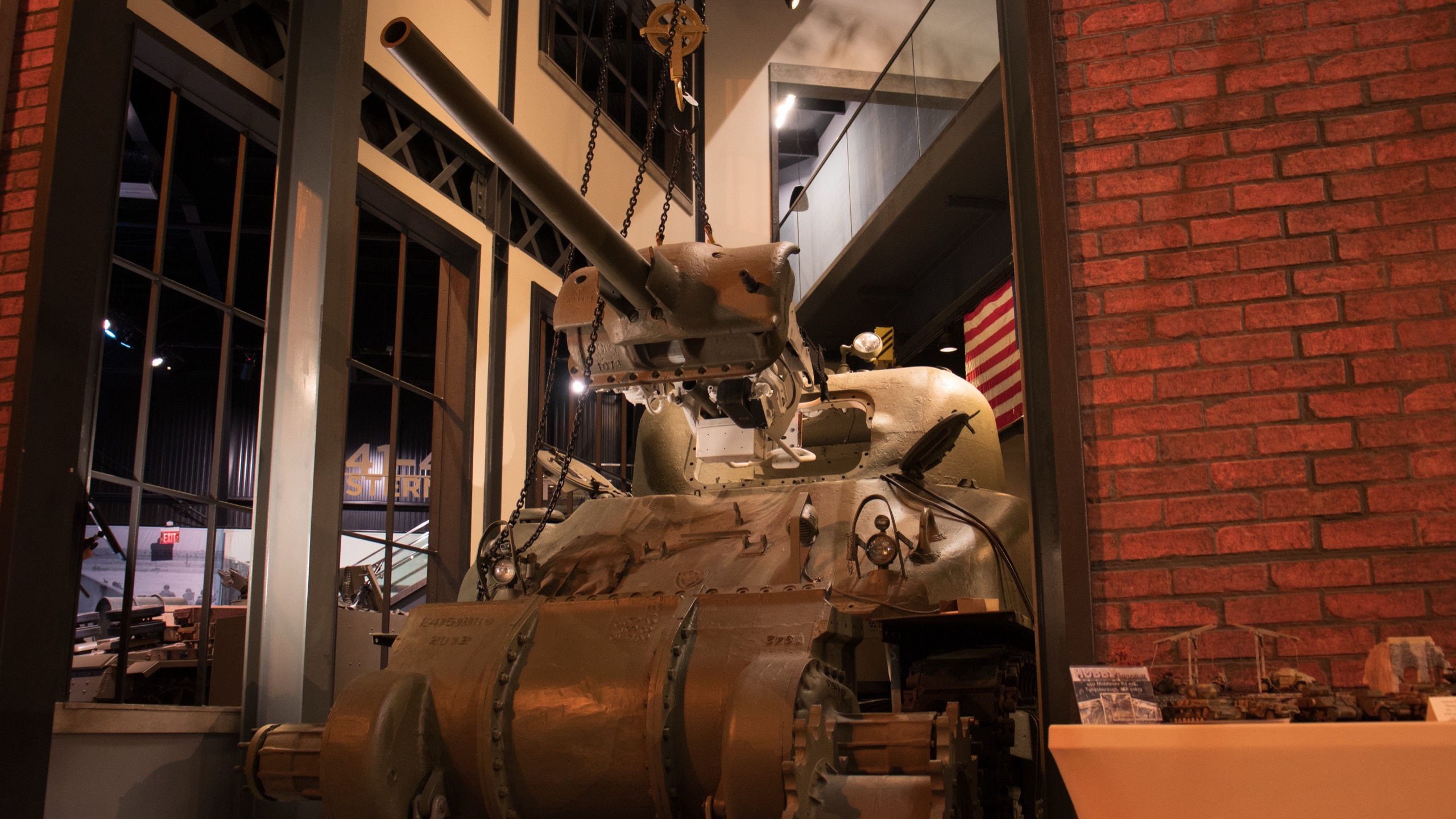
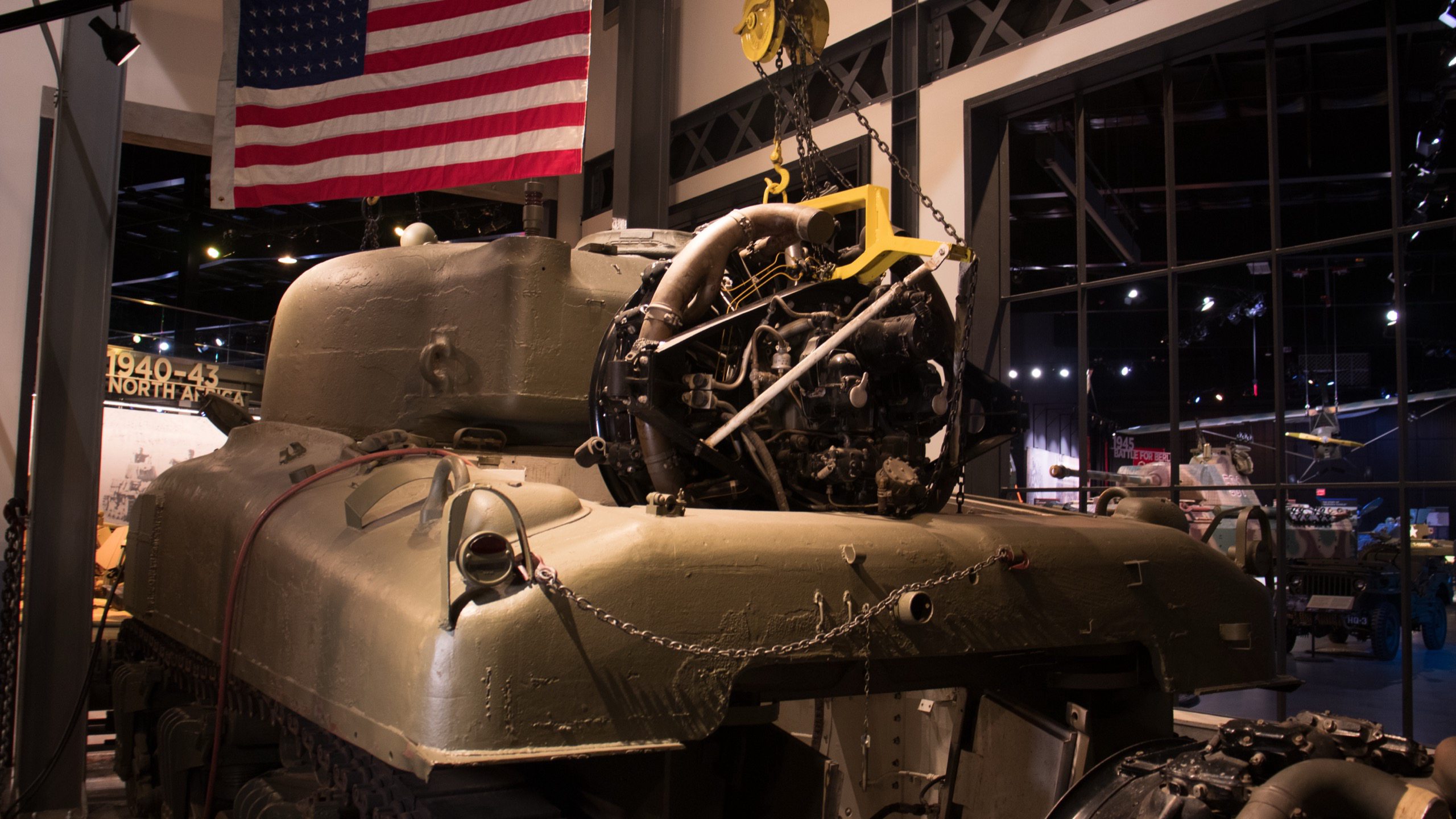
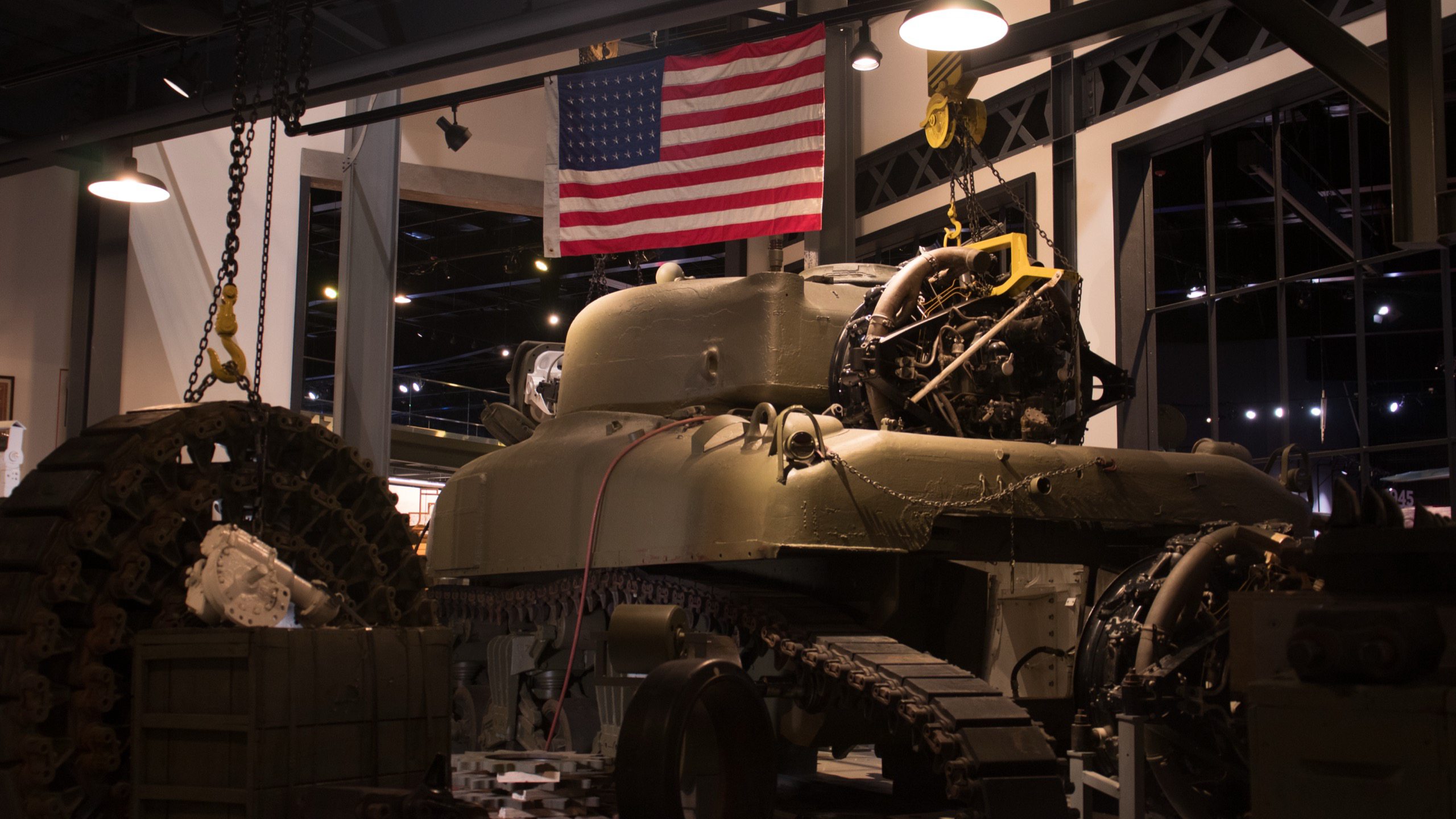
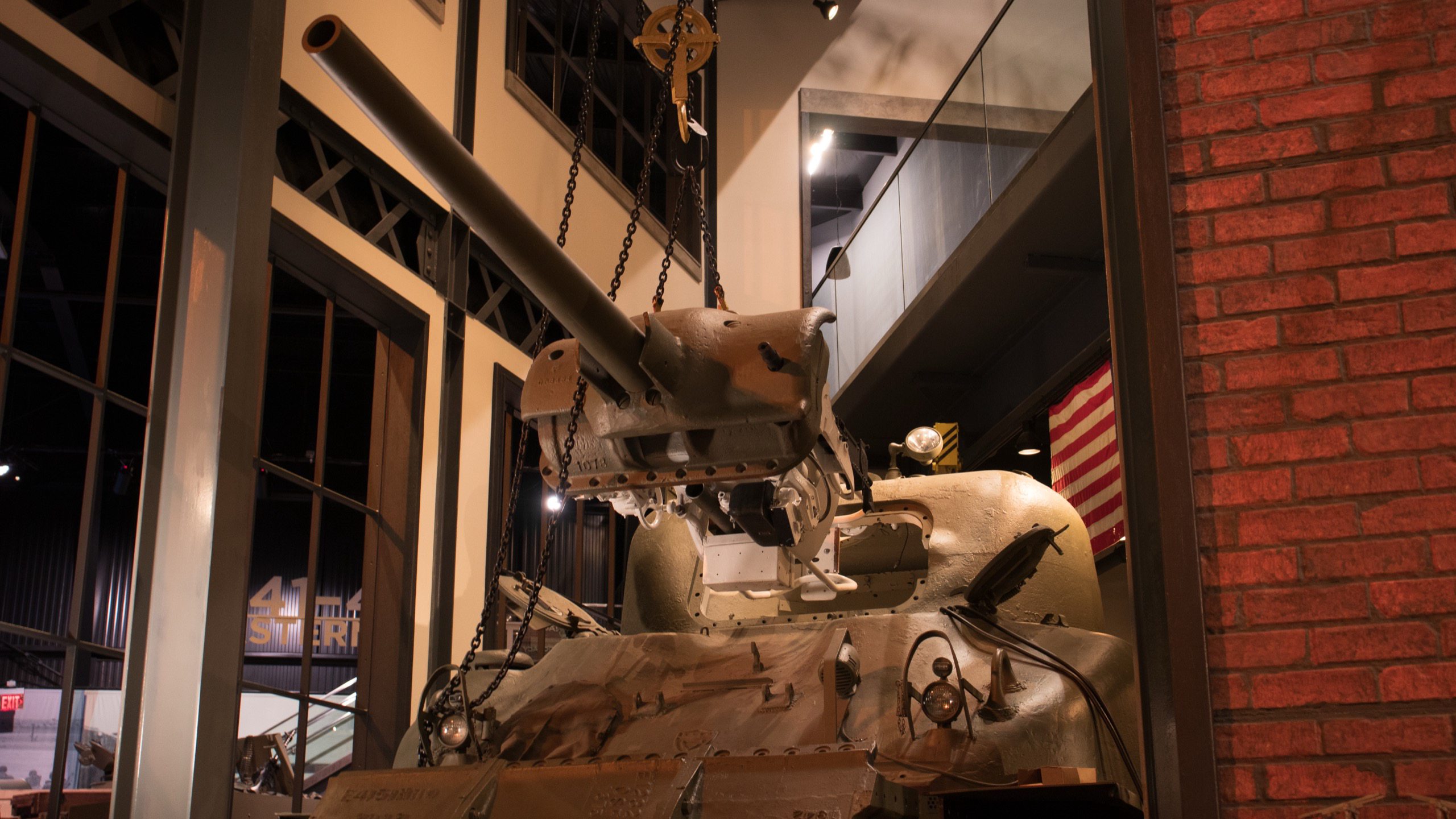
The Grizzly I was a Canadian-built variant of the legendary American M4A1 Sherman medium tank, representing the remarkable industrial cooperation between Allied nations during World War II. Developed to supplement American tank production and equip Canadian armored forces, the Grizzly combined the proven engineering of the Sherman with modifications suited to Canadian military requirements. Although produced in limited numbers, it remains an important example of Canada’s contribution to the Allied war effort.
Manufactured by Montreal Locomotive Works in Montreal, Quebec, Grizzly production began in August 1943, following the company’s earlier manufacture of the Canadian Ram tank. Based on the American M4A1(75) Sherman, the Grizzly featured a distinctive rounded, cast-steel hull, a 75mm M3 main gun, and a Continental R-975 nine-cylinder radial gasoline engine producing approximately 400 horsepower. Weighing approximately 30 tons and operated by a five-man crew, it retained the Sherman’s proven mechanical systems while incorporating modifications to equipment stowage and radio communications. Many Grizzlies were subsequently fitted with Canadian Dry Pin (CDP) tracks, which conserved strategically important rubber supplies.
Only 188 Grizzly I tanks were manufactured, with production ending in late 1943 as American factories demonstrated their ability to supply sufficient Sherman tanks for Allied requirements. Canadian manufacturing resources were subsequently redirected toward the Sexton self-propelled artillery vehicle, which shared the Grizzly’s basic chassis and drivetrain. Most Grizzlies served in training roles with Canadian armored units rather than seeing frontline combat. Some remained in service after the war, including examples transferred to Portugal during the 1950s.
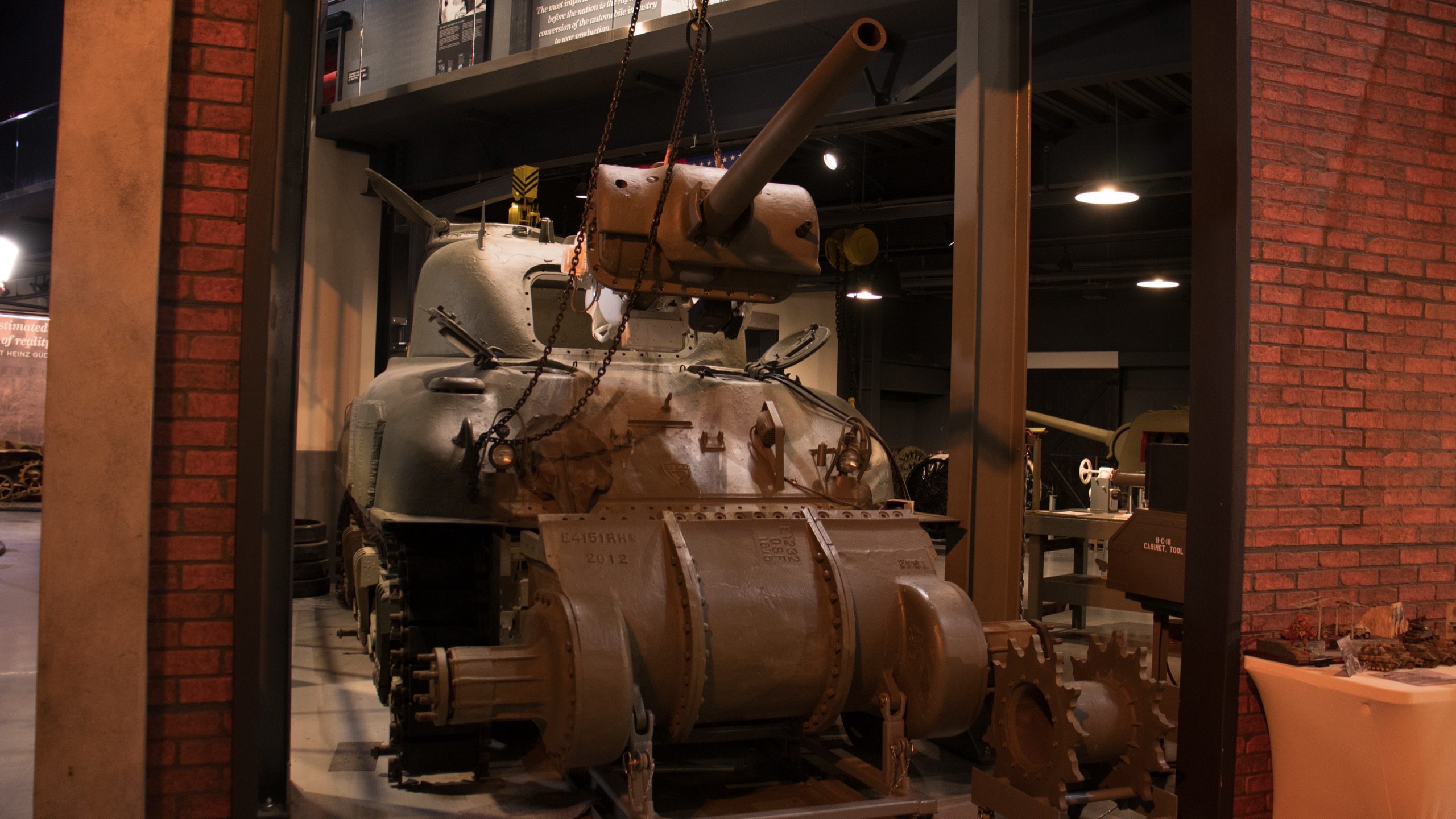
The Grizzly I displayed in the American Heritage Museum’s Arsenal of Democracy Gallery is presented within a recreated World War II tank factory production line, offering visitors an extraordinary opportunity to examine the complex engineering and assembly processes involved in manufacturing an armored fighting vehicle.
Unlike a fully assembled tank, this Grizzly has several major components removed and displayed separately, including the turret, 75mm gun and mantlet, final-drive assembly, tracks, and engine. These exposed subassemblies reveal how the tank’s mechanical systems, armor, and weaponry came together to form a complete fighting vehicle. Visitors can examine the relationship between the rear-mounted engine, drivetrain, suspension, and front-mounted drive sprockets, gaining an appreciation for the precision engineering and manufacturing coordination required.
As part of the museum’s Arsenal of Democracy exhibit, the Grizzly provides a tangible connection to the immense industrial mobilization that equipped Allied armies. It illustrates how factories, engineers, and workers throughout North America transformed raw materials and thousands of individual components into the armored vehicles that helped secure victory in World War II.