Artifacts
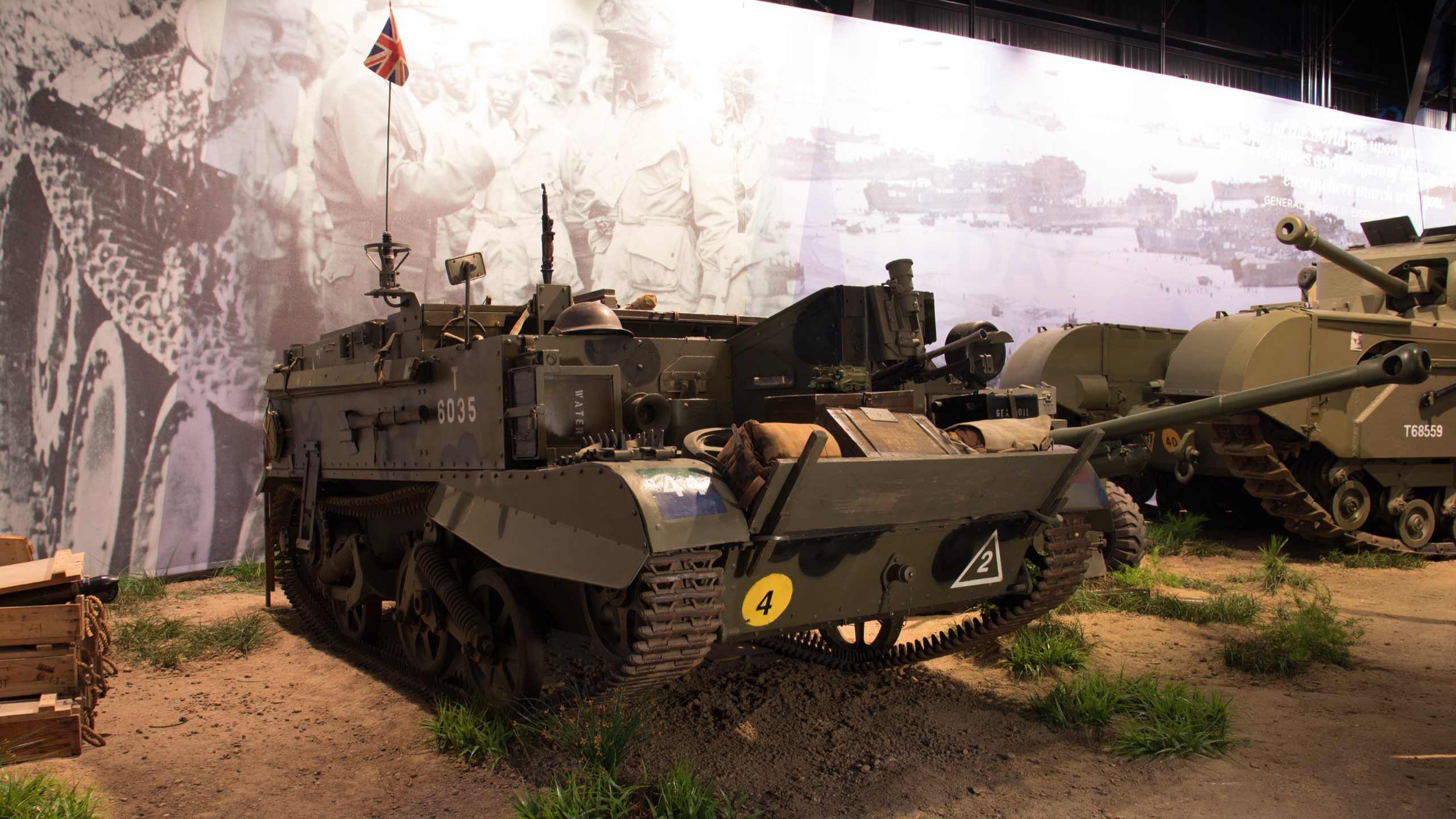
Bren Gun Carrier (Universal Carrier)
| General Information | |
|---|---|
| Model | Bren Gun Carrier (Universal Carrier) |
| Class | Military Vehicle |
| Type | Personnel Carrier – Tracked |
| Use | Military |
| Era | 1940-1945 |
| Gallery Focus | WWII European Theater |
| Manufacturer | Vickers-Armstrongs |
| Year | 1943 |
| Country | United Kingdom |
| Ownership | Privately Owned |
| Gallery Location | D-Day |
| Status | Operational, Online |
Additional Photos
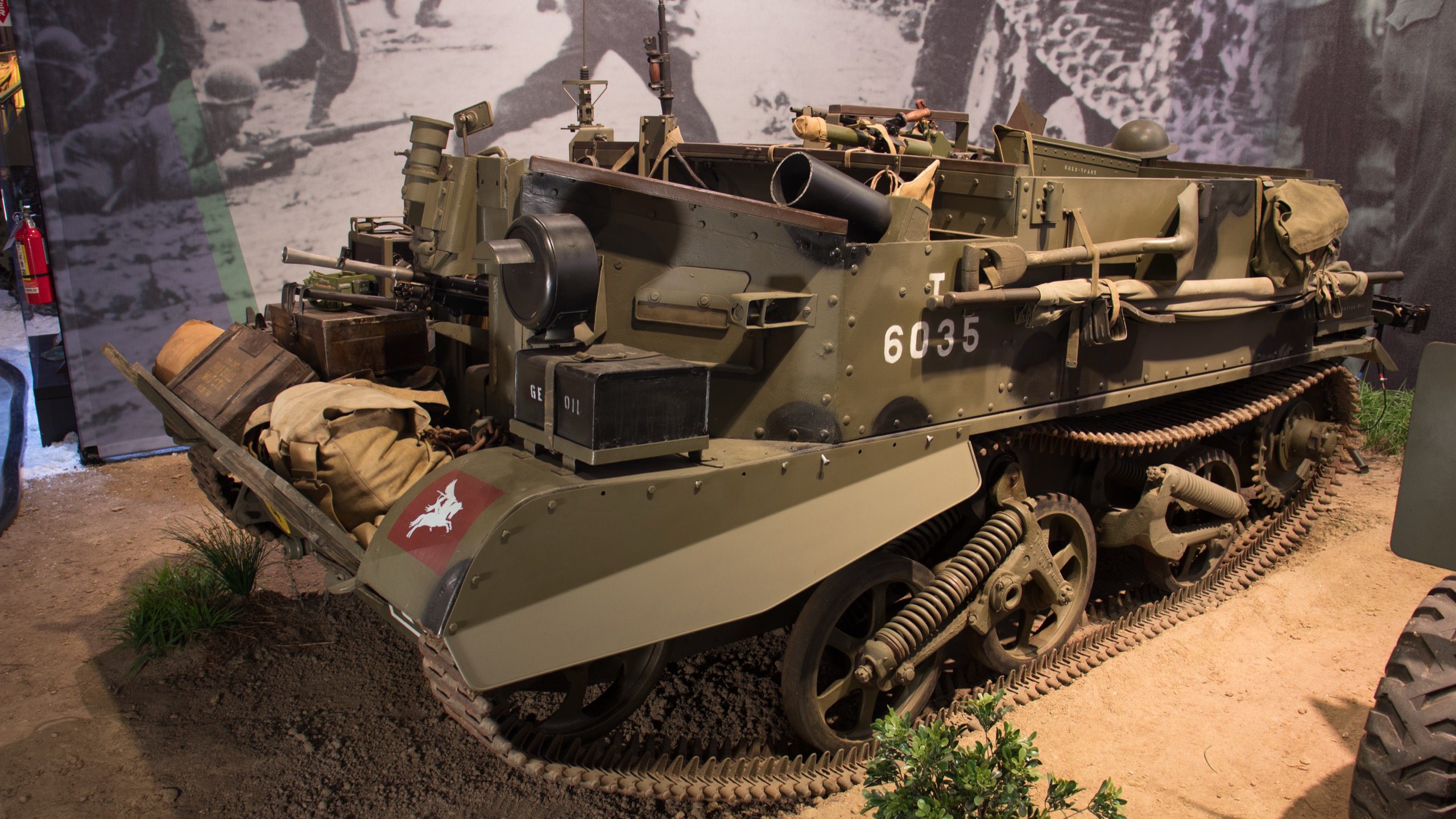
The British Universal Carrier, popularly known as the “Bren Gun Carrier,” was one of the most versatile and widely produced armored vehicles of World War II. Used extensively by British and Commonwealth forces, this compact, lightly armored tracked vehicle played an essential role in supporting infantry operations during the D-Day invasion of Normandy and the subsequent liberation of Western Europe.
Developed from earlier British Bren Gun and Scout Carriers, the standardized Universal Carrier entered service in 1940. Powered by a Ford V8 engine, the vehicle could reach speeds of approximately 30 mph while carrying a small crew, weapons, ammunition, and supplies across difficult terrain. Its low profile and tracked suspension made it especially useful where conventional wheeled vehicles struggled.
Despite its nickname, the Universal Carrier performed far more duties than transporting the .303-caliber Bren light machine gun. It served as a reconnaissance vehicle, mortar carrier, ammunition transporter, artillery tractor, and mobile communications platform. Some were modified as flamethrower vehicles, while others evacuated wounded soldiers from the battlefield. More than 100,000 carriers of various types were manufactured during the war, making the family one of the most extensively produced armored vehicle designs in history.
During the Allied invasion of Normandy on June 6, 1944, Universal Carriers landed with British forces and helped establish the logistical and tactical support necessary to secure the beachhead. As Allied troops advanced inland, carriers transported machine gun teams, mortar crews, ammunition, and essential supplies through Normandy’s narrow roads and hedgerow-lined countryside. Their mobility proved especially valuable in maintaining support for advancing infantry formations.
Although its thin armor and open-topped compartments left crews vulnerable to enemy fire and artillery fragments, the Universal Carrier’s adaptability made it an indispensable battlefield workhorse.
Displayed in the American Heritage Museum’s D-Day Gallery, the Bren Gun Carrier represents the remarkable ingenuity of British wartime engineering and the essential contribution of small, versatile armored vehicles to the Allied victory in Europe.