Artifacts
M551 Sheridan
United States | 1967–1996 | Vietnam War & Persian Gulf War – Operation Desert Storm
| General Information | |
|---|---|
| Model | M551 Sheridan AR/AAV |
| Class | Armor |
| Type | Light Tank, Amphibious |
| Use | Military |
| Era | 1990-1995 |
| Gallery Focus | Gulf War / Desert Storm |
| Manufacturer | Cadillac Motor Company |
| Year | 1970 |
| Country | United States |
| Ownership | CF Inc. |
| Gallery Location | Gulf War |
| Status | Operational, Offline |
Additional Photos
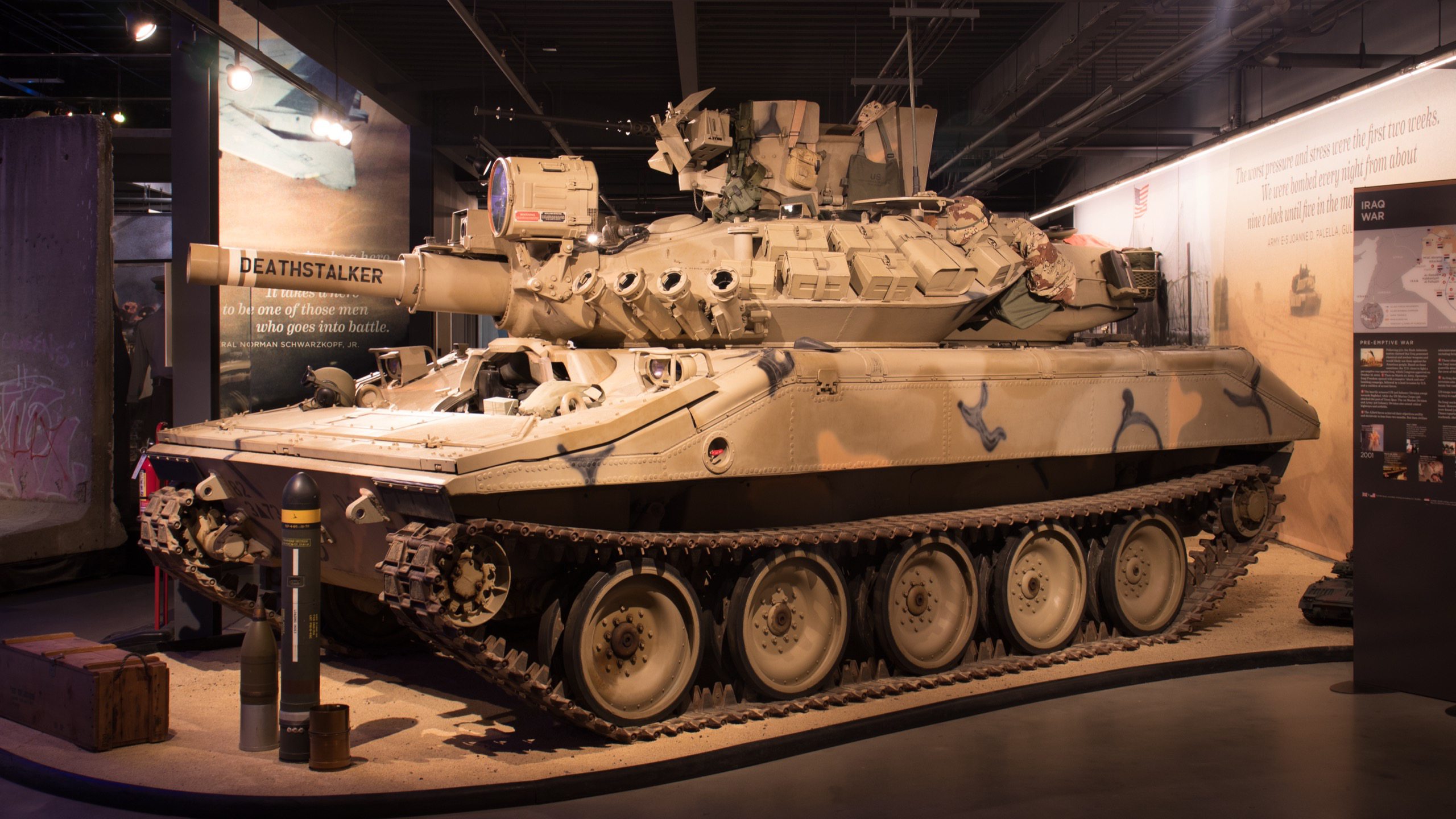
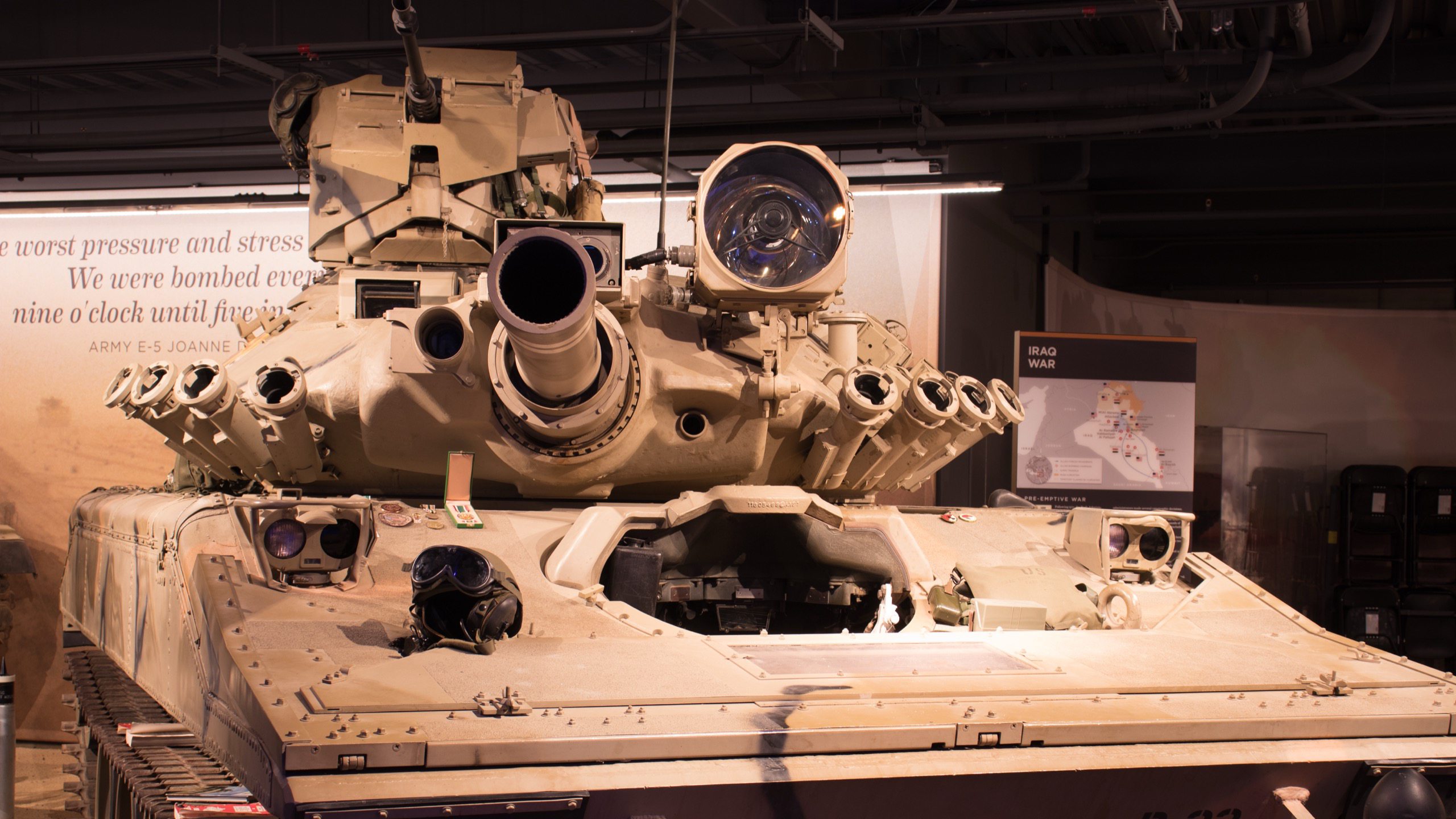
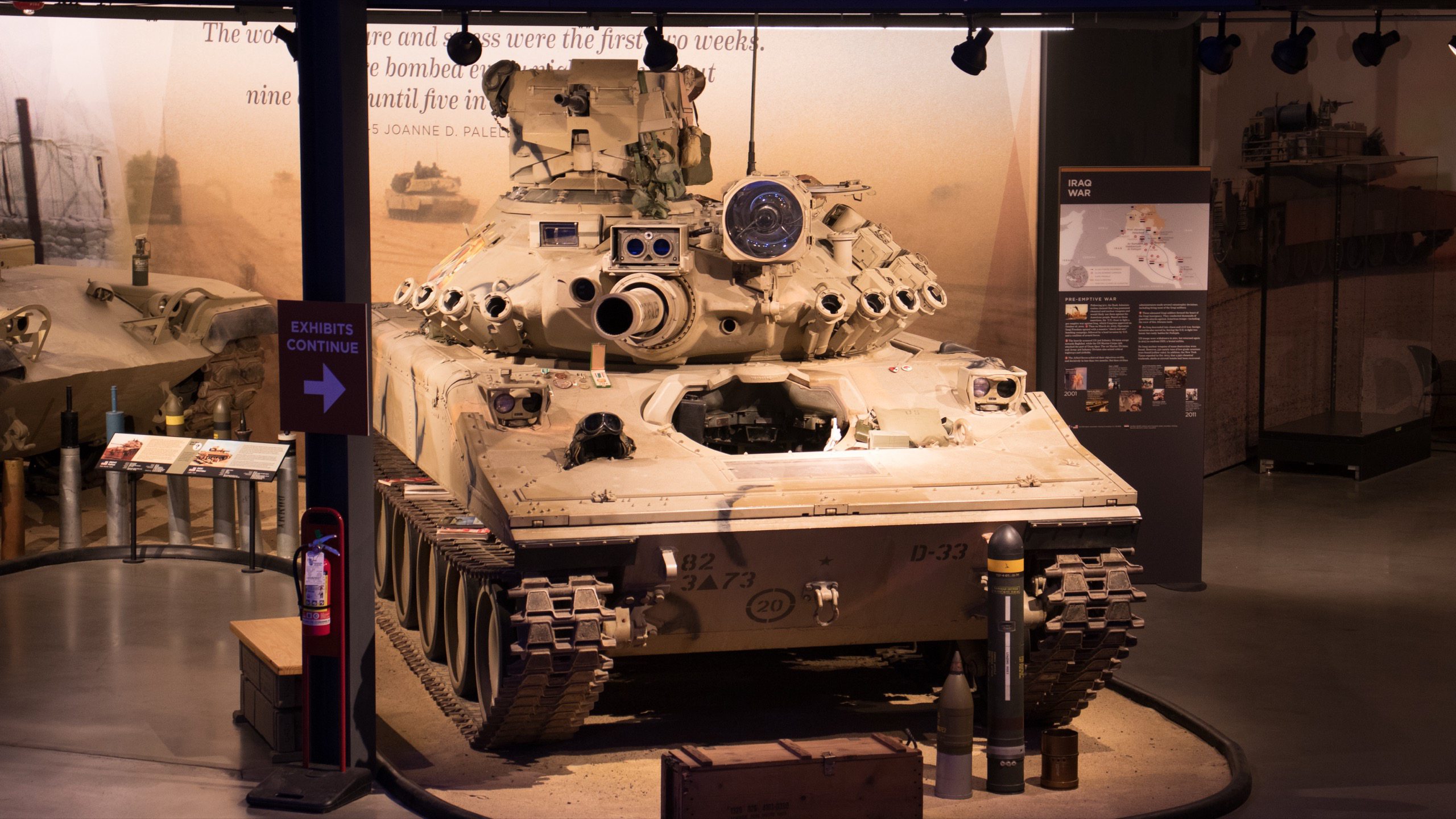
The American M551 Sheridan was one of the most unconventional armored fighting vehicles developed during the Cold War. Officially designated an Armored Reconnaissance/Airborne Assault Vehicle (AR/AAV), the Sheridan was designed to provide U.S. Army airborne forces with a lightweight, heavily armed vehicle capable of parachute deployment, amphibious operations, and rapid battlefield maneuvering.
Named in honor of Civil War General Philip H. Sheridan, the vehicle entered U.S. Army service in 1967. Its lightweight aluminum hull, steel turret, and powerful 300-horsepower diesel engine allowed the approximately 17-ton vehicle to reach speeds approaching 45 mph. Unlike conventional tanks, the Sheridan could also cross rivers using a deployable flotation system.
The Sheridan’s most revolutionary feature was its 152mm M81 gun/launcher, capable of firing both conventional ammunition and the MGM-51 Shillelagh guided anti-tank missile. This unusual combination provided substantial firepower in a vehicle weighing considerably less than contemporary main battle tanks. However, the system experienced persistent mechanical and electronic problems, while the vehicle’s relatively thin armor left crews vulnerable to mines, rocket-propelled grenades, and heavy enemy fire.
First deployed to Vietnam in January 1969, Sheridans provided mobile fire support for American cavalry units, using powerful high-explosive anti-tank and anti-personnel ammunition against enemy positions. In December 1989, Sheridans of the 82nd Airborne Division participated in Operation Just Cause in Panama, including the first combat parachute delivery of American tanks.
The Sheridan’s final major combat deployment came during the 1991 Persian Gulf War. When Iraq invaded Kuwait in August 1990, the 3rd Battalion, 73rd Armor Regiment deployed to Saudi Arabia with the 82nd Airborne Division as part of Operation Desert Shield. The lightweight Sheridans were among the first American armored vehicles available to reinforce Saudi defenses while heavier forces arrived.
Before the Coalition ground offensive, many were upgraded with thermal imaging sights, significantly improving their ability to detect and engage targets under poor visibility conditions.
During Operation Desert Storm in February 1991, Sheridan crews advanced into southern Iraq, supporting airborne infantry, conducting reconnaissance, and engaging Iraqi defensive positions. Elements of the battalion participated in operations near Talil Air Base, where the vehicles’ powerful 152mm guns provided valuable direct fire support. A small number of Shillelagh missiles were reportedly launched during the campaign, marking their only documented combat employment, although their precise results remain uncertain.
The M551 Sheridan displayed at the American Heritage Museum, known as “Deathstalker,” is associated with the 3rd Battalion, 73rd Armor Regiment’s Gulf War service. Following its military career, the vehicle entered Jacques Littlefield’s Military Vehicle Technology Foundation collection, helping preserve this distinctive chapter of American armored warfare.
Displayed in the museum’s Gulf War Gallery, the M551 Sheridan represents the innovative engineering, operational challenges, and battlefield adaptability of American airborne armor during the final years of the Cold War.