Artifacts
M60A1 Main Battle Tank
United States | 1962–1991 | Cold War & Persian Gulf War – Operation Desert Storm
| General Information | |
|---|---|
| Model | M60A1 |
| Class | Armor |
| Type | Main Battle Tank |
| Use | Military |
| Era | 1990-1995 |
| Gallery Focus | Gulf War / Desert Storm |
| Manufacturer | Detroit Arsenal Tank Plant |
| Year | 1975 |
| Country | United States |
| Ownership | CF Inc. |
| Gallery Location | Gulf War |
| Status | Operational, Offline |
Additional Photos
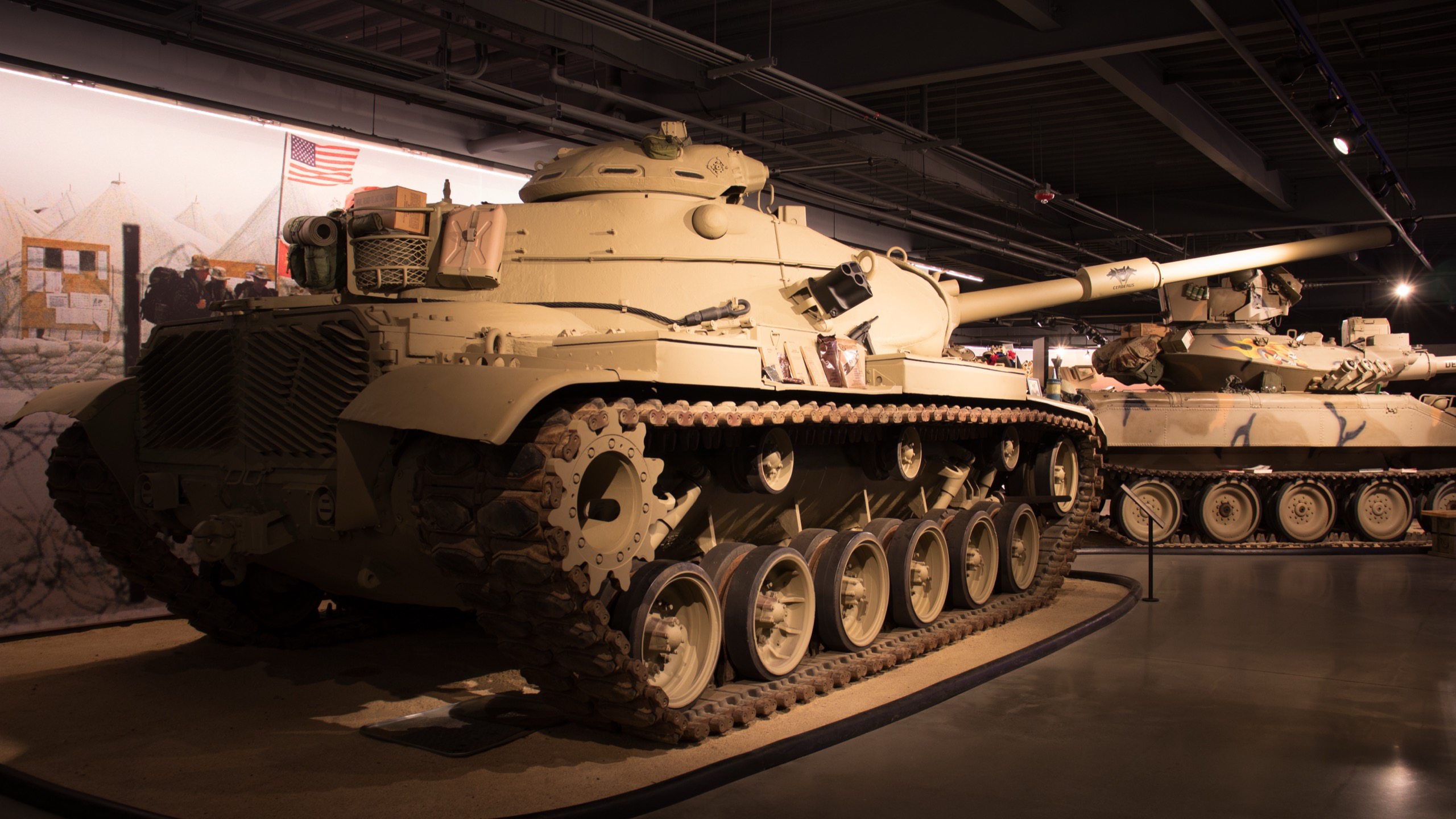
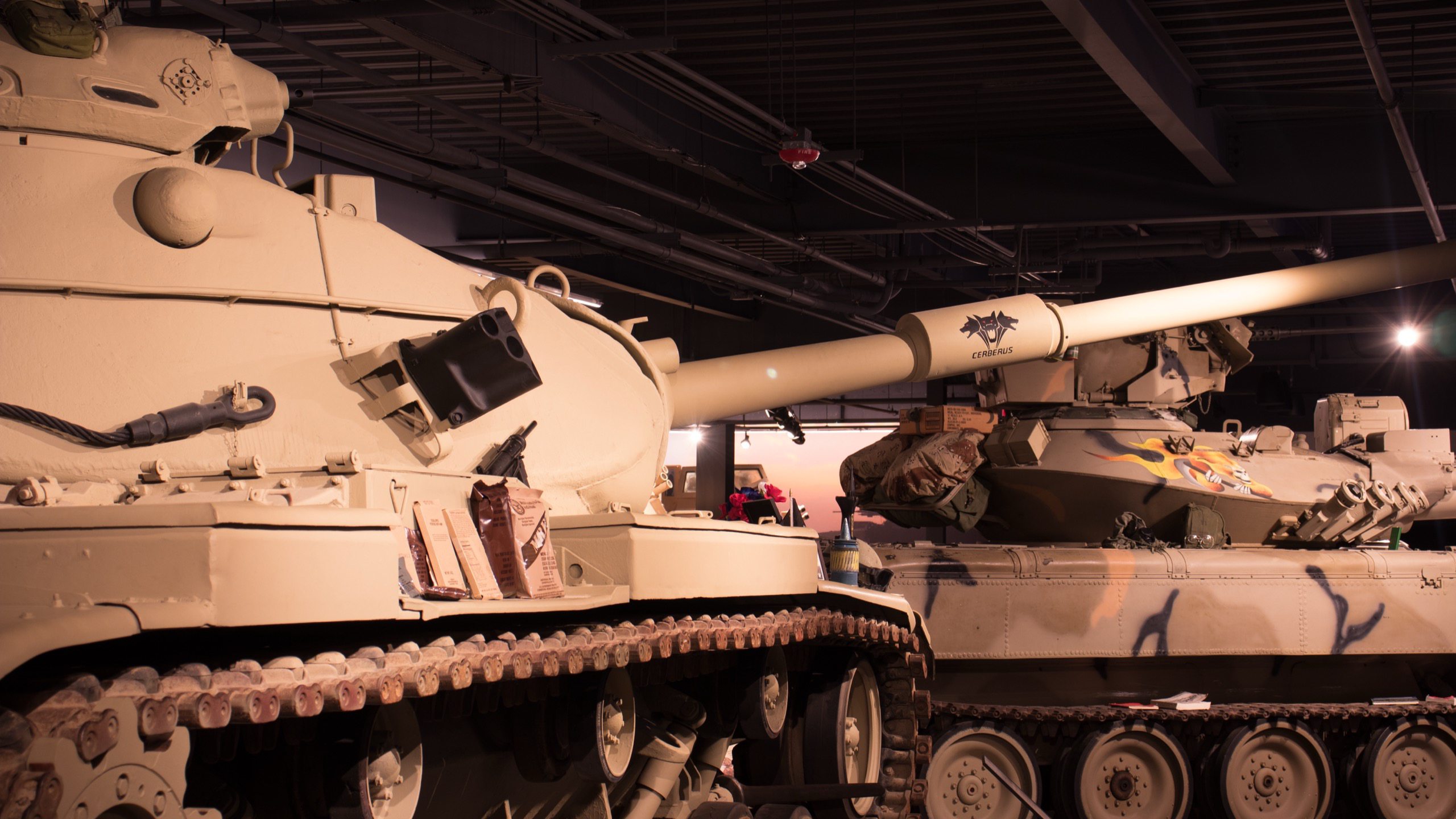
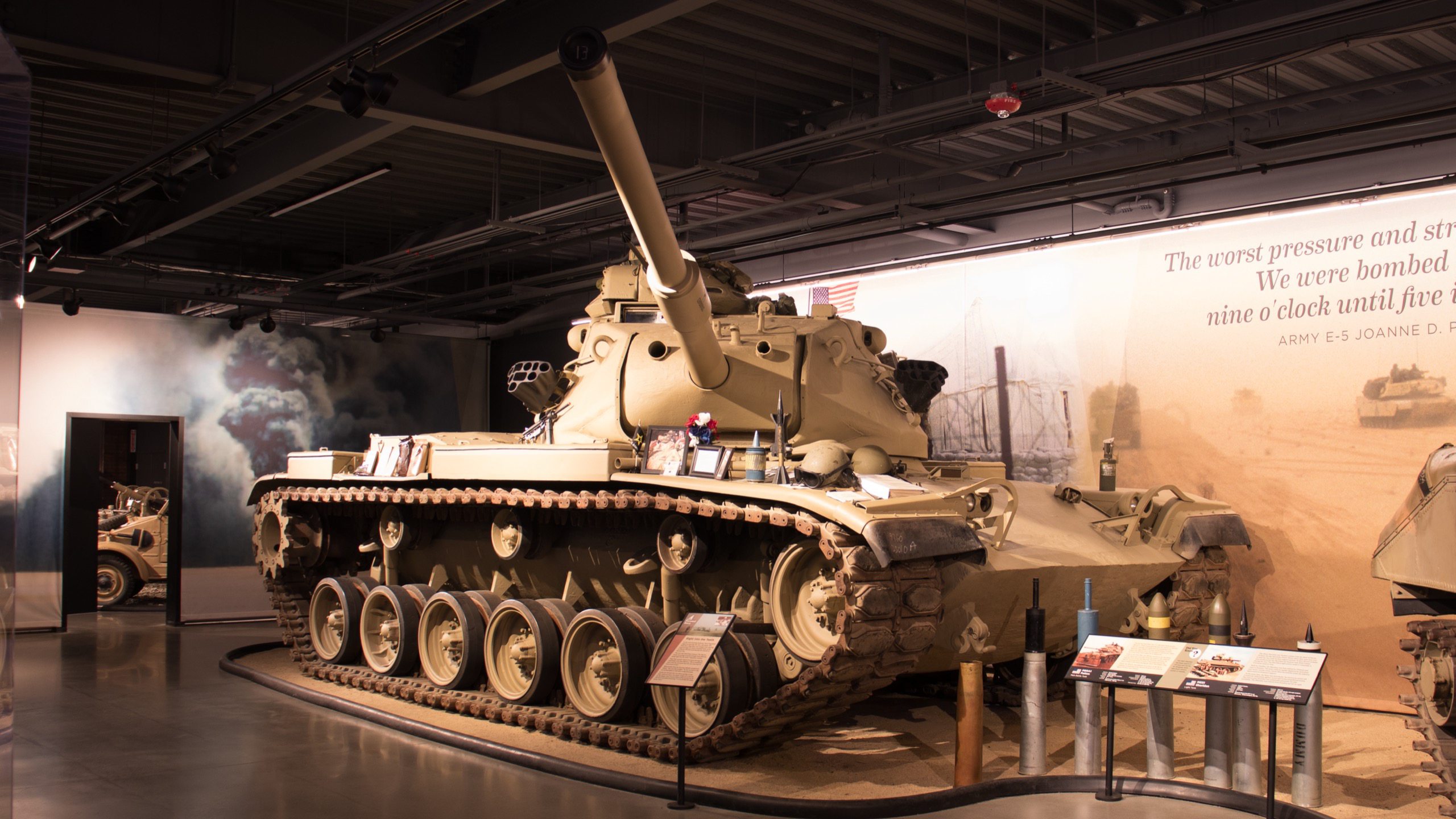
The American M60A1 Main Battle Tank was one of the most important armored fighting vehicles of the Cold War and a mainstay of U.S. Army and Marine Corps armored forces for nearly three decades. Developed as an improvement upon the earlier M48 Patton, the M60 series was designed to confront increasingly powerful Soviet tanks and became a cornerstone of American and allied military strength throughout the world.
Introduced in 1960, the original M60 incorporated a powerful 105mm cannon, improved armor protection, and a more efficient diesel engine. The upgraded M60A1, introduced in 1962, featured a distinctive elongated “needle-nose” turret, greater armor protection, and improved internal arrangements for its four-man crew.
Its primary armament was the 105mm M68 rifled cannon, derived from the British Royal Ordnance L7, capable of firing high-velocity armor-piercing and high-explosive ammunition. A 750-horsepower Continental diesel engine propelled the approximately 52-ton tank at speeds approaching 30 mph. Combined with advanced optical sights and subsequent improvements in stabilization and night-vision equipment, the M60A1 offered formidable firepower and battlefield mobility.
More than 15,000 M60-series tanks were manufactured, serving with American forces and numerous allied nations. Israeli versions participated in the 1973 Yom Kippur War and the 1982 Lebanon War, while Iranian M60A1s saw combat during the prolonged Iran-Iraq War of 1980–1988.
The M60A1’s final major combat deployment with American forces occurred during the 1991 Persian Gulf War. Although the newer M1A1 Abrams had begun replacing the M60 throughout the U.S. military, the Marine Corps continued operating hundreds of upgraded M60A1 tanks during Operations Desert Shield and Desert Storm.
Many Marine M60A1s were equipped with explosive reactive armor (ERA), providing additional protection against shaped-charge anti-tank weapons. Improvements in fire-control systems, night-vision equipment, and mechanical reliability helped extend the effectiveness of these Cold War-era vehicles.
When Coalition ground forces launched their offensive to liberate Kuwait on February 24, 1991, Marine M60A1s spearheaded attacks through extensive Iraqi defensive positions, minefields, and fortified strongpoints. During the rapid advance toward Kuwait City, Marine tank crews confronted Iraqi T-55, T-62, and T-72 tanks, employing their accurate 105mm cannons to devastating effect.
M60A1-equipped Marine units participated in fierce engagements during the advance on Kuwait International Airport, destroying numerous Iraqi armored vehicles and helping secure the strategic objective. Their performance demonstrated that experienced crews, effective tactics, and coordinated combined-arms operations could remain decisive even when employing older military equipment.
Following Operation Desert Storm, the Marine Corps retired the M60A1 from frontline service, completing its transition to the more advanced M1A1 Abrams.
Displayed in the American Heritage Museum’s Gulf War Gallery, the M60A1 represents the culmination of American Cold War tank development and the courage and professionalism of Marine tank crews whose service helped secure the liberation of Kuwait during Operation Desert Storm.