Artifacts
Soviet 2S1 / SAU-122 Gvozdika
Soviet Union / Iraq | 1972–1991 | Persian Gulf War – Operation Desert Storm
| General Information | |
|---|---|
| Model | 2S1 (SAU-122) Gvozdika |
| Class | Armor |
| Type | Self-Propelled Artillery |
| Use | Military |
| Era | 1990-1995 |
| Gallery Focus | Gulf War / Desert Storm |
| Manufacturer | Kharkiv Tractor Plant |
| Year | 1980 |
| Country | Soviet Union |
| Ownership | CF Inc. |
| Gallery Location | Gulf War |
| Status | Operational, Offline |
Additional Photos
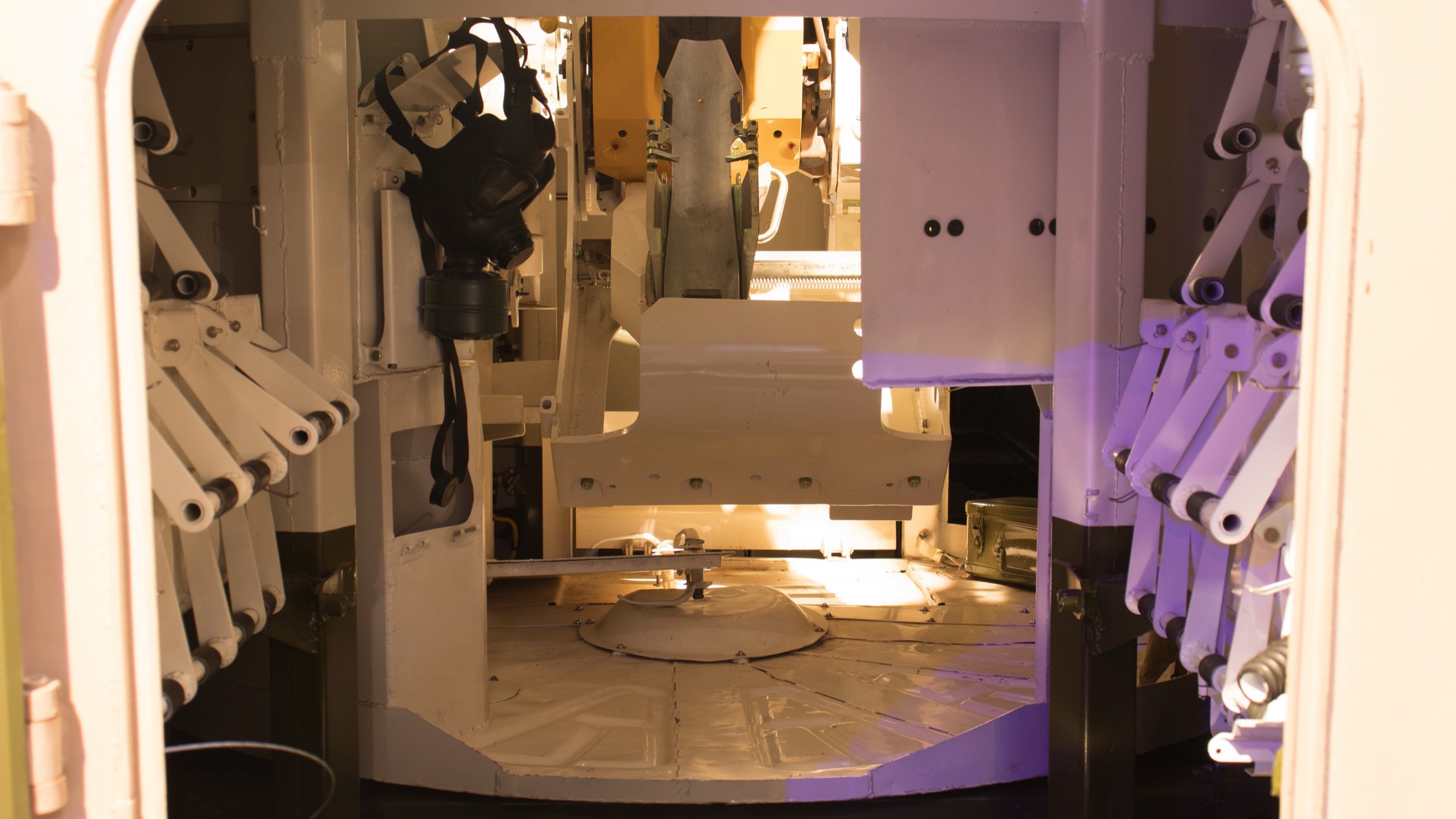
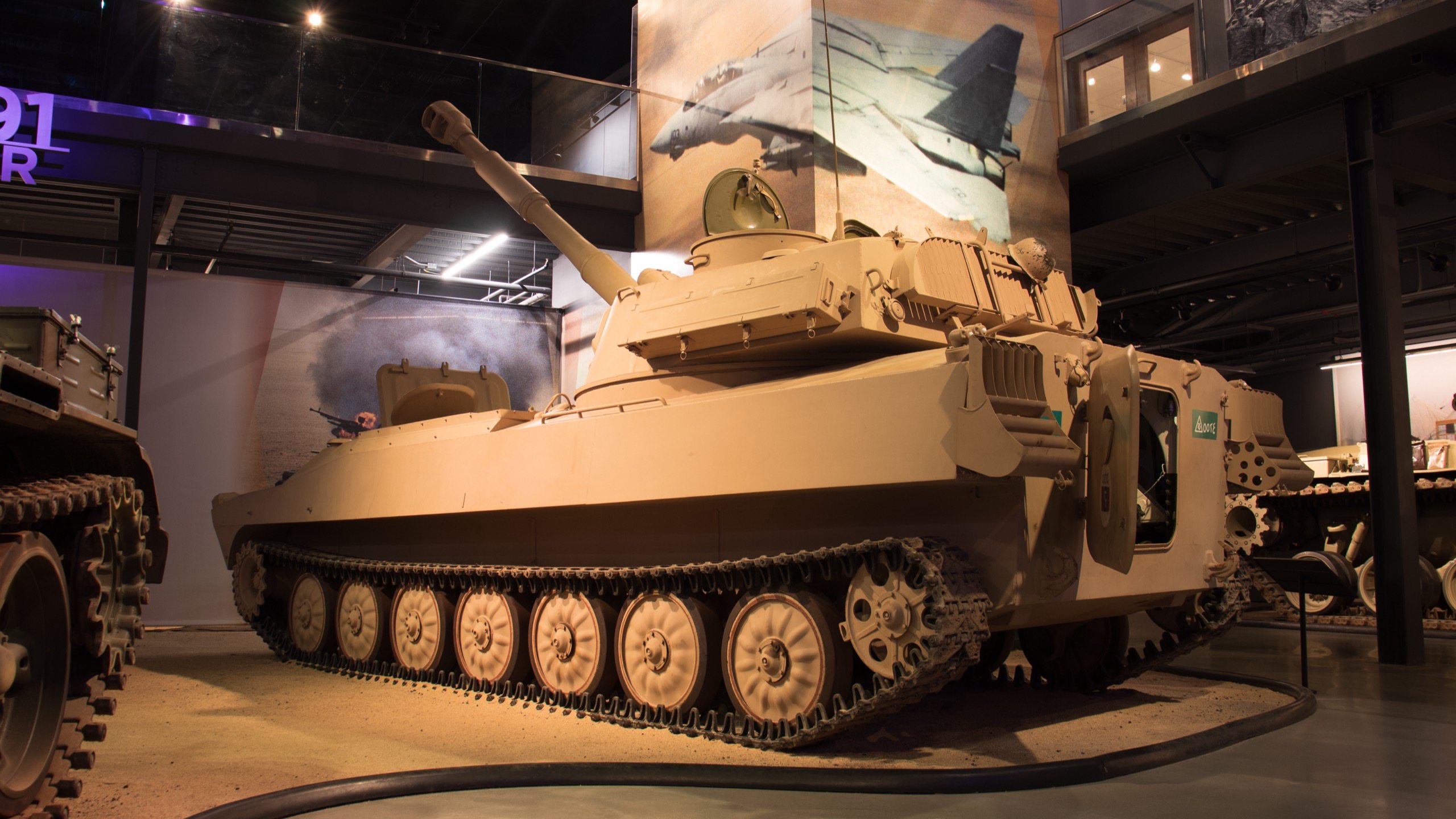
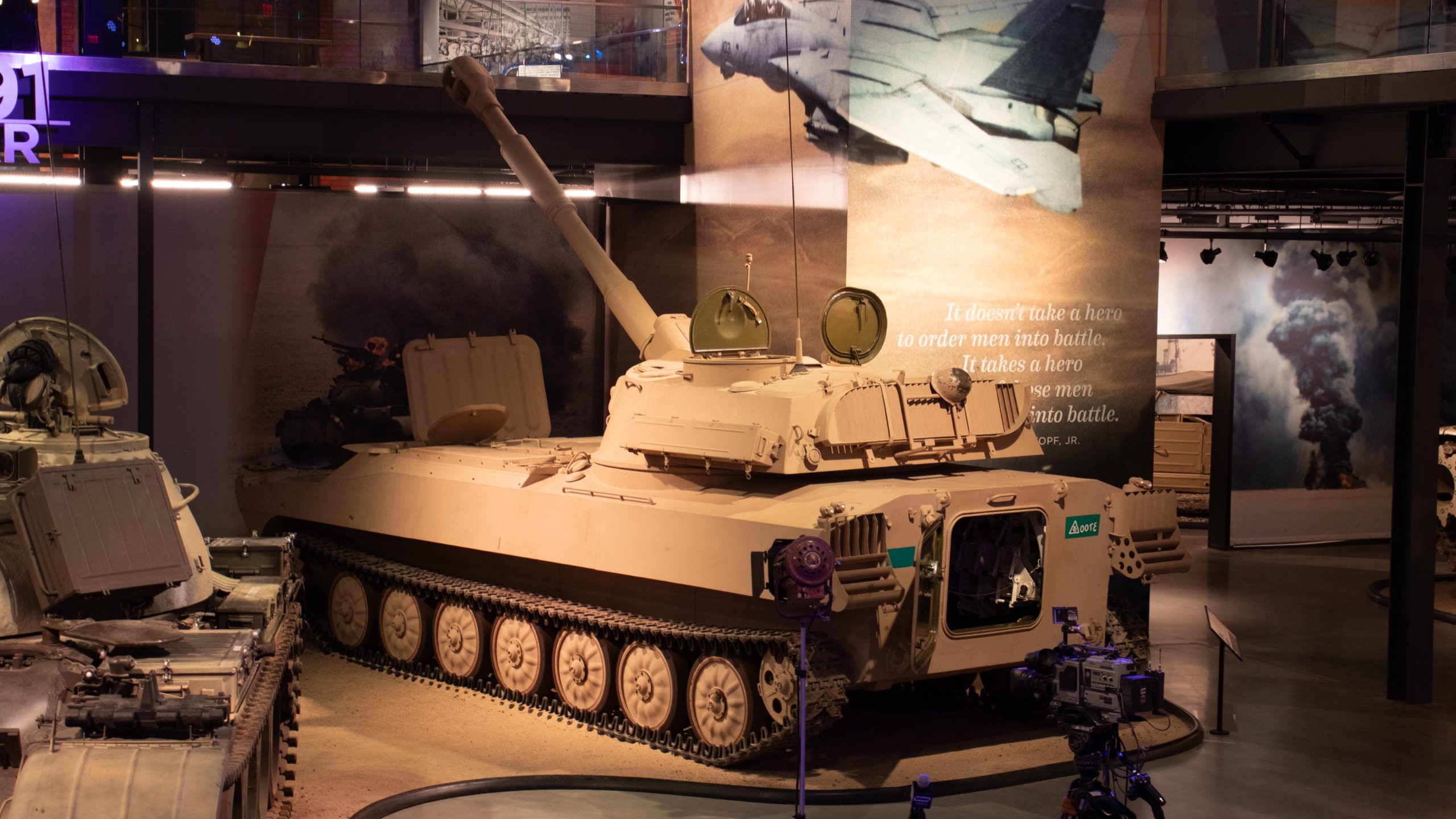
The Soviet-designed 2S1 Gvozdika, meaning “Carnation” in Russian, was a highly mobile, self-propelled artillery system developed during the Cold War to provide powerful fire support for advancing armored and mechanized infantry formations. Introduced into Soviet service in the early 1970s, the Gvozdika became one of the most widely exported artillery vehicles of its generation, eventually serving in numerous conflicts, including the Iran-Iraq War and the 1991 Persian Gulf War.
Built upon a modified MT-LBu tracked chassis, the 2S1 featured a fully enclosed, rotating turret mounting a 122mm 2A31 howitzer derived from the Soviet D-30 field gun. Its four-man crew could deliver high-explosive artillery shells to targets approximately 9.5 miles (15.3 kilometers) away, with specialized ammunition extending its range even farther. A 300-horsepower diesel engine allowed the vehicle to reach speeds approaching 37 mph, while its tracked suspension provided excellent mobility over difficult terrain.
One of the Gvozdika’s most unusual features was its amphibious capability. Unlike many Western self-propelled artillery vehicles, the 2S1 could cross waterways using its tracks for propulsion. Its lightweight armor provided protection against small-arms fire and artillery fragments, although it was never intended to engage enemy tanks in direct combat.
The Gvozdika’s greatest advantage was its ability to rapidly reposition after firing. Unlike conventional towed artillery, which required considerable time to deploy and withdraw, the 2S1 could move into position, deliver a concentrated barrage, and quickly relocate to avoid enemy counter-battery fire—a tactic commonly known as “shoot and scoot.”
During the 1991 Persian Gulf War, Iraqi forces employed Soviet-built 2S1 Gvozdikas to support armored and infantry formations defending Kuwait and southern Iraq. Following Iraq’s invasion of Kuwait in August 1990, these vehicles became part of the extensive Iraqi military defenses confronted by American and Coalition forces during Operation Desert Storm.
Although capable artillery platforms, Iraqi Gvozdikas faced overwhelming Coalition airpower, reconnaissance capabilities, and superior artillery coordination. Many were destroyed, abandoned, or captured during the rapid Coalition ground offensive in February 1991.
The 2S1 displayed at the American Heritage Museum is an actual Iraqi combat-veteran vehicle captured by United States Marines during Operation Desert Storm in 1991. Transported to the United States for military evaluation, it was later acquired by Jacques Littlefield’s Military Vehicle Technology Foundation in September 2000.
After arriving with damage to its engine, electrical systems, suspension, and armament, the vehicle underwent extensive restoration. Its missing equipment was addressed, and the American Heritage Museum subsequently returned its exterior appearance to its documented condition when captured from Iraqi forces.
Displayed in the museum’s Gulf War Gallery, this historic 2S1 Gvozdika provides a tangible connection to the Iraqi military equipment encountered by Coalition forces during Operation Desert Storm and illustrates the continuing importance of mobile artillery in modern mechanized warfare.