Artifacts
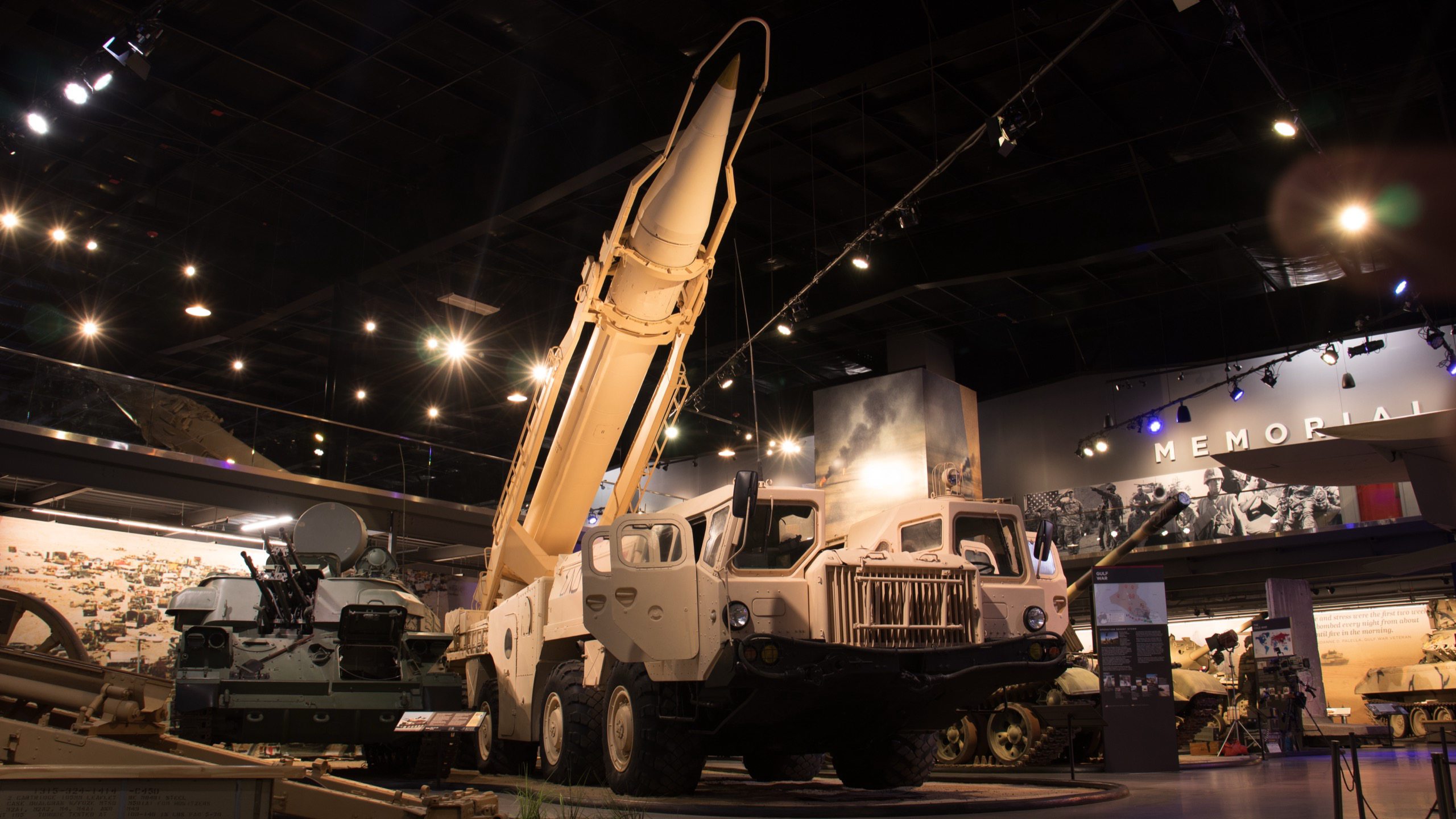
SS-1C Scud-B with MAZ-543 Transport
| General Information | |
|---|---|
| Model | SS-1C Scud-B (R-17/R-300 Elbrus) / MAZ-543 Transport |
| Class | Missile |
| Type | Tactical Ballistic Missile |
| Use | Military |
| Era | 1990-1995 |
| Gallery Focus | Gulf War / Desert Storm |
| Manufacturer | Votkinsk Machine Building Plant / Minsk Automobile Plant |
| Year | 1985 |
| Country | Soviet Union |
| Ownership | CF Inc. |
| Gallery Location | Gulf War |
| Status | Operational, Offline |
Additional Photos
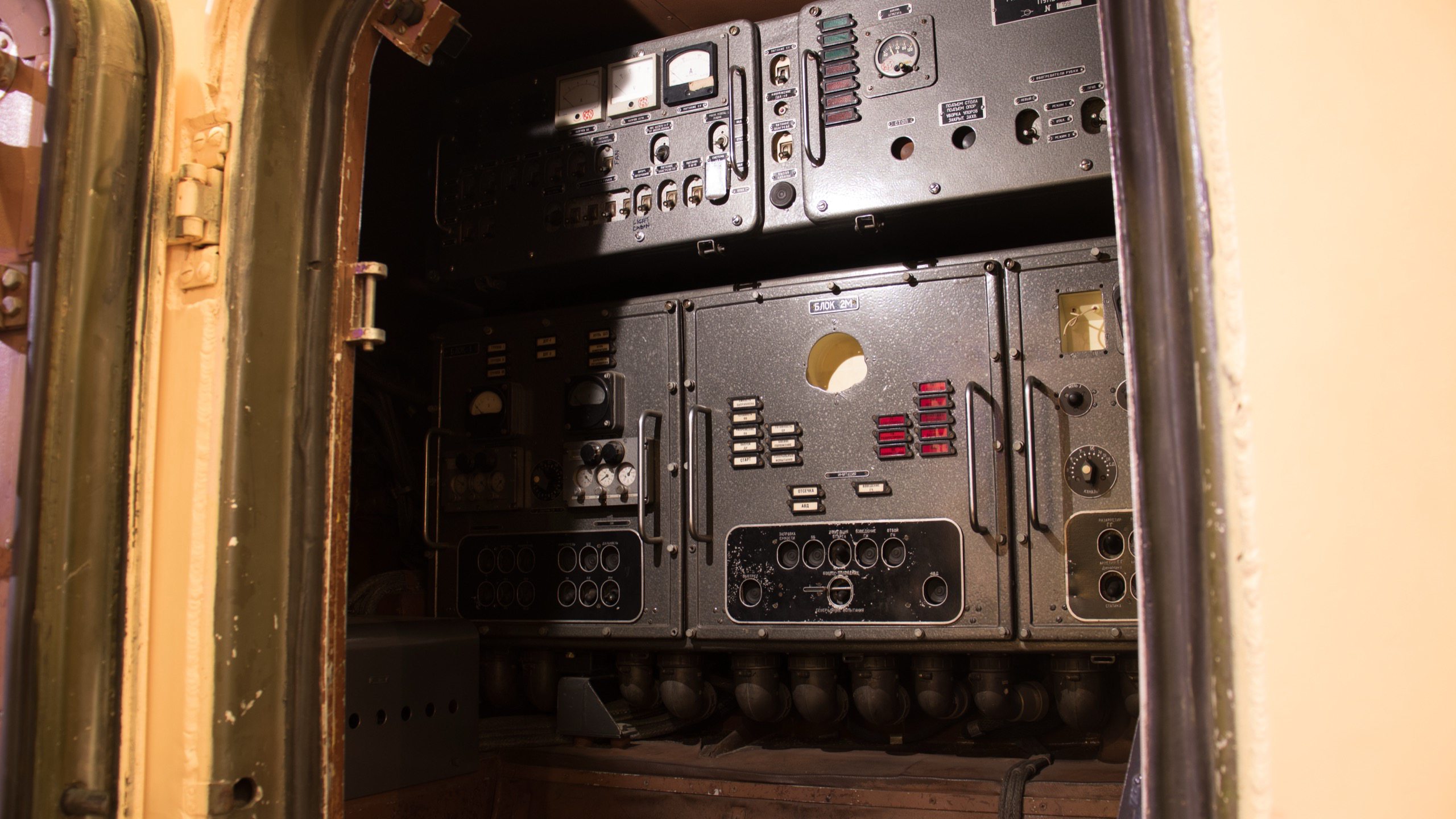
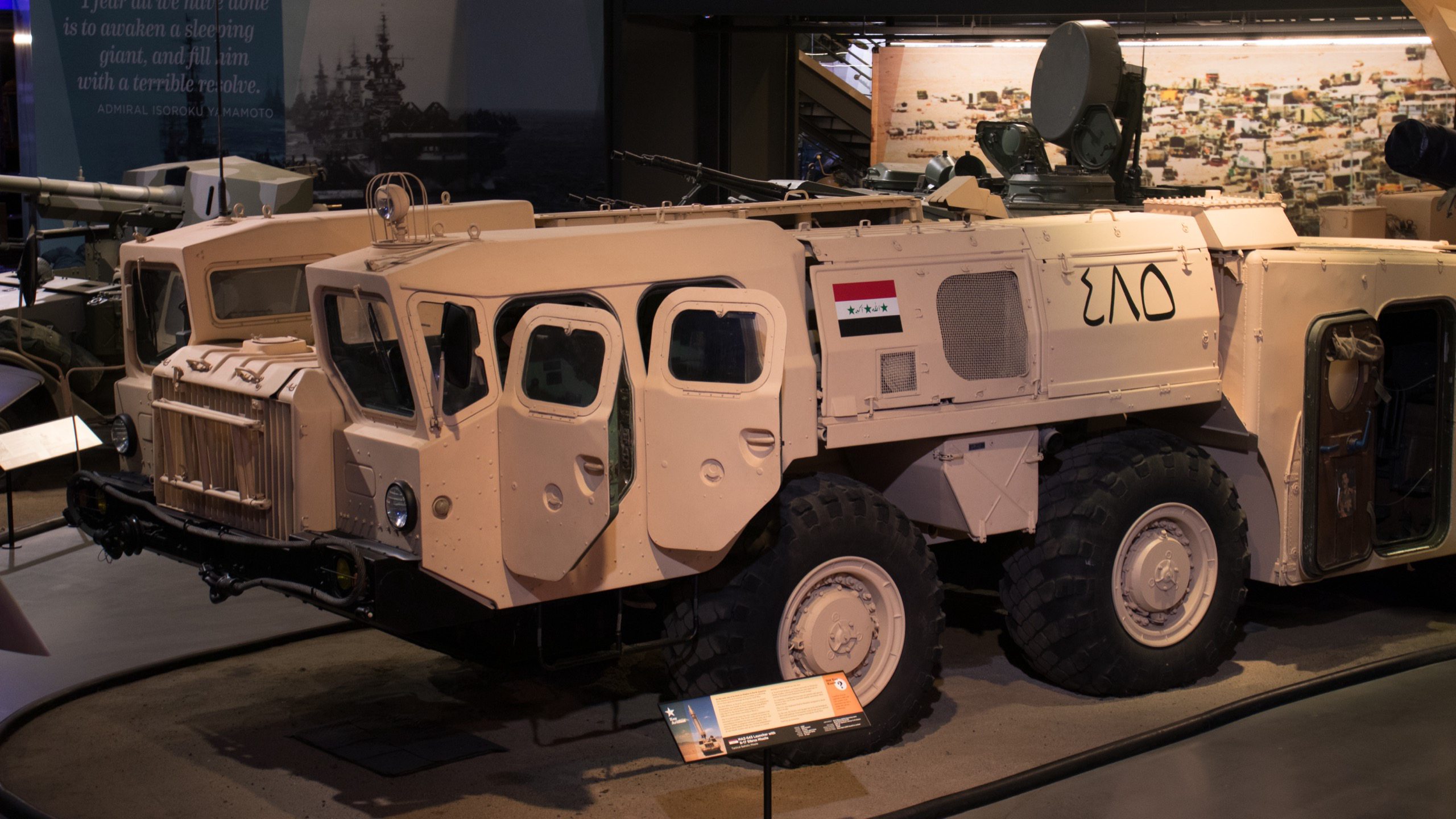
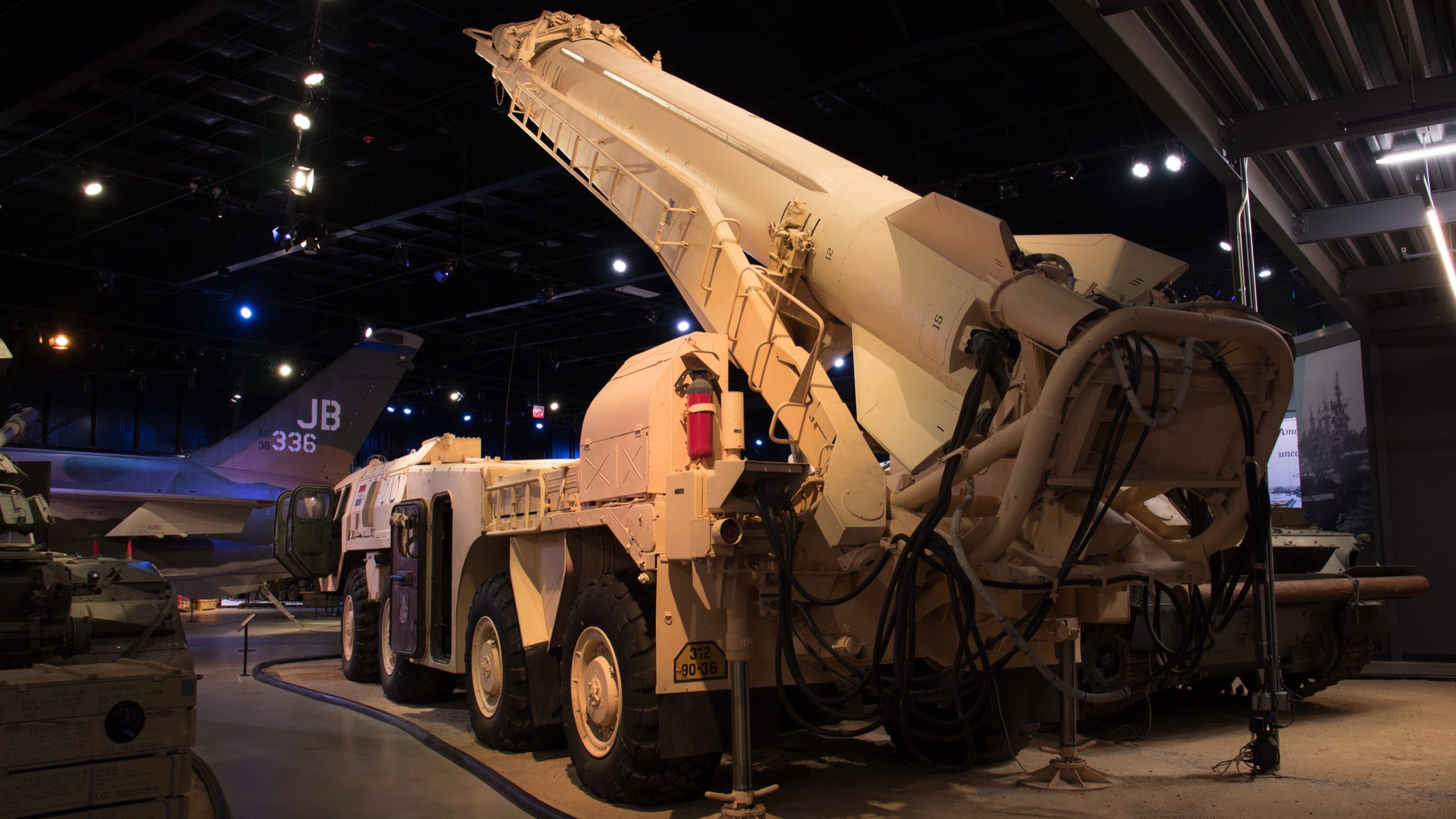
The Soviet-designed R-17 Elbrus, known to NATO as the SS-1C Scud-B, became one of the most recognizable weapons of the 1991 Persian Gulf War. Developed during the Cold War, the Scud represented an important advancement in mobile ballistic missile technology, tracing its origins to the German V-2 rocket program of World War II. Its ability to strike targets hundreds of miles away made it a formidable weapon of both military and psychological warfare.
Introduced into Soviet service in 1962, the R-17 was a single-stage, liquid-fueled ballistic missile capable of delivering a warhead approximately 186 miles (300 kilometers). Measuring nearly 37 feet long and weighing approximately 13,000 pounds, the missile could carry conventional high-explosive, chemical, or nuclear warheads. Traveling at several times the speed of sound, it presented significant challenges to air defense systems. However, its relatively primitive inertial guidance system limited its accuracy, making it more suitable for attacking large geographic areas than individual military targets.
The missile was commonly deployed aboard the massive eight-wheeled MAZ-543 transporter-erector-launcher (TEL). This mobile platform allowed missile crews to transport, conceal, reposition, and launch their weapons from widely dispersed locations. Before firing, the missile was hydraulically raised to a vertical position, with the complete launch preparation process generally requiring approximately one hour.
Iraq acquired Soviet Scud missiles during the 1970s and 1980s, subsequently developing longer-range variants during its war with Iran. The Iraqi Al Hussein modification extended the missile’s range to approximately 400 miles (650 kilometers) by increasing fuel capacity and reducing warhead weight. These modifications came at the expense of accuracy and structural reliability.
During Operation Desert Storm in 1991, Iraqi President Saddam Hussein employed Scud-derived missiles against Israel and Saudi Arabia in an attempt to disrupt Coalition operations, spread fear among civilian populations, and potentially draw Israel into the conflict, threatening the unity of the international Coalition.
Throughout the six-week conflict, Iraq launched approximately 88 ballistic missiles toward Israel and countries supporting Coalition forces. Although many failed to strike their intended targets, the attacks caused widespread alarm and forced Coalition forces to devote significant resources to locating mobile launchers and defending against incoming missiles with Patriot air defense systems.
The deadliest attack occurred on February 25, 1991, when an Iraqi missile struck a U.S. Army barracks in Dhahran, Saudi Arabia, killing 28 American soldiers and wounding approximately 100 others. It was the single deadliest attack against American forces during Operation Desert Storm.
Displayed in the American Heritage Museum’s Gulf War Gallery, the R-17 Elbrus and its MAZ-543 launcher illustrate the evolution of ballistic missile warfare, the challenges posed by mobile missile systems, and the far-reaching consequences of these weapons during one of the defining military conflicts of the late twentieth century.