Artifacts
Soviet T-55
Soviet Union / Iraq | 1958–1991 | Persian Gulf War – Operation Desert Storm
| General Information | |
|---|---|
| Model | T-55 |
| Class | Armor |
| Type | Medium Tank |
| Use | Military |
| Era | 1990-1995 |
| Gallery Focus | Gulf War / Desert Storm |
| Manufacturer | ZTS Martin |
| Year | 1980 |
| Country | CzechoslovakiaSoviet Union |
| Ownership | CF Inc. |
| Gallery Location | Gulf War |
| Status | Operational, Offline |
Additional Photos
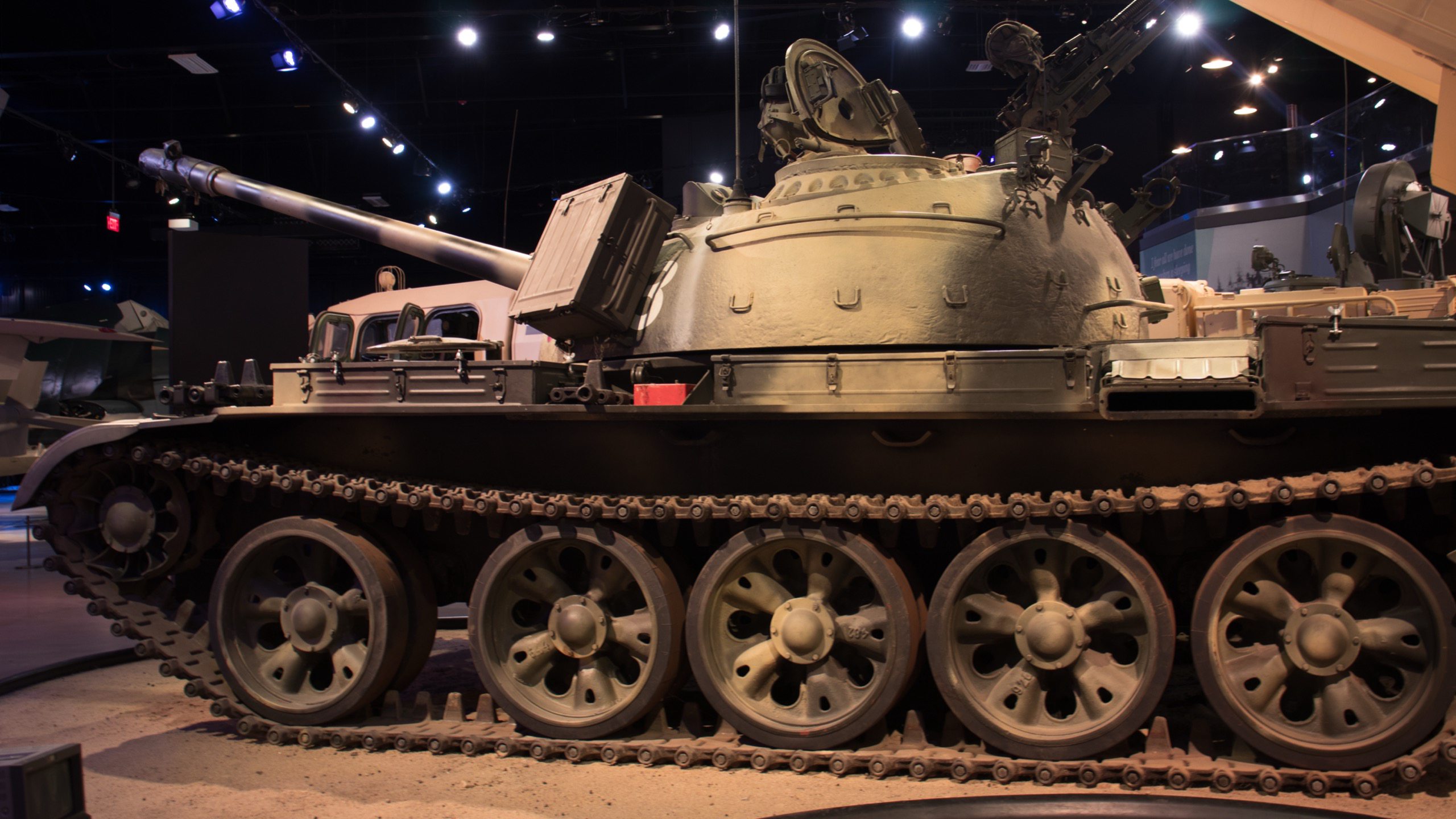
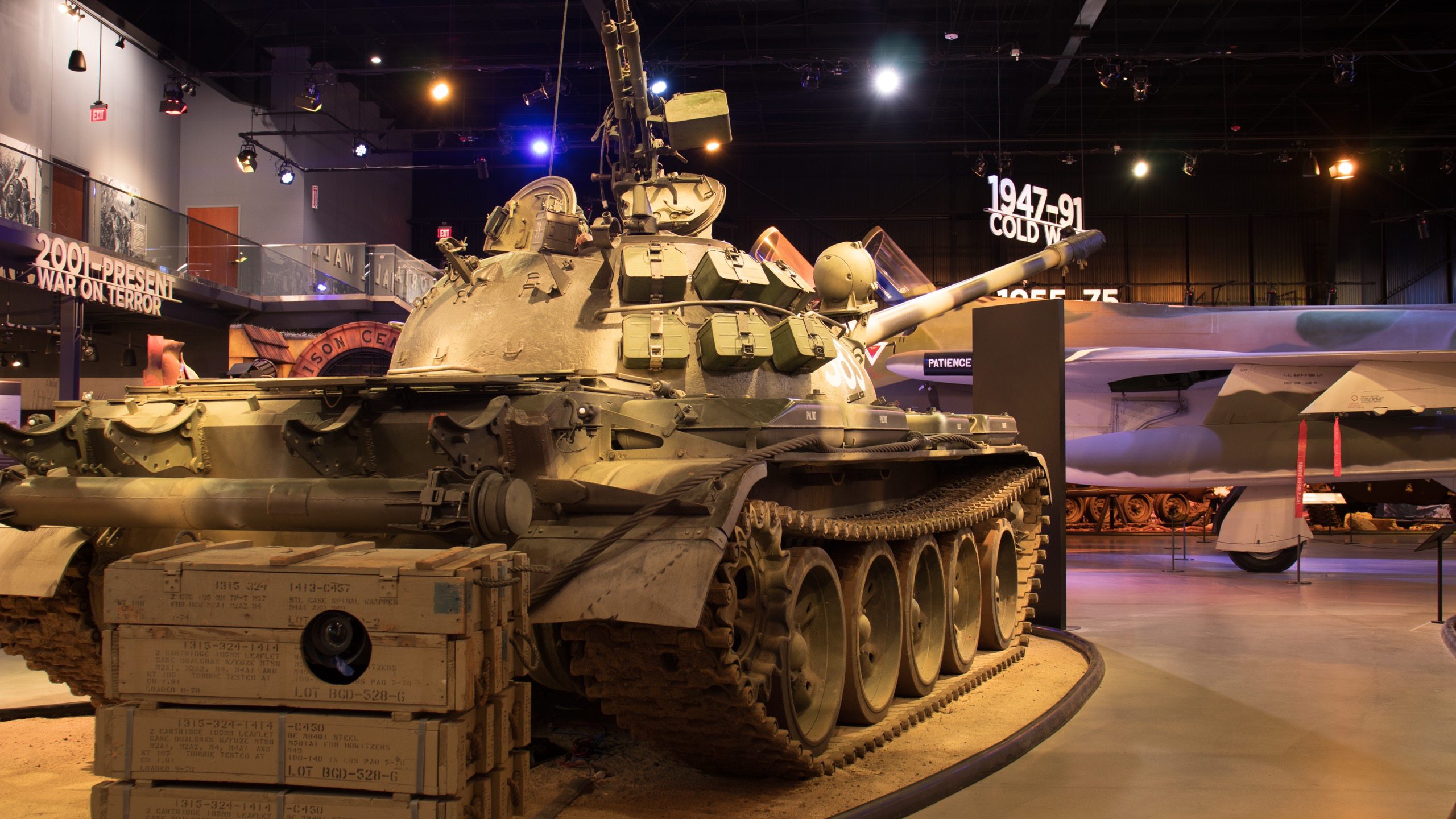
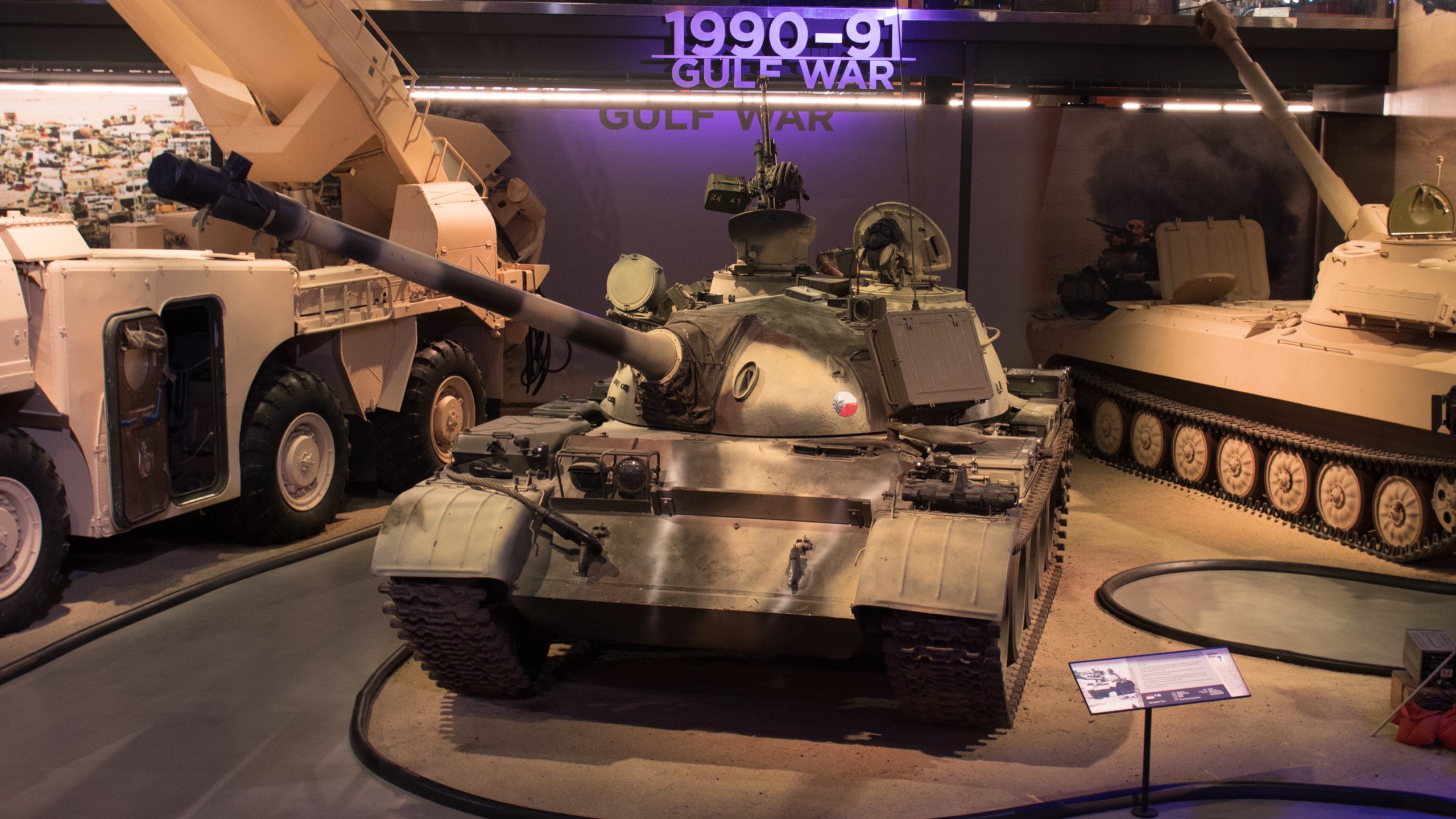
The Soviet T-55 was one of the most widely produced and influential tanks in military history, serving as a mainstay of Soviet, Warsaw Pact, and allied armored forces throughout the Cold War. Together with its predecessor, the T-54, the series achieved an estimated worldwide production of nearly 100,000 vehicles, making it the most extensively manufactured tank family in history.
Development of the T-54 began during the final months of World War II, incorporating lessons learned from the legendary Soviet T-34. Introduced in 1958, the improved T-55 featured greater operational range, an upgraded diesel engine, and enhanced protection against nuclear, biological, and chemical threats. Its compact design, relatively low silhouette, mechanical reliability, and ease of maintenance made it particularly attractive to nations seeking affordable, capable armored forces.
Armed with a powerful 100mm D-10T2S rifled cannon and a coaxial machine gun, the T-55 operated with a four-man crew. Its 580-horsepower diesel engine propelled the approximately 36-ton tank at speeds approaching 30 mph. The vehicle’s relatively simple construction also made it suitable for mass production and extensive modernization.
Exported throughout the Middle East, Africa, Asia, and Eastern Europe, the T-55 participated in numerous conflicts, including the Arab-Israeli Wars, Vietnam War, and Iran-Iraq War. Iraq acquired substantial numbers of Soviet-designed T-55s, which became an important component of Saddam Hussein’s armored forces during the 1980s.
During the 1991 Persian Gulf War, Iraqi T-55 tanks were deployed throughout Kuwait and southern Iraq following Iraq’s August 1990 invasion of Kuwait. Alongside T-62s, T-72s, and Chinese-built tanks, they formed part of the armored defenses confronting American and Coalition forces during Operation Desert Storm.
Iraqi commanders frequently positioned T-55s in defensive emplacements, partially concealing their hulls behind earthen berms to reduce exposure to enemy fire. However, the aging tanks faced overwhelming disadvantages against modern American M1A1 Abrams and M60A1 tanks, as well as British Challenger 1 main battle tanks.
Western thermal imaging sights, advanced fire-control computers, modern armor, and superior ammunition allowed Coalition crews to detect and engage Iraqi armored vehicles at distances where many T-55 crews struggled to respond effectively. Coalition air superiority and coordinated ground operations further diminished the effectiveness of Iraqi armored formations.
During the rapid Coalition ground offensive of February 24–28, 1991, hundreds of Iraqi tanks were destroyed, abandoned, or captured, including numerous T-55s. The conflict demonstrated how dramatically armored warfare had evolved since the T-55’s introduction more than three decades earlier.
Displayed in the American Heritage Museum’s Gulf War Gallery, this Iraqi T-55 represents the enormous influence of Soviet armored vehicle design during the Cold War and the technological transformation of tank warfare demonstrated during Operation Desert Storm.