Artifacts
M8 Scott HMC
American Self-Propelled Artillery Vehicle | World War II (1942–1945)
| General Information | |
|---|---|
| Model | M8 Howitzer Motor Carriage (HMC) Scott |
| Class | Armor |
| Type | Self-Propelled Artillery |
| Use | Military |
| Era | 1940-1945 |
| Gallery Focus | WWII European Theater |
| Manufacturer | General Motors Cadillac Division |
| Year | 1943 |
| Country | United States |
| Ownership | CF Inc. |
| Gallery Location | Battle of the Bulge |
| Status | Operational, Offline |
Additional Photos
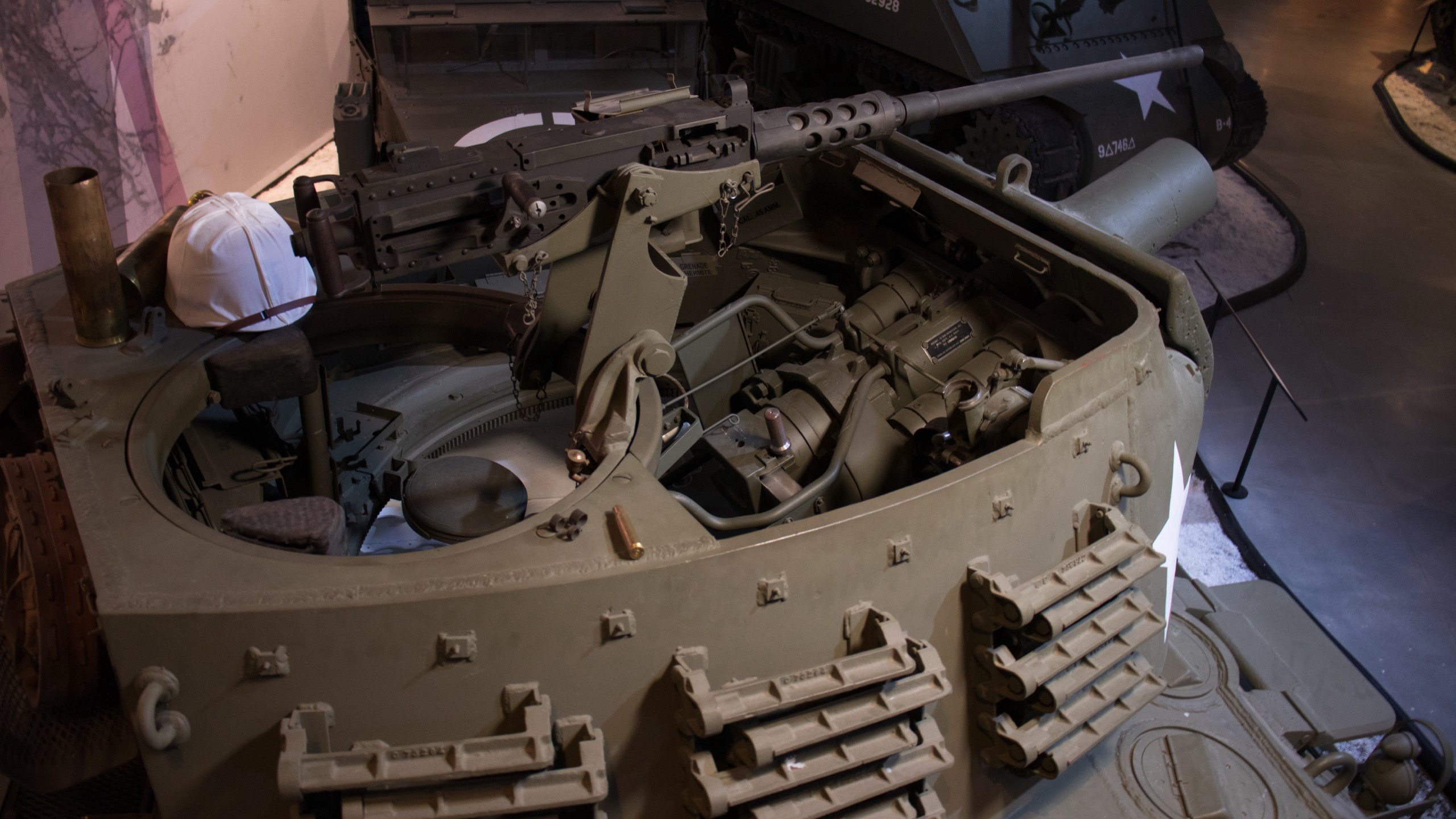
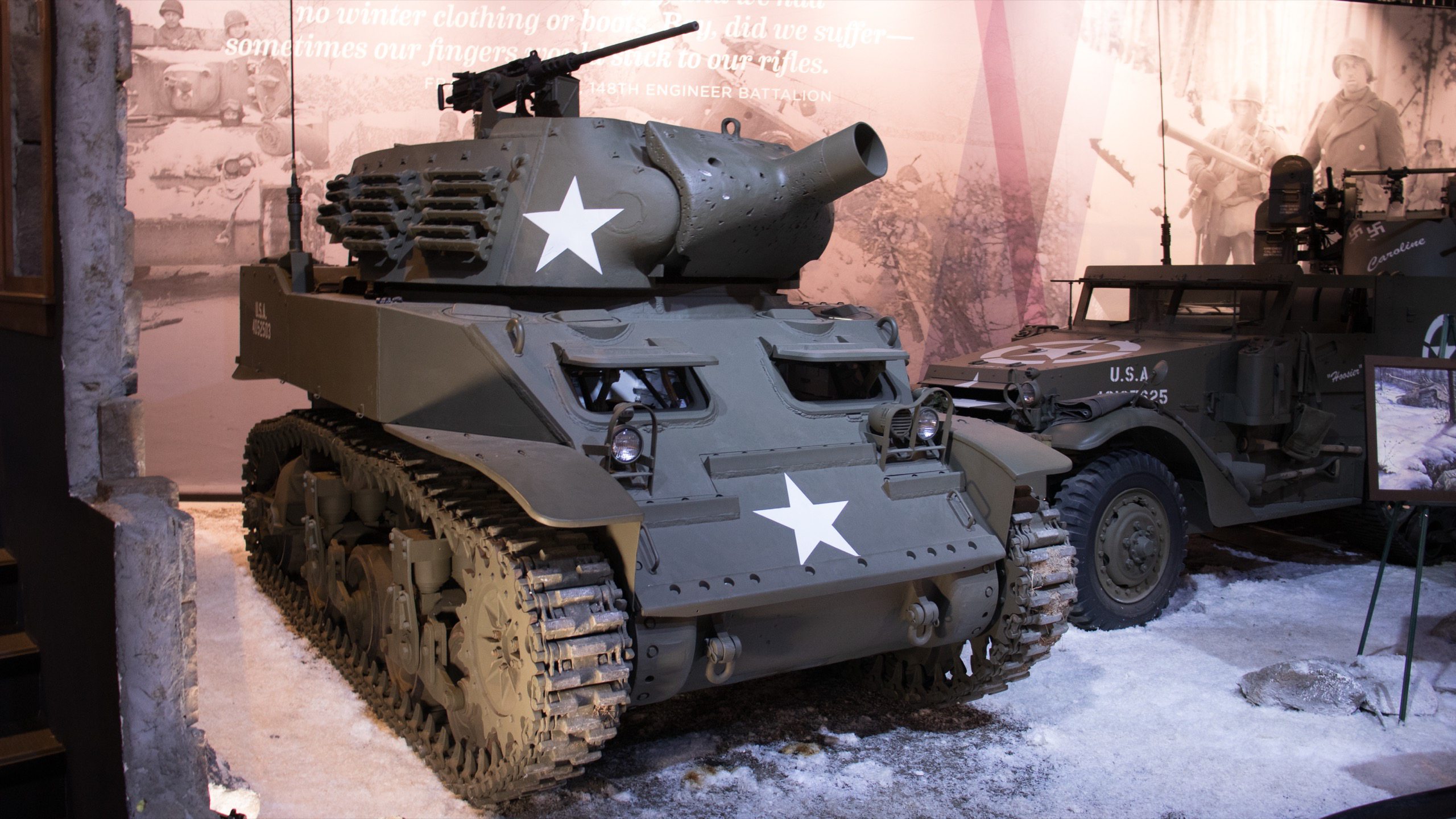
The M8 Scott Howitzer Motor Carriage (HMC) was an American self-propelled artillery vehicle developed during World War II to provide mobile fire support for armored and mechanized forces. Combining the proven chassis of the M5 Stuart light tank with a powerful 75mm howitzer, the M8 gave American troops the ability to engage enemy infantry, fortified positions, and other battlefield targets while keeping pace with advancing armored formations.
Developed in 1942, the M8 replaced the Stuart’s conventional gun turret with a larger, open-topped, fully rotating turret mounting a short-barreled 75mm M2 or M3 howitzer. Unlike the high-velocity cannons fitted to conventional tanks, the M8’s howitzer was designed primarily to fire high-explosive, smoke, and other specialized ammunition. Its ability to elevate the gun to approximately 40 degrees made it particularly effective against enemy positions on hillsides, behind obstacles, and in other locations difficult to engage with conventional tank guns.
The M8 retained the M5 Stuart’s twin Cadillac V8 gasoline engines, producing a combined 220 horsepower. Weighing approximately 17 tons, it could reach speeds approaching 36 mph on roads. Its four-man crew consisted of a commander, gunner, driver, and assistant driver who also served as the loader during combat. A .50-caliber Browning machine gun provided additional protection against enemy infantry and low-flying aircraft.
A total of 1,778 M8 Howitzer Motor Carriages were manufactured by the Cadillac Division of General Motors between September 1942 and January 1944. Originally employed in the headquarters companies of American tank battalions, the M8 increasingly served with cavalry reconnaissance squadrons, where its mobility and firepower made it a valuable companion to lighter reconnaissance vehicles.
The M8 saw extensive service in the Italian Campaign, the Normandy Campaign, and the Allied advance across Western Europe. Some participated in the Battle of the Bulge in December 1944, including fighting around Bastogne, where American forces desperately resisted Germany’s last major offensive in the West. The M8 also fought in the Pacific Theater, supporting American infantry and armored units during difficult island campaigns.
Although its open-topped turret and relatively thin armor left the crew vulnerable to enemy fire, the M8 proved to be an effective mobile support weapon. It was gradually supplemented by Sherman tanks equipped with more powerful 105mm howitzers, although many M8s remained in frontline service through the end of the war. Following World War II, the vehicle continued serving with other nations, notably France during the conflicts in Indochina and Algeria.
The M8 Scott displayed in the American Heritage Museum’s Battle of the Bulge Gallery represents the vital role of mobile artillery in American armored warfare and the determination of the soldiers who fought through the brutal winter campaign of 1944–1945.