Artifacts
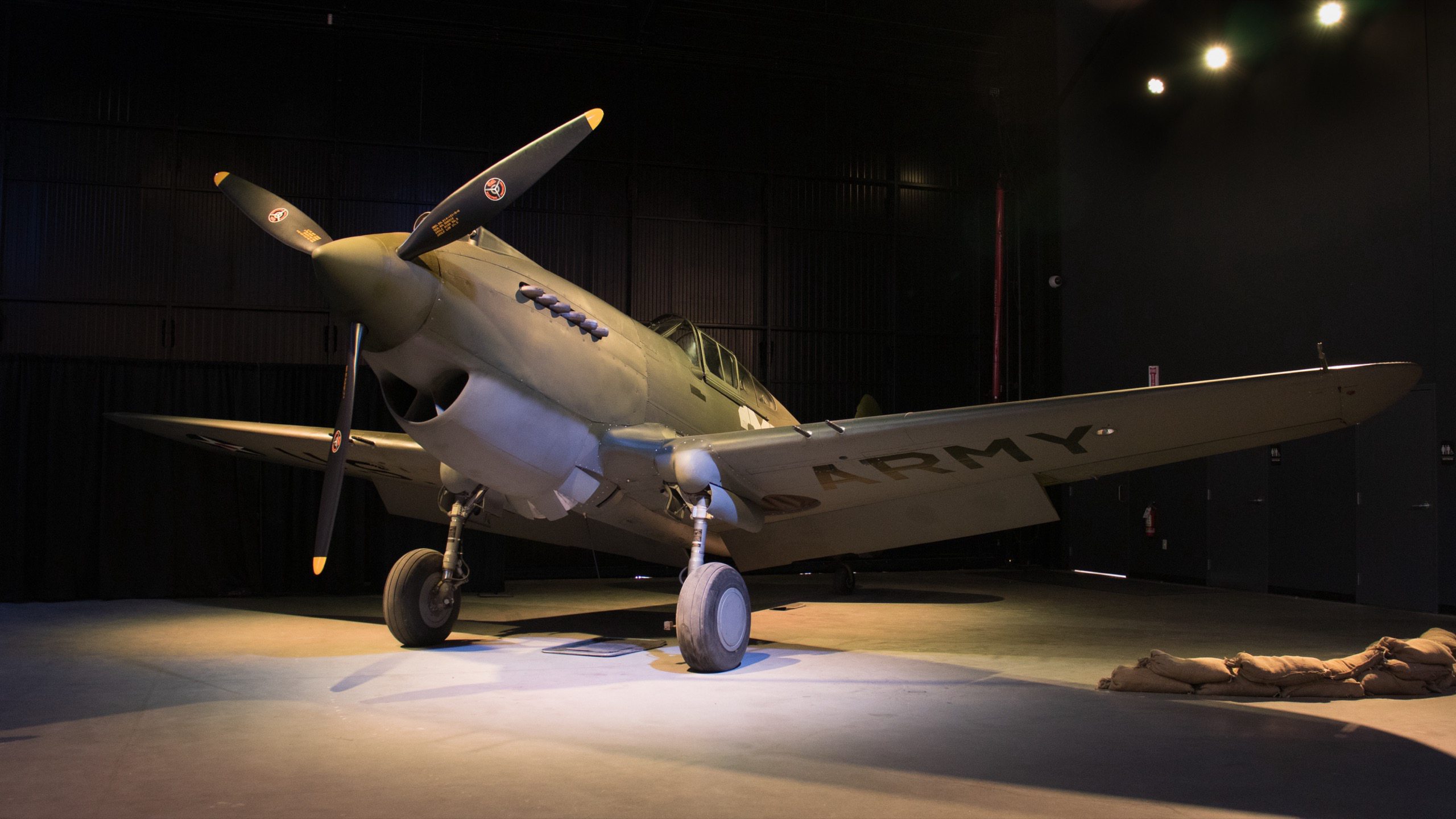
Curtiss-Wright P-40B Tomahawk "Pearl Harbor"
United States | 1941–1945 | World War II – Pearl Harbor
| General Information | |
|---|---|
| Model | P-40B Tomahawk |
| Class | Aircraft |
| Type | Fighter |
| Use | Military |
| Era | 1940-1945 |
| Gallery Focus | WWII Pacific Theater |
| Manufacturer | Curtiss-Wright |
| Year | 1941 |
| Country | United States |
| Ownership | CF Inc. |
| Gallery Location | Pacific Theatre |
| Status | Operational, Offline |
Additional Photos
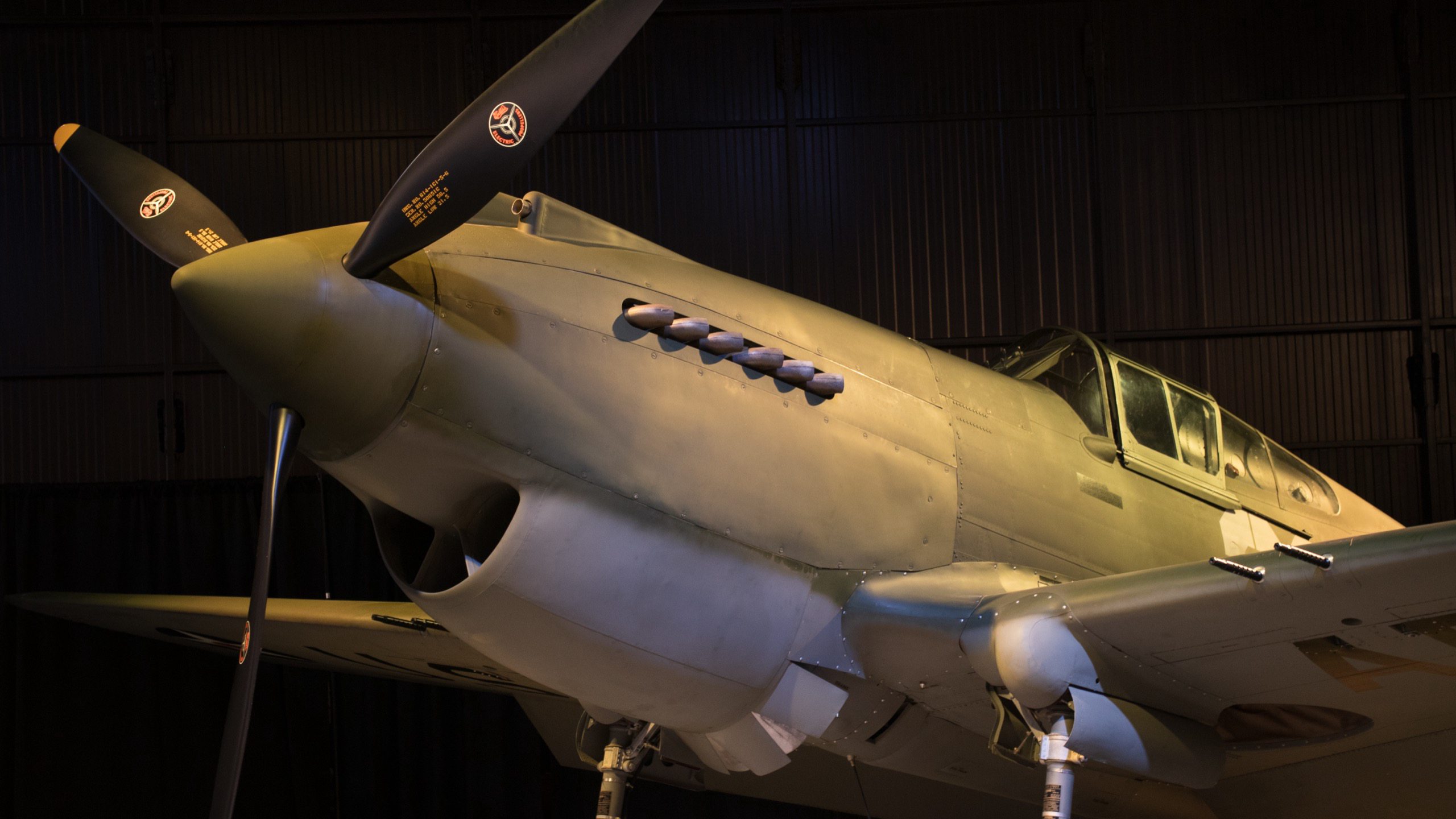

The Curtiss P-40B Tomahawk occupies a remarkable place in American aviation history as one of the few surviving aircraft known to have been present during the Japanese attack on Pearl Harbor on December 7, 1941. The American Heritage Museum’s P-40B, serial number 41-13297, is widely recognized as the only surviving airworthy American fighter from that historic day, providing an extraordinary physical connection to the event that brought the United States into World War II.
Developed by the Curtiss-Wright Corporation of Buffalo, New York, the P-40 was among America’s most important early World War II fighters. Derived from the earlier P-36 Hawk, the P-40 replaced its radial engine with a more streamlined Allison V-1710 liquid-cooled V-12. The P-40B variant incorporated improved armor protection, self-sealing fuel tanks, and an armament of two .50-caliber machine guns mounted above the engine and four .30-caliber machine guns in the wings.
Although later Allied fighters would surpass its high-altitude performance, the P-40 was rugged, dependable, and effective at low to medium altitudes. Nearly 13,800 P-40s of all variants were manufactured, making it the third most-produced American fighter of World War II. The aircraft served in virtually every major theater, including with the legendary American Volunteer Group, better known as the Flying Tigers, in China.
The Museum’s P-40B was manufactured in early 1941 and delivered to the U.S. Army Air Corps that March. Assigned to the 19th Pursuit Squadron of the 18th Pursuit Group, it arrived at Wheeler Field on Oahu, Hawaii, in April 1941. Following a landing accident that October, the fighter was placed in a maintenance hangar for repairs.
When Japanese aircraft attacked Pearl Harbor and surrounding military installations on December 7, 1941, Wheeler Field was among their primary targets. Numerous American fighters were destroyed on the ground. Remarkably, P-40B 41-13297 survived undamaged inside its maintenance hangar, spared by the very accident that had temporarily grounded it.
Returned to flying condition, the aircraft’s service was tragically short-lived. On January 24, 1942, First Lieutenant Kenneth Wayne Sprankle lost control of the P-40 during a flight over Oahu’s rugged Ko’olau Mountains. The aircraft entered a spin and crashed, killing Sprankle. With only 56 recorded flight hours, the fighter’s wreckage remained on the remote mountainside for more than four decades.
Rediscovered in 1985, the aircraft was recovered through expeditions conducted in 1985 and 1989. A lengthy restoration effort, known as “Project Tomahawk,” incorporated surviving original components alongside parts recovered from two other early P-40s. The aircraft eventually joined The Fighter Collection at Duxford, England, and returned to flight in 2007, wearing its original Hawaiian assignment markings and aircraft number “284.”
Acquired for the Collings Foundation through the generosity of a dedicated benefactor in 2013, this exceptionally rare fighter is now preserved at the American Heritage Museum. Its survival, restoration, and connection to Pearl Harbor offer a powerful tribute to the American aviators who served and sacrificed during the opening months of World War II.
Exhibit Location: The Curtiss P-40B Tomahawk is on permanent public display in the Pacific War Gallery of the American Heritage Museum in Hudson, Massachusetts.