Artifacts
Cromwell IV (A27M)
British Cruiser Tank | World War II (1944–1945)
| General Information | |
|---|---|
| Model | Cromwell IV (A27M) |
| Class | Armor |
| Type | Cruiser Tank |
| Use | Military |
| Era | 1940-1945 |
| Gallery Focus | WWII European Theater |
| Manufacturer | London – Midland and Scottish Railway, English Electric, Leyland Motors, Morris Motors |
| Year | 1944 |
| Country | United Kingdom |
| Ownership | CF Inc. |
| Gallery Location | D-Day |
| Status | Operational, Offline |
Additional Photos
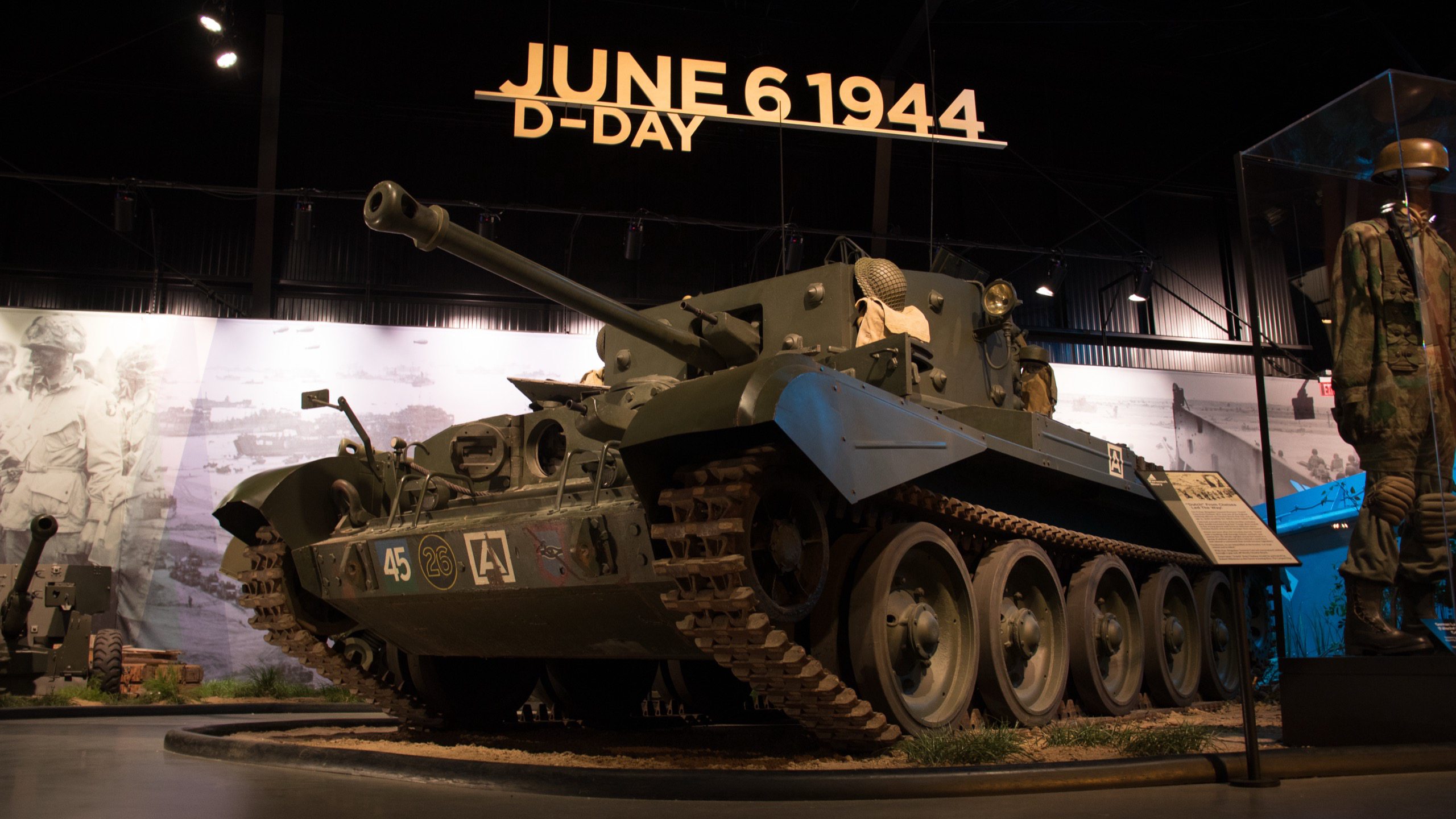
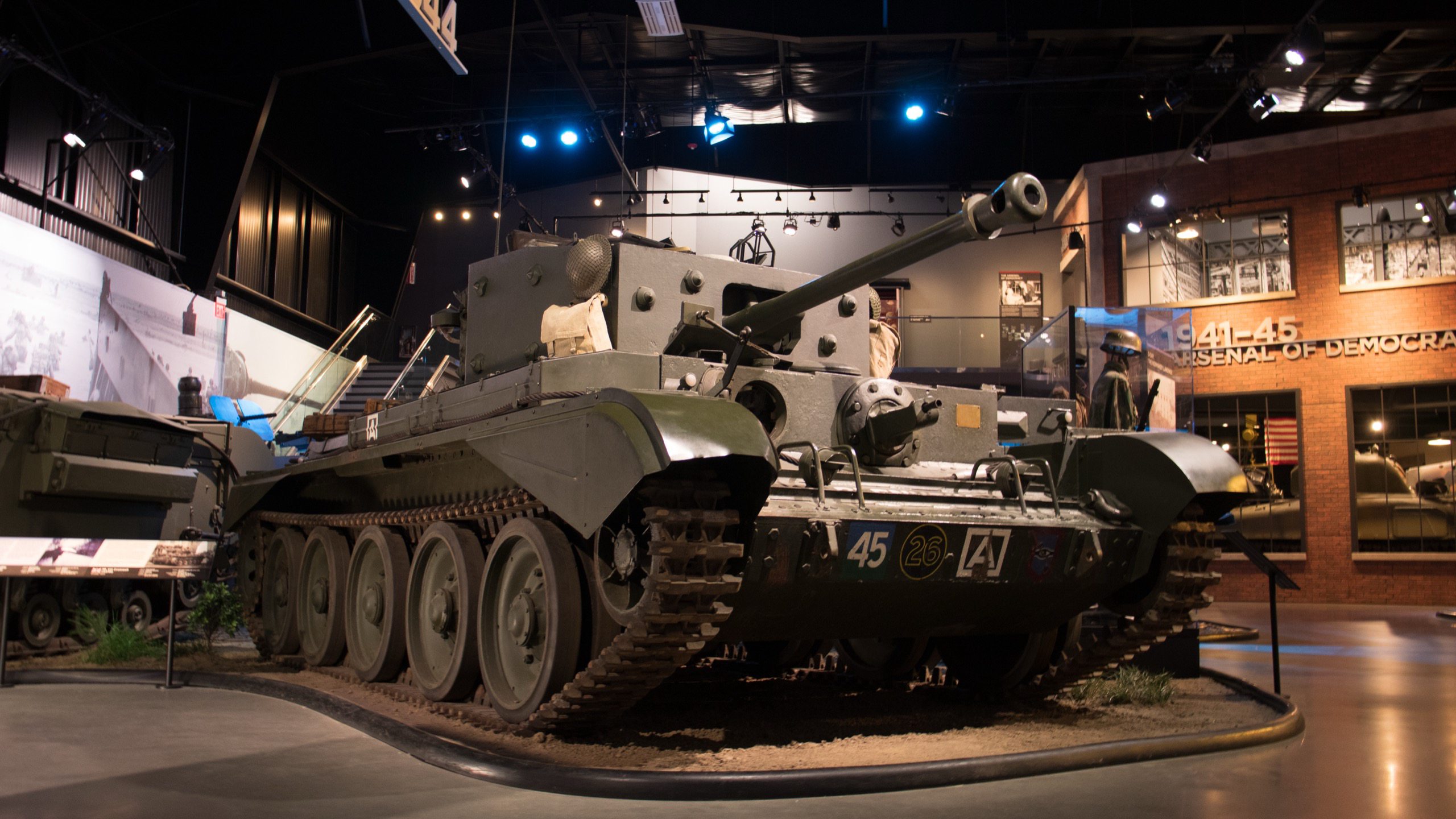
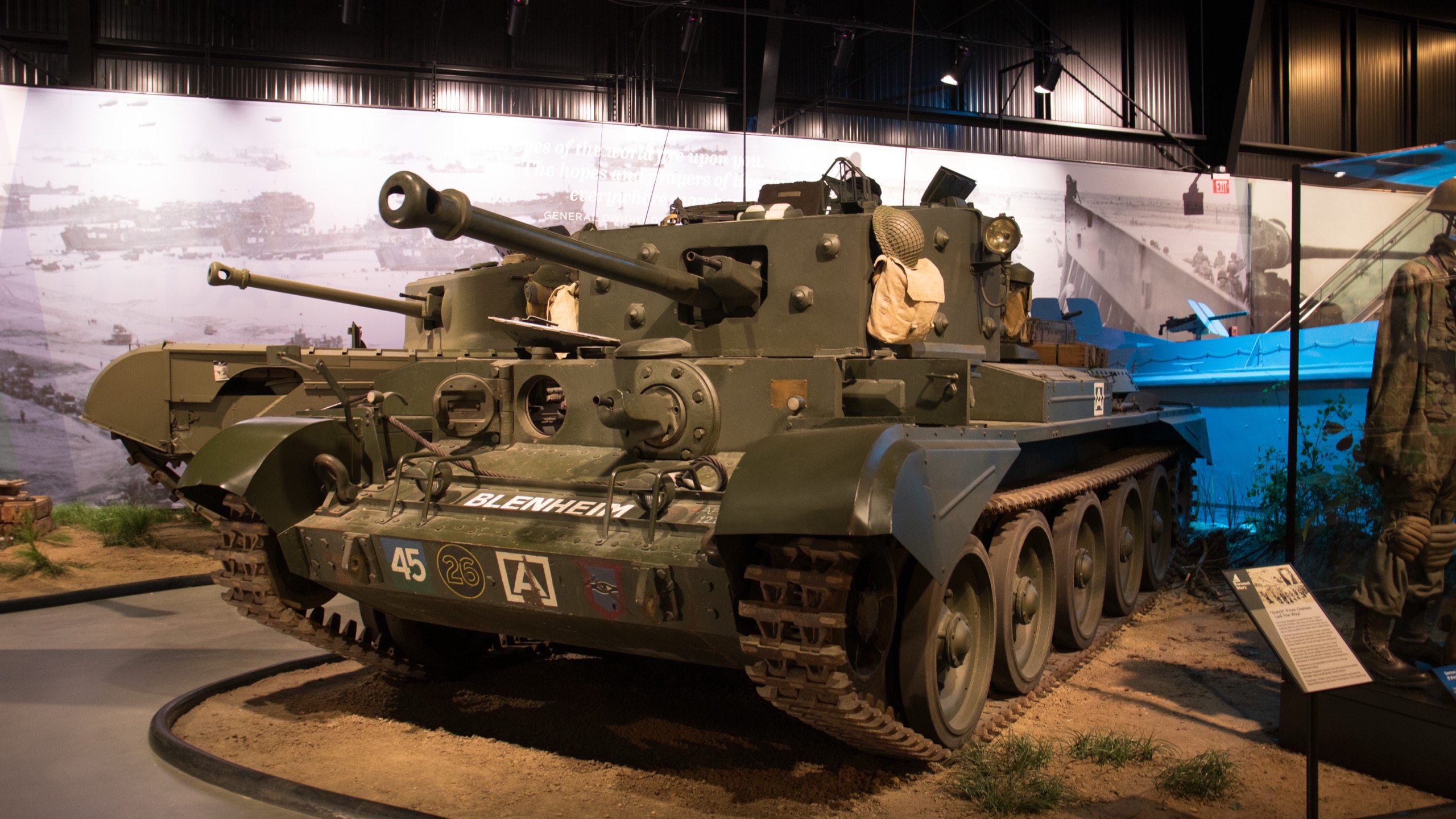
The Cromwell IV was one of Britain’s most successful cruiser tanks of World War II, combining exceptional speed, mechanical reliability, and effective firepower in a highly mobile armored fighting vehicle. Officially designated the Cruiser Tank Mk VIII, Cromwell (A27M), it was named after Oliver Cromwell, the English military and political leader of the 17th century. Developed to replace earlier British cruiser tanks, the Cromwell became an important component of Allied armored operations during the liberation of Western Europe.
The Cromwell’s greatest innovation was its powerful 600-horsepower Rolls-Royce Meteor V12 gasoline engine, derived from the legendary Merlin aircraft engine that powered Britain’s Spitfire and Hurricane fighters. Combined with a Merritt-Brown transmission and Christie suspension, the Meteor provided remarkable mobility. Capable of reaching approximately 40 mph under ideal conditions, the Cromwell was among the fastest tanks fielded by the British Army, although operational speeds were generally restricted to approximately 32 mph to reduce mechanical wear.
The Cromwell IV was the most numerous variant produced, with more than 1,900 examples manufactured. Many were originally constructed as Centaur tanks and completed or converted with the more powerful Meteor engine. Armed with a 75mm Ordnance QF main gun, the Cromwell IV could fire both armor-piercing and high-explosive ammunition, providing greater versatility against enemy vehicles, infantry, and fortified positions than earlier 6-pounder-equipped models. Two 7.92mm Besa machine guns provided additional defensive firepower. Operated by a five-man crew, the approximately 28-ton tank featured armor protection of up to three inches, balancing survivability with battlefield mobility.
The Cromwell entered combat during the Normandy Campaign in June 1944, serving prominently with the British 7th Armoured Division, the famous “Desert Rats,” and reconnaissance regiments of other Allied armored formations. Although its 75mm gun was less effective against heavily armored German Panther and Tiger tanks, the Cromwell excelled in mobile operations, where speed, maneuverability, and reliability were essential.
Following the Allied breakout from Normandy, Cromwell tanks played an important role in the rapid advance across France and Belgium, including operations that liberated Brussels and Antwerp in September 1944. Their performance helped demonstrate the value of highly mobile armored forces and influenced the development of Britain’s more heavily armed Comet tank.
The surviving Cromwell IV displayed in the American Heritage Museum’s D-Day Gallery represents an important achievement in British armored engineering and the vital contribution of British tank crews to the liberation of Europe.