Artifacts
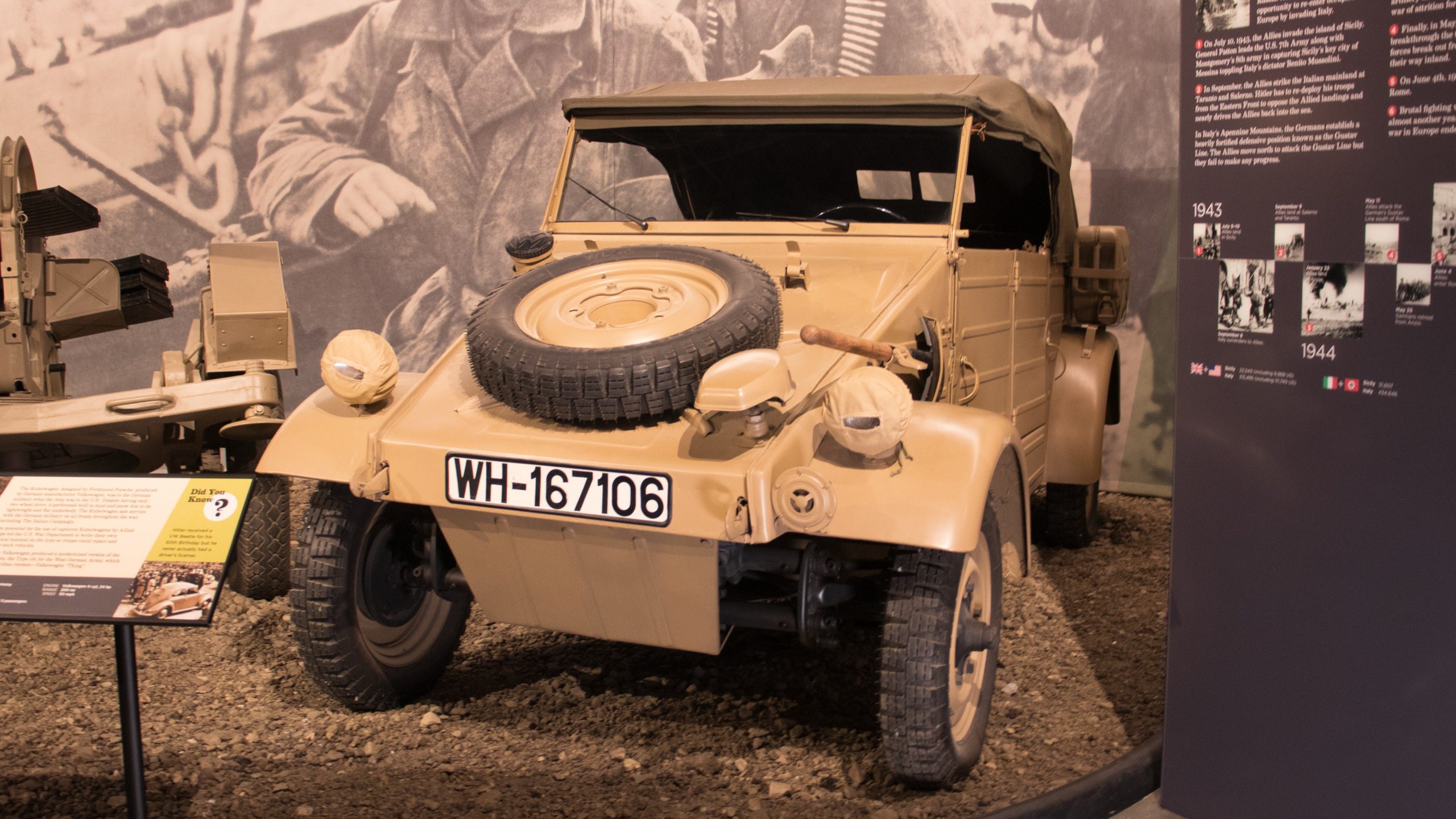
Type 82 Kübelwagen
Germany | 1940–1945 | World War II – Italian Campaign
| General Information | |
|---|---|
| Model | Type 82 Kübelwagen |
| Class | Military Vehicle |
| Type | Light Utility |
| Use | Military |
| Era | 1940-1945 |
| Gallery Focus | WWII European Theater |
| Manufacturer | Volkswagen |
| Year | 1941 |
| Country | Germany |
| Ownership | CF Inc. |
| Gallery Location | Italian Campaign |
| Status | Operational, Offline |
Additional Photos
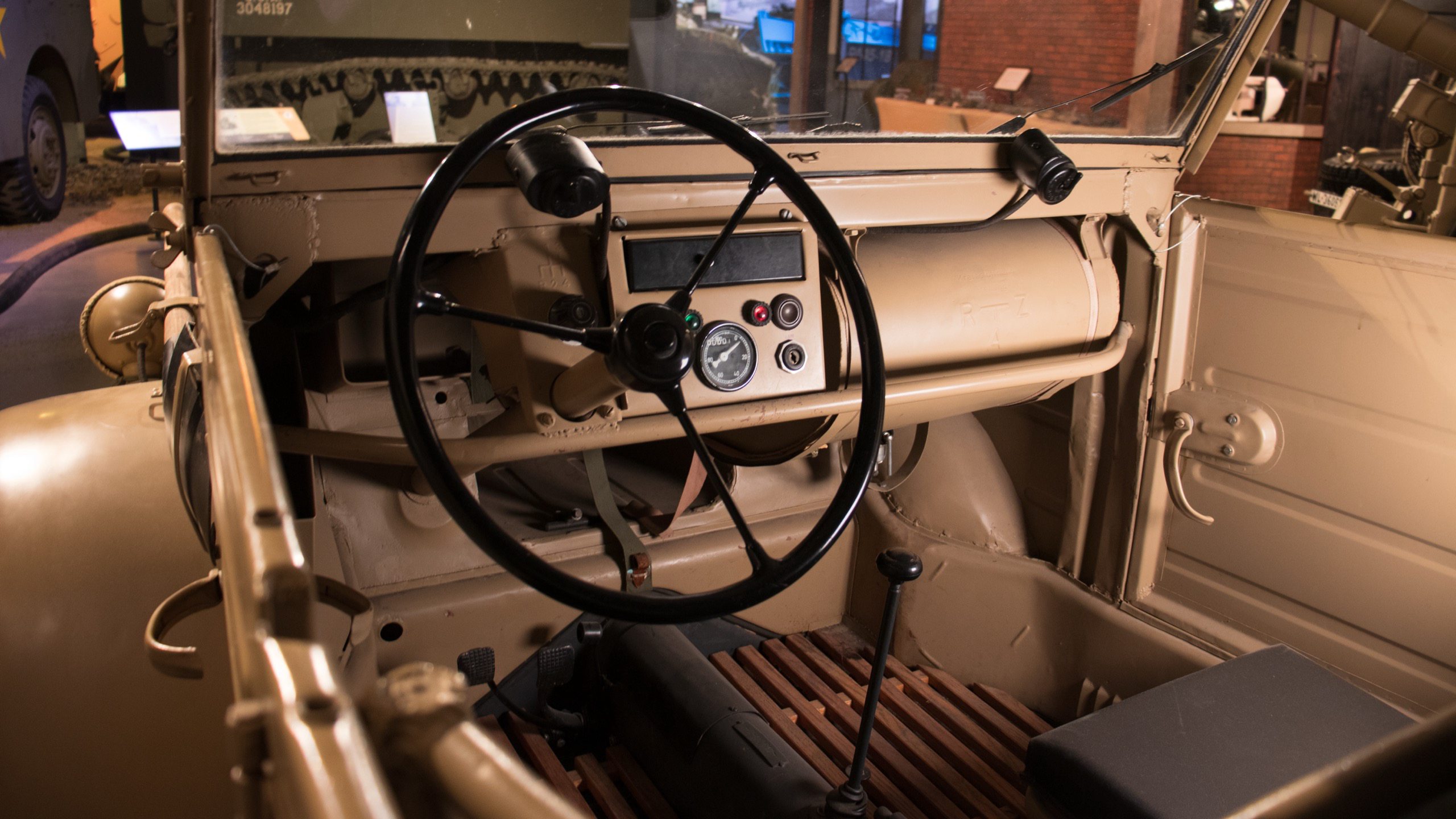
The German Volkswagen Type 82 Kübelwagen was one of the most recognizable and widely used light military vehicles of World War II. Designed by Ferdinand Porsche and manufactured by Volkswagen, the Kübelwagen served much the same purpose for the German military as the Jeep did for American forces. Its lightweight construction, reliability, and impressive cross-country mobility made it indispensable for reconnaissance, communications, and personnel transportation across nearly every theater of the war.
Developed from the Volkswagen KdF-Wagen, the predecessor of the famous Volkswagen Beetle, the Kübelwagen entered mass production in 1940. Its distinctive angular body accommodated four occupants and was powered by a rear-mounted, air-cooled four-cylinder engine producing approximately 25 horsepower in later models. Despite having only rear-wheel drive, its lightweight construction, high ground clearance, specialized reduction gearing, and self-locking differential provided remarkable traction across mud, sand, snow, and rough terrain. The vehicle could reach speeds approaching 50 mph on roads.
During the Italian Campaign of 1943–1945, German forces relied upon Kübelwagens for reconnaissance, command, and liaison missions throughout the mountainous Italian countryside. Italy’s steep mountain roads, narrow village streets, muddy valleys, and damaged transportation infrastructure created considerable challenges for military vehicles. The Kübelwagen’s compact dimensions and off-road capabilities allowed German units to move personnel, deliver messages, and transport essential supplies between widely dispersed defensive positions.
Although unarmored and generally unarmed, the Kübelwagen’s simplicity and versatility made it a valuable battlefield asset. Captured examples were occasionally employed by Allied forces, prompting the U.S. War Department to publish an official technical manual in June 1944 detailing their operation, maintenance, and repair.
Approximately 50,000 Type 82 Kübelwagens were manufactured during World War II. Their successful design later influenced Volkswagen’s Type 181 military utility vehicle, introduced in 1969 and subsequently marketed to American civilians as the Volkswagen “Thing.”
Displayed in the American Heritage Museum’s Italian Campaign Gallery, the Type 82 Kübelwagen illustrates the essential role of lightweight transportation and battlefield mobility during the prolonged Allied campaign to liberate Italy.