Artifacts
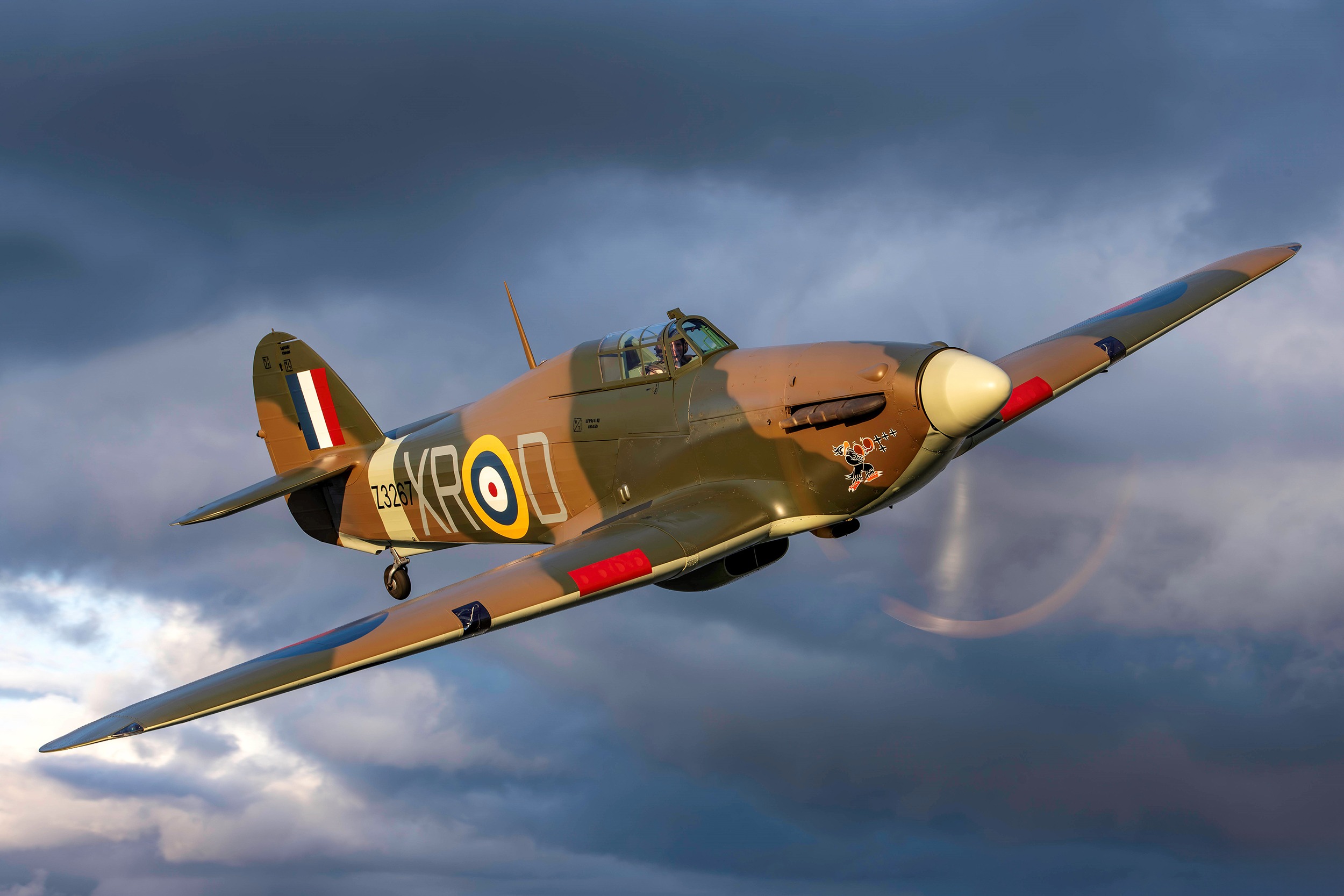
Supermarine Spitfire Mk.IX
United Kingdom | 1942–1945 | World War II – Air War Over Europe

| General Information | |
|---|---|
| Model | Spitfire Mk.IX |
| Class | Aircraft |
| Type | Fighter |
| Use | Military |
| Era | 1940-1945 |
| Gallery Focus | WWII European Theater |
| Manufacturer | Supermarine |
| Year | 1942 |
| Country | United Kingdom |
| Ownership | CF Inc. |
| Gallery Location | N/A |
| Status | Operational, Online |
Few surviving Allied fighter aircraft possess a combat history as extraordinary as Supermarine Spitfire Mk.IX BR601. One of the earliest examples of this legendary British fighter, BR601 completed 116 combat missions over occupied Europe and was flown by two celebrated Allied aces. Its survival offers a remarkable connection to a pivotal period when the Royal Air Force struggled to regain air superiority against Germany’s Luftwaffe.
Designed by R.J. Mitchell and first flown in 1936, the Supermarine Spitfire became an enduring symbol of British resistance during World War II. By late 1941, however, the Luftwaffe’s powerful new Focke-Wulf Fw 190 had gained a significant performance advantage over the RAF’s Spitfire Mk.V. British engineers responded by adapting the existing Spitfire airframe to accommodate the Rolls-Royce Merlin 61 engine, featuring a revolutionary two-stage, two-speed supercharger. Producing approximately 1,565 horsepower, this improved powerplant dramatically increased speed, climb rate, and high-altitude performance.
The resulting Spitfire Mk.IX entered service in the summer of 1942, helping restore the RAF’s ability to challenge German fighters over occupied Europe. Originally intended as an interim solution, the Mk.IX proved so successful that more than 5,600 examples were eventually manufactured, making it the most-produced Spitfire variant.
The American Heritage Museum’s BR601 was the sixth Spitfire Mk.IX completed, making its first flight on June 16, 1942. Following delivery to the RAF, the aircraft was ferried by Polish Air Transport Auxiliary pilot Stefania Wojtulanis to RAF Hornchurch, where it joined No. 64 Squadron. On July 28, 1942, BR601 participated in one of the first operational missions flown by the new Mk.IX, a fighter sweep over German-occupied France.
Over the following months, BR601 participated in dangerous fighter sweeps, bomber escort missions, and offensive operations across the English Channel. Among its pilots was Australian ace Frederick Anthony Owen “Tony” Gaze, who famously engaged a German Fw 190 in October 1942. During the encounter, Gaze’s aircraft became covered in ice after passing through the enemy fighter’s condensation trail, temporarily blinding him before he escaped.
BR601 was also flown by Squadron Leader Colin Falkland Gray, New Zealand’s highest-scoring fighter ace of World War II, credited with 27½ aerial victories. On October 21, 1942, Gray experienced a burst tire while landing BR601, damaging its undercarriage and wing. Remarkably, this was among the aircraft’s most serious recorded wartime accidents.
Following repairs, BR601 continued operational service with several RAF and Allied units, including Nos. 453, 129, 316 (Polish), and 165 Squadrons. By the end of its combat career, the aircraft had completed an extraordinary 116 missions, including approximately 58 providing fighter cover and escort for Allied bombers.
BR601’s postwar survival is nearly as remarkable as its combat record. Transferred to the South African Air Force in 1949, it served as aircraft 5631 before being relegated to ground instruction and eventually sold for scrap. After years in a scrapyard, the Spitfire was restored for static display in 1976 and mounted on a pole, its remarkable wartime history largely unrecognized.
Recovered in 1986, BR601 eventually underwent an extensive international restoration involving specialists in New Zealand and the United Kingdom. On August 31, 2016, the aircraft triumphantly returned to flight following restoration at Biggin Hill Heritage Hangar in England. The following year, it received the World War II Reserve Grand Champion award at EAA AirVenture Oshkosh.
Today, BR601 stands as an exceptionally rare flying survivor of the desperate aerial battles over Europe, honoring the courage of the Allied pilots who fought to secure victory in World War II.
Current Location and Future Exhibit: The Spitfire remains in flying condition and is currently stored in a private hangar in Albany, New York, where it is not available for public viewing. It is planned for permanent exhibition within the American Heritage Museum’s proposed Aviation Wing expansion as part of the World War II in Europe aviation galleries.