Artifacts
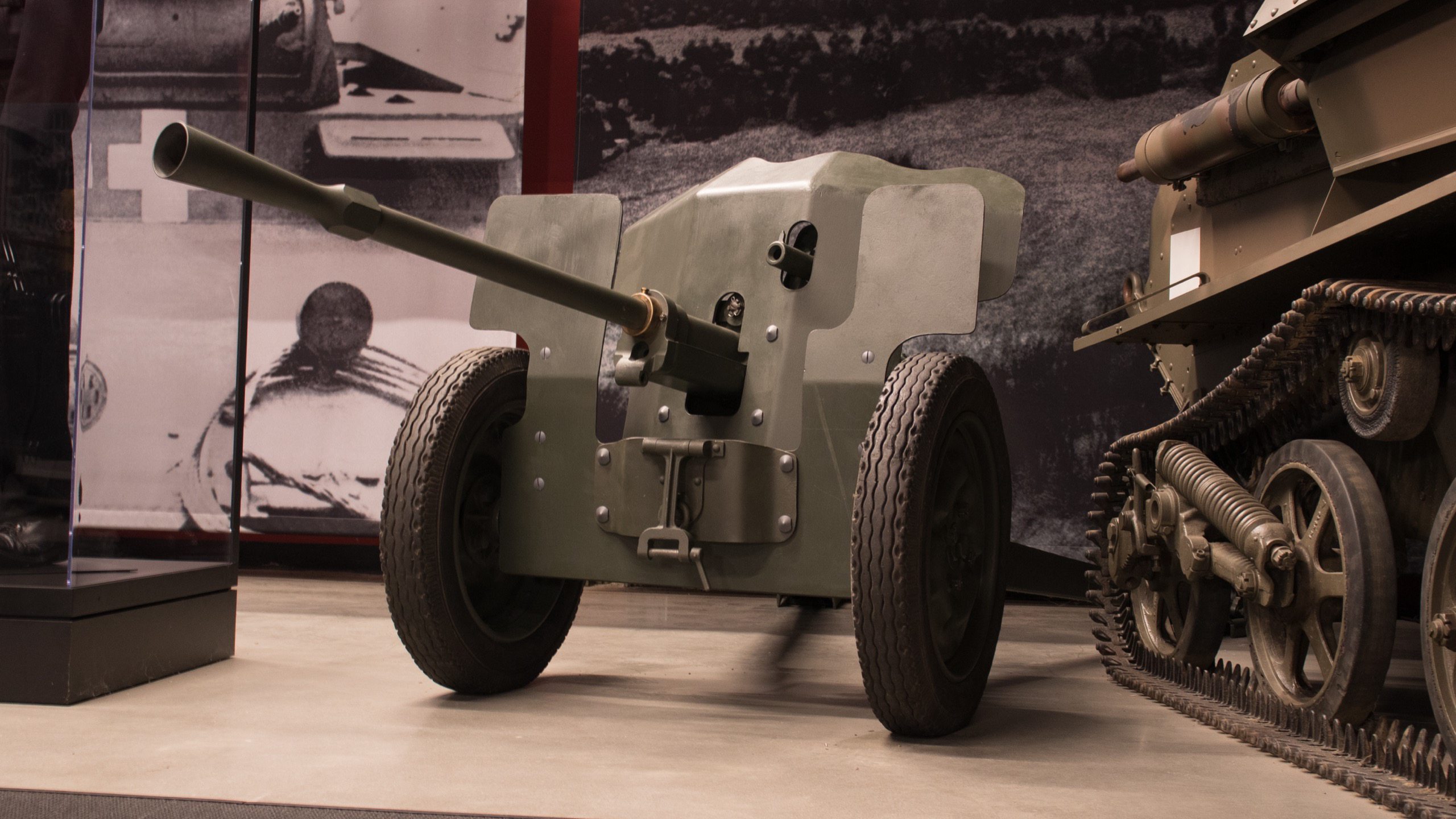
25mm Hotchkiss Anti-Tank Gun
French anti-tank gun
| General Information | |
|---|---|
| Model | 25mm Hotchkiss Anti-Tank Gun |
| Class | Artillery |
| Type | Anti-Tank Gun |
| Use | Military |
| Era | 1935-1945 |
| Gallery Focus | WWII European Theater |
| Manufacturer | Hotchkiss |
| Year | 1934 |
| Country | France |
| Ownership | CF Inc. |
| Gallery Location | War Clouds |
| Status | Static Only |
Additional Photos
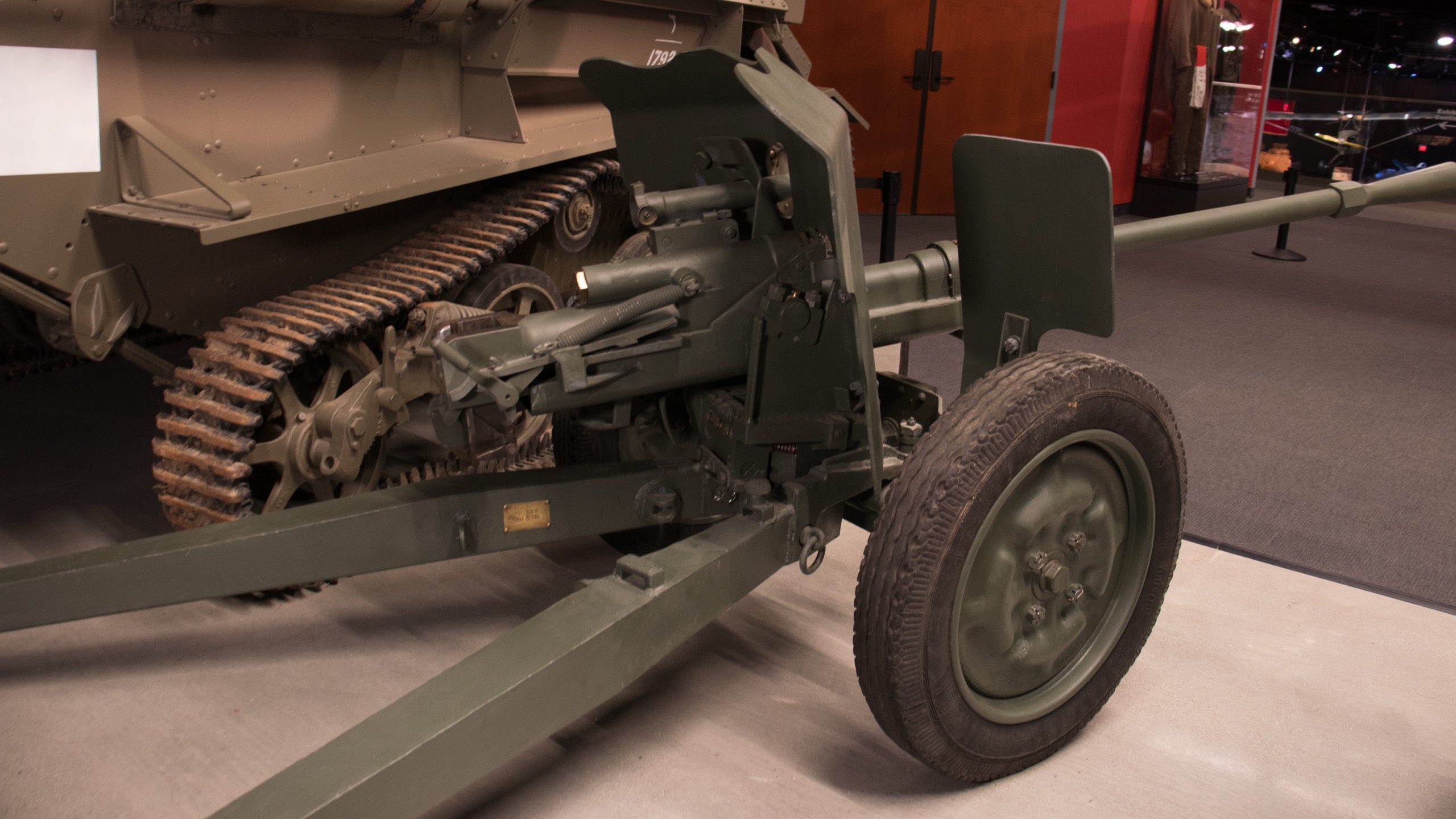
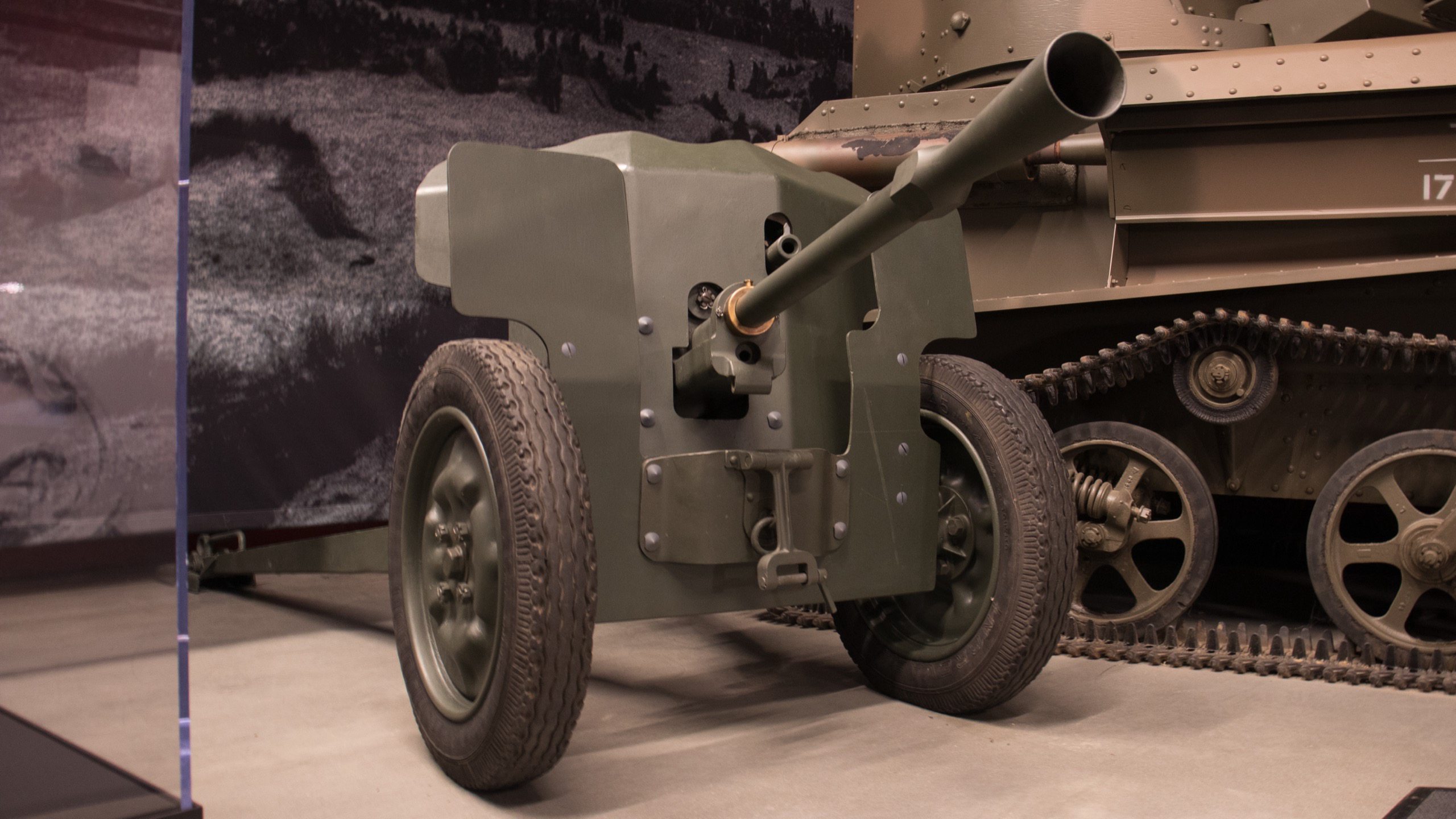
The French 25mm Hotchkiss Anti-Tank Gun was one of the principal anti-tank weapons employed by the French Army during the opening stages of World War II. Developed during the 1920s and adopted in 1934, the weapon reflected France’s growing concern over the emergence of increasingly powerful armored vehicles and the need for effective defenses against them.
Officially designated the Canon de 25 mm Semi-Automatique Modèle 1934, the Hotchkiss was designed to be relatively lightweight, mobile, and capable of engaging enemy tanks with high-velocity armor-piercing ammunition. Its compact profile made it easier to conceal in defensive positions, while its mobility allowed crews to reposition the gun as battlefield conditions changed.
By the German invasion of France in May 1940, thousands of 25mm Hotchkiss guns equipped French infantry and anti-tank formations. The British Expeditionary Force also received approximately 300 guns to supplement its limited supply of anti-tank weapons. British troops sometimes transported them on trucks in a configuration known as portée, improving mobility across the battlefield.
During the Battle of France, the Hotchkiss proved effective against lightly armored German vehicles, including the Panzer I and Panzer II. Its high-velocity projectiles could also penetrate vulnerable areas of some heavier Panzer III and Panzer IV tanks, particularly at close range. At the Battle of Stonne in May 1940, French anti-tank crews demonstrated the weapon’s potential in determined defensive fighting against advancing German armored formations.
Despite these successes, the gun’s small 25mm projectile often produced limited damage after penetrating enemy armor, while increasing armor protection reduced its effectiveness. Following France’s defeat in June 1940, substantial numbers were captured and subsequently employed by German forces.
Displayed in the American Heritage Museum’s War Clouds Gallery, the Hotchkiss represents the rapid evolution of armored warfare during the 1930s and the desperate defensive battles fought by France and its allies as World War II engulfed Western Europe.