Artifacts
Caudron G.4 Twin-Engine Bomber
France | 1915–1918 | World War I – Reconnaissance and Bombing
| General Information | |
|---|---|
| Model | Caudron G.4 |
| Class | Aircraft |
| Type | Bomber |
| Use | Military |
| Era | 1914-1919 |
| Gallery Focus | WWI / Great War |
| Manufacturer | Caudron |
| Year | 1916 |
| Country | FranceUnited States |
| Ownership | Donor, Pending Donation |
| Gallery Location | N/A |
| Status | Restoration |
The Caudron G.4 represents a remarkable turning point in military aviation, becoming one of the world’s first twin-engine aircraft to see widespread combat service. Developed by French aviation pioneers René and Gaston Caudron during World War I, this distinctive biplane helped establish the airplane as an effective platform for aerial reconnaissance and bombing, fundamentally changing the nature of warfare.
First flown in March 1915, the Caudron G.4 evolved from the successful single-engine Caudron G.3 reconnaissance aircraft. Recognizing the limitations of the earlier design, particularly its restricted payload and defensive armament, the Caudron brothers developed a larger aircraft powered by two 80-horsepower Le Rhône rotary engines mounted between its wings. The unusual configuration featured a short central crew nacelle, twin tail booms, and four vertical rudders. With the engines positioned on either side of the fuselage, an observer could occupy the forward cockpit with an unobstructed field of fire for a defensive machine gun.
The aircraft’s twin-engine arrangement provided improved performance, greater reliability, and the ability to carry approximately 220 pounds of bombs. Its generous wing area and excellent climbing capabilities made the G.4 particularly effective for reconnaissance over enemy positions and operations in mountainous terrain. Unlike modern aircraft, the G.4 employed wing warping rather than conventional ailerons for lateral control, reflecting the rapidly evolving technology of early aviation.
Entering French military service in November 1915, the Caudron G.4 became an important Allied reconnaissance and light bomber. French crews conducted bombing raids deep behind German lines, sometimes reaching targets in the Rhineland. The aircraft also served with British, Italian, and Russian forces. Its impressive altitude performance proved especially valuable to Italian aviators operating over the Alps.
As faster and more heavily armed German fighters emerged, the increasingly vulnerable G.4 was gradually withdrawn from daylight bombing operations and reassigned to night missions and training duties. Nevertheless, approximately 1,400 examples were manufactured, making it one of the most successful early twin-engine military aircraft. The type also contributed to American military aviation, with the United States acquiring a small number for flight training during World War I.
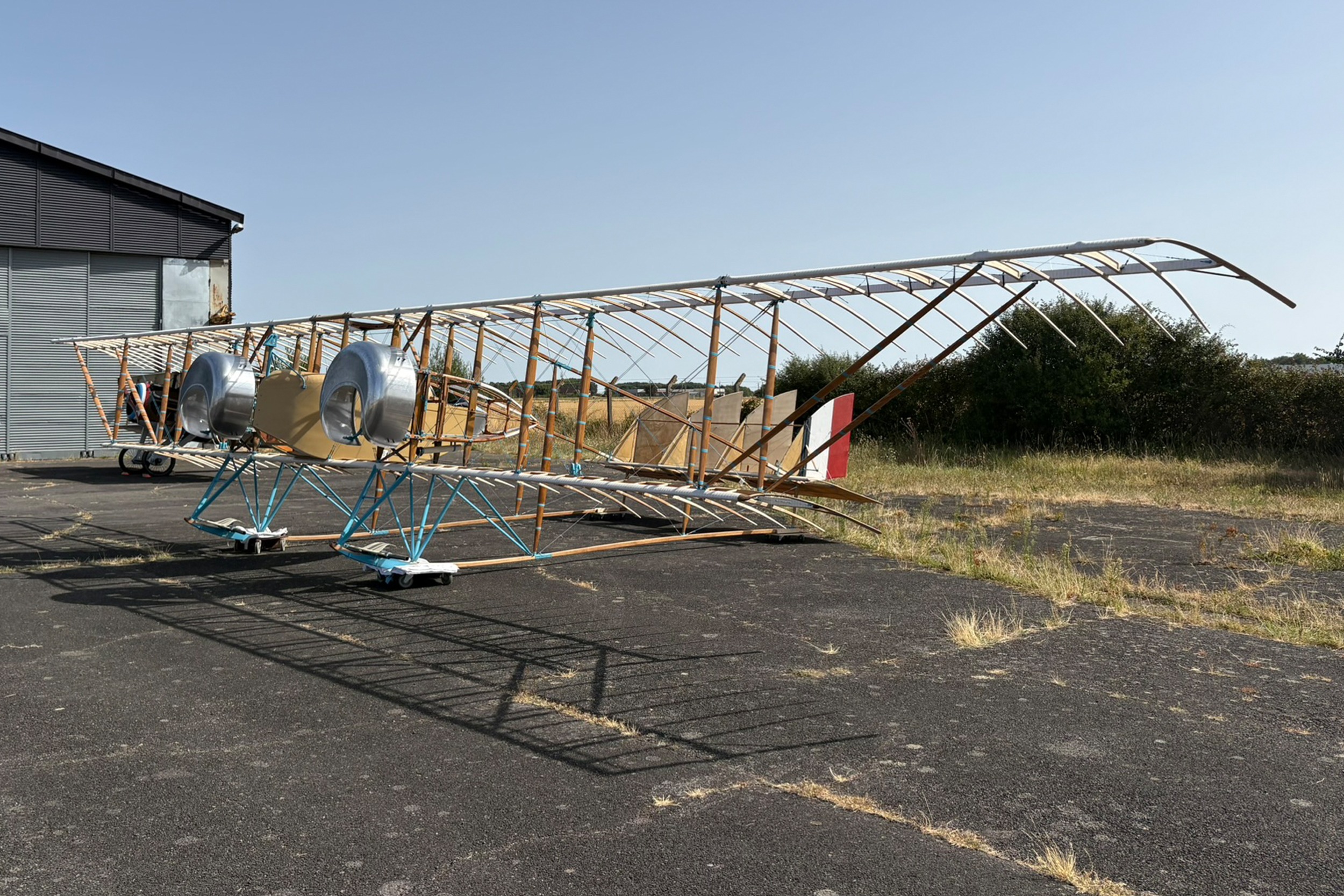
The American Heritage Museum’s Caudron G.4 is an exceptionally rare surviving example of this pioneering aircraft. Currently undergoing an extensive restoration in France at Tours-Sorigny Airfield, the project is being directed by historic aircraft restoration specialist Antoine Ros and his team at Early Aviators. Their painstaking work seeks to preserve the aircraft’s remarkable engineering and restore its original appearance and mechanical functionality using historically appropriate materials and techniques.
Once completed, the Caudron G.4 will become a centerpiece of the American Heritage Museum’s expanded World War I aviation collection, joining other extraordinary aircraft from the earliest years of military flight.
Future Exhibit Location: The Caudron G.4 is being restored in France and is not currently on public display at the American Heritage Museum. Upon completion, it is planned for exhibition in ground-running condition within the Museum’s proposed Aviation Wing expansion, where visitors will be able to experience the engineering and mechanical character of this exceptionally rare World War I aircraft.