Artifacts
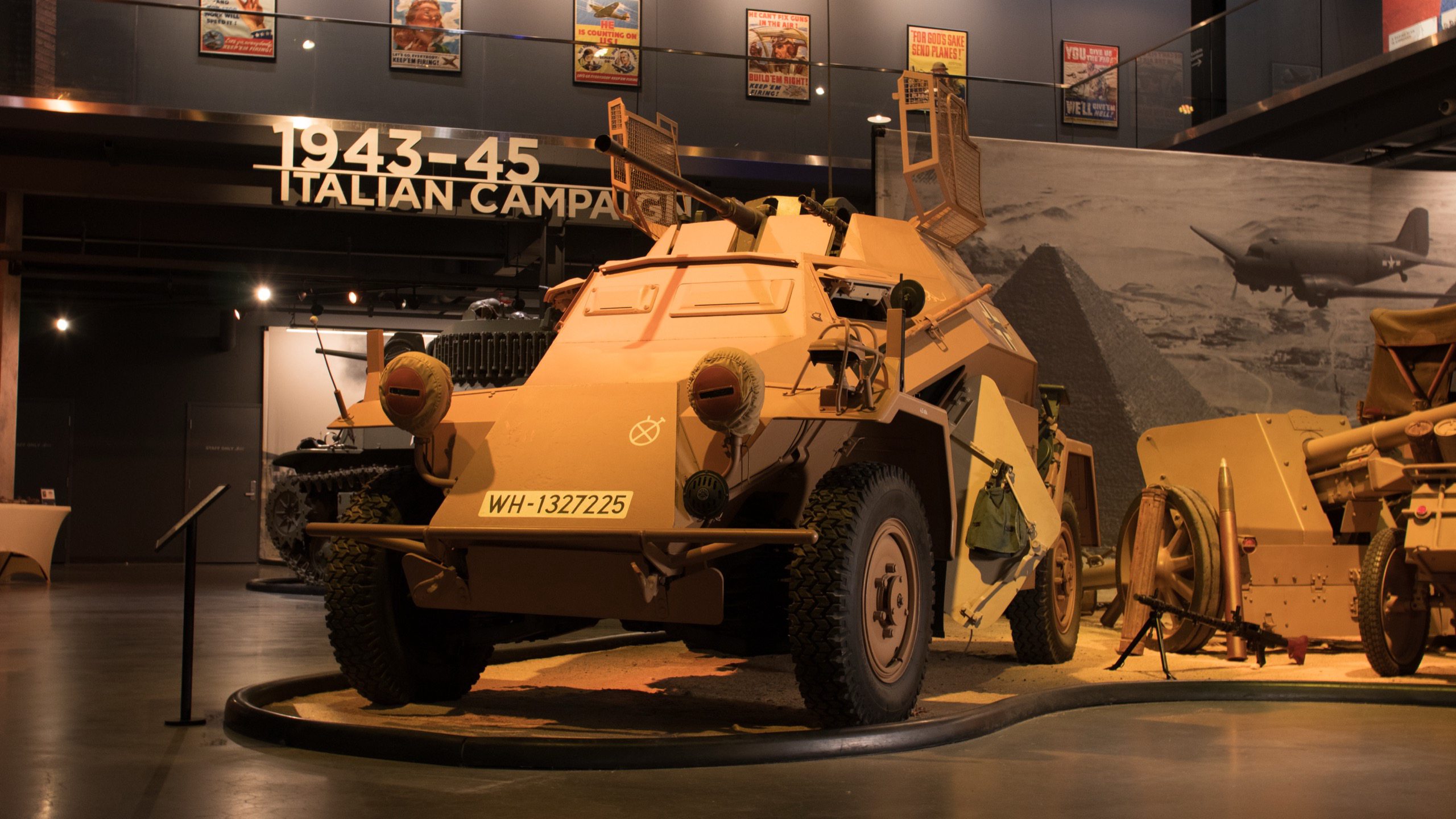
Sd.Kfz 222 Scout Car
Germany | 1937–1943 | World War II – North African Campaign
| General Information | |
|---|---|
| Model | Leichter Panzerspähwagen Sd.Kfz 222 |
| Class | Military Vehicle |
| Type | Armored Scout Car |
| Use | Military |
| Era | 1940-1945 |
| Gallery Focus | WWII European Theater |
| Manufacturer | Auto Union, F. Schichau |
| Year | 1940 |
| Country | Germany |
| Ownership | CF Inc. |
| Gallery Location | North Africa |
| Status | Operational, Offline |
Additional Photos
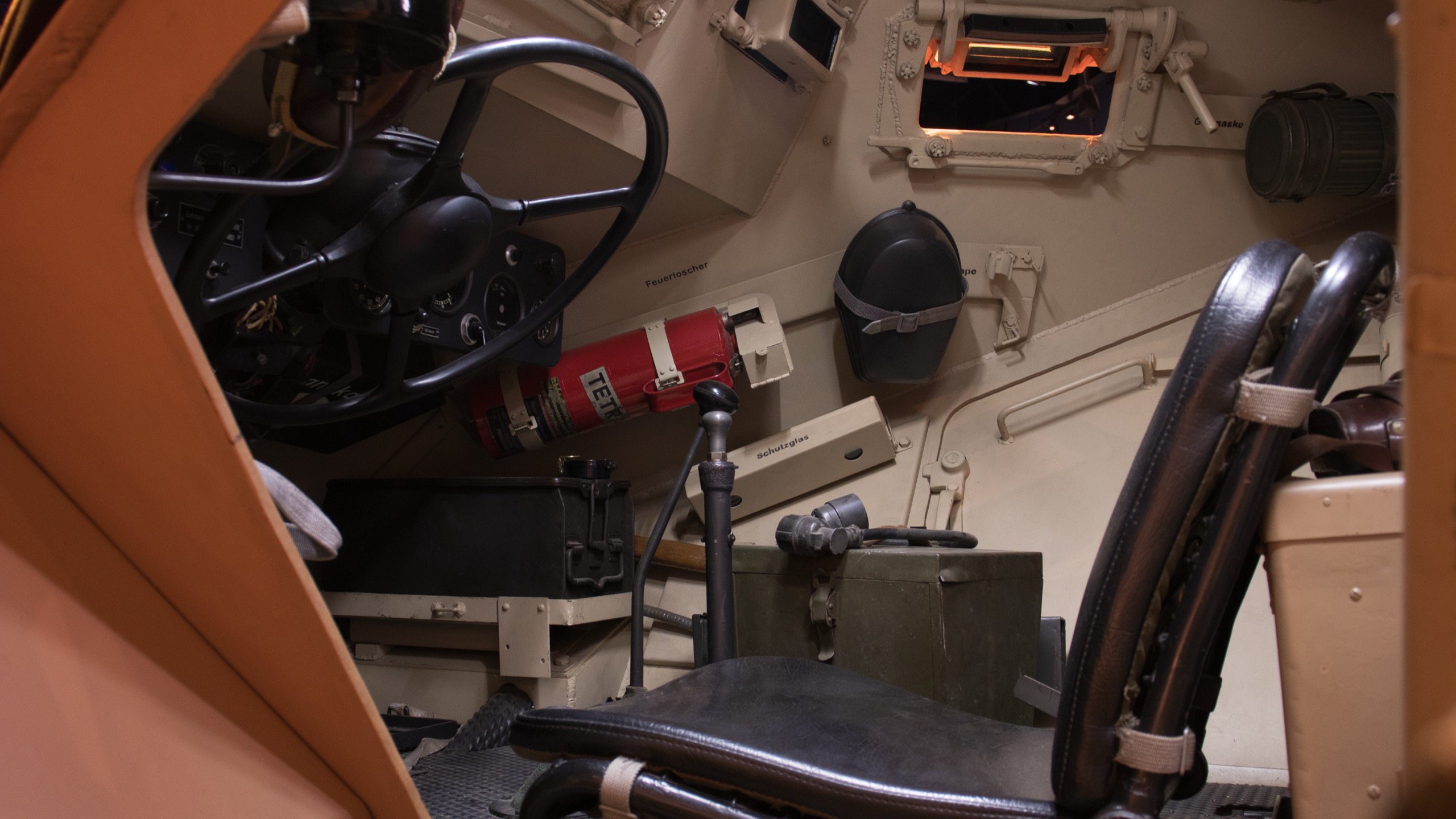
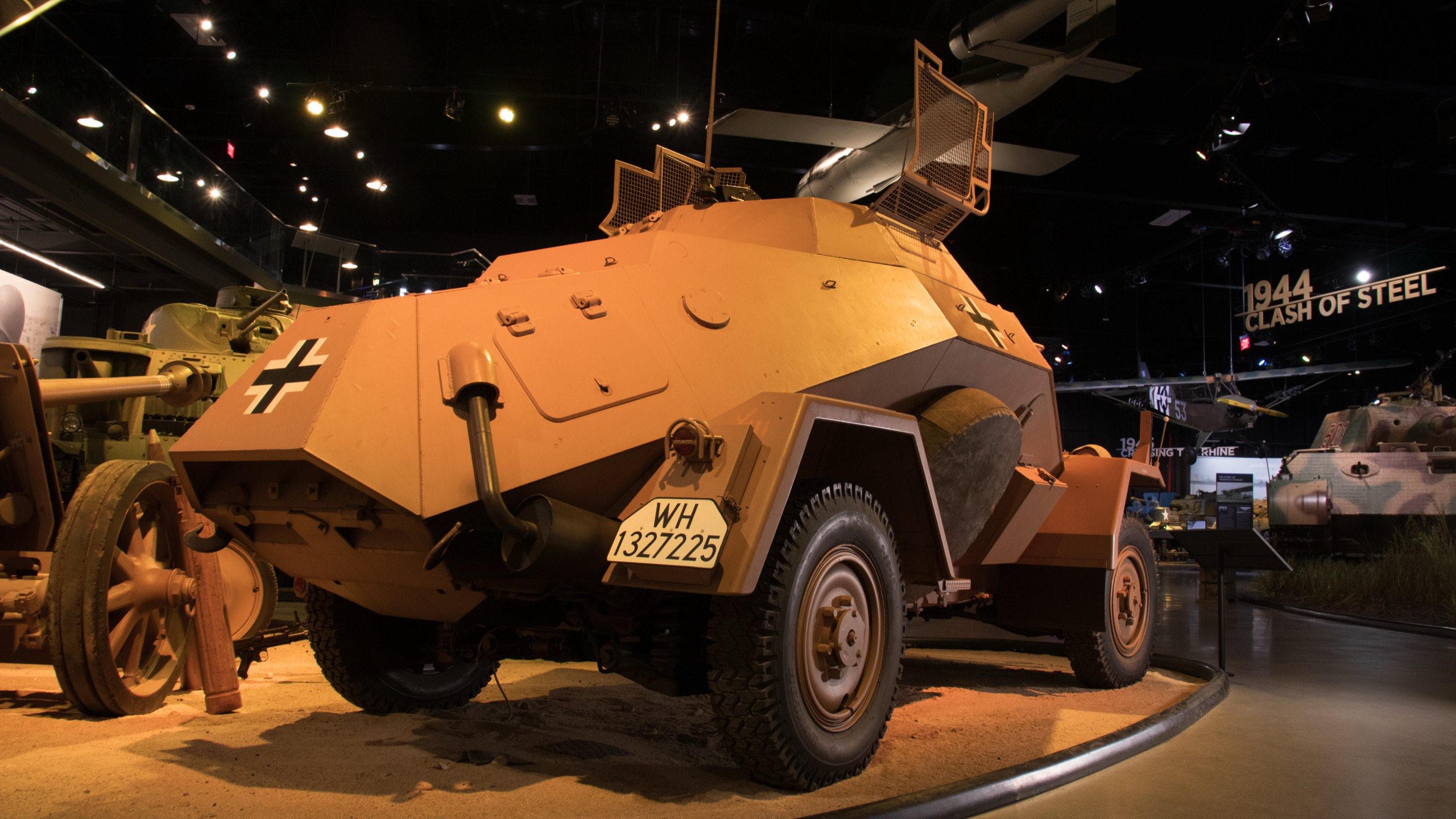
The German Leichter Panzerspähwagen Sd.Kfz. 222, meaning “Light Armored Reconnaissance Vehicle,” was one of Germany’s most recognizable armored scout cars of World War II. Designed to conduct reconnaissance, patrol enemy territory, and provide security for advancing armored formations, the Sd.Kfz. 222 played an important role in the North African Campaign, where mobility and intelligence gathering were essential to battlefield success.
Developed during the 1930s as an improvement over the lightly armed Sd.Kfz. 221, the Sd.Kfz. 222 featured a larger turret equipped with a rapid-firing 20mm KwK 30 or KwK 38 autocannon and a coaxial 7.92mm MG34 machine gun. Its three-man crew operated within a compact, lightly armored hull mounted on a four-wheel-drive Horch chassis. Powered by a V8 gasoline engine, the vehicle could reach speeds approaching 50 mph on roads. Its four-wheel steering system provided excellent maneuverability, while distinctive folding wire-mesh screens above the open turret offered some protection against grenades.
During the North African Campaign of 1941–1943, Sd.Kfz. 222 armored cars served with German reconnaissance battalions attached to the Afrika Korps and other armored formations. Operating across the deserts of Libya, Egypt, and Tunisia, these vehicles scouted Allied positions, screened advancing columns, maintained communications, and helped identify suitable routes for German tanks and supporting forces.
Although effective on roads and firm desert surfaces, the Sd.Kfz. 222 experienced difficulties in deep sand and rough terrain. Its relatively thin armor also left it vulnerable to anti-tank weapons and heavier Allied armored vehicles. These limitations eventually contributed to its replacement in frontline reconnaissance roles by more capable half-tracked vehicles, including the Sd.Kfz. 250.
Approximately 990 Sd.Kfz. 222 armored cars were manufactured during World War II, with only a handful of original examples surviving today.
The Sd.Kfz. 222 displayed at the American Heritage Museum has a remarkable history of its own. Manufactured in 1942, this vehicle was captured by British forces in North Africa in May 1943, during the final stages of the Tunisian Campaign. Transported to England for technical evaluation in 1944, it subsequently passed through several collections, including a period on display at the Imperial War Museum. It even appeared in the 1977 war film A Bridge Too Far.
In 1999, the Military Vehicle Technology Foundation, established by collector Jacques Littlefield, acquired the deteriorated vehicle and undertook an extensive restoration, completed largely by 2001. Its desert camouflage was recreated using evidence of original paint discovered during the restoration.
Displayed in the American Heritage Museum’s North Africa Gallery, this exceptionally rare Sd.Kfz. 222 offers visitors a tangible connection to the reconnaissance forces of the Afrika Korps and the demanding conditions of armored warfare in the North African desert.