Artifacts
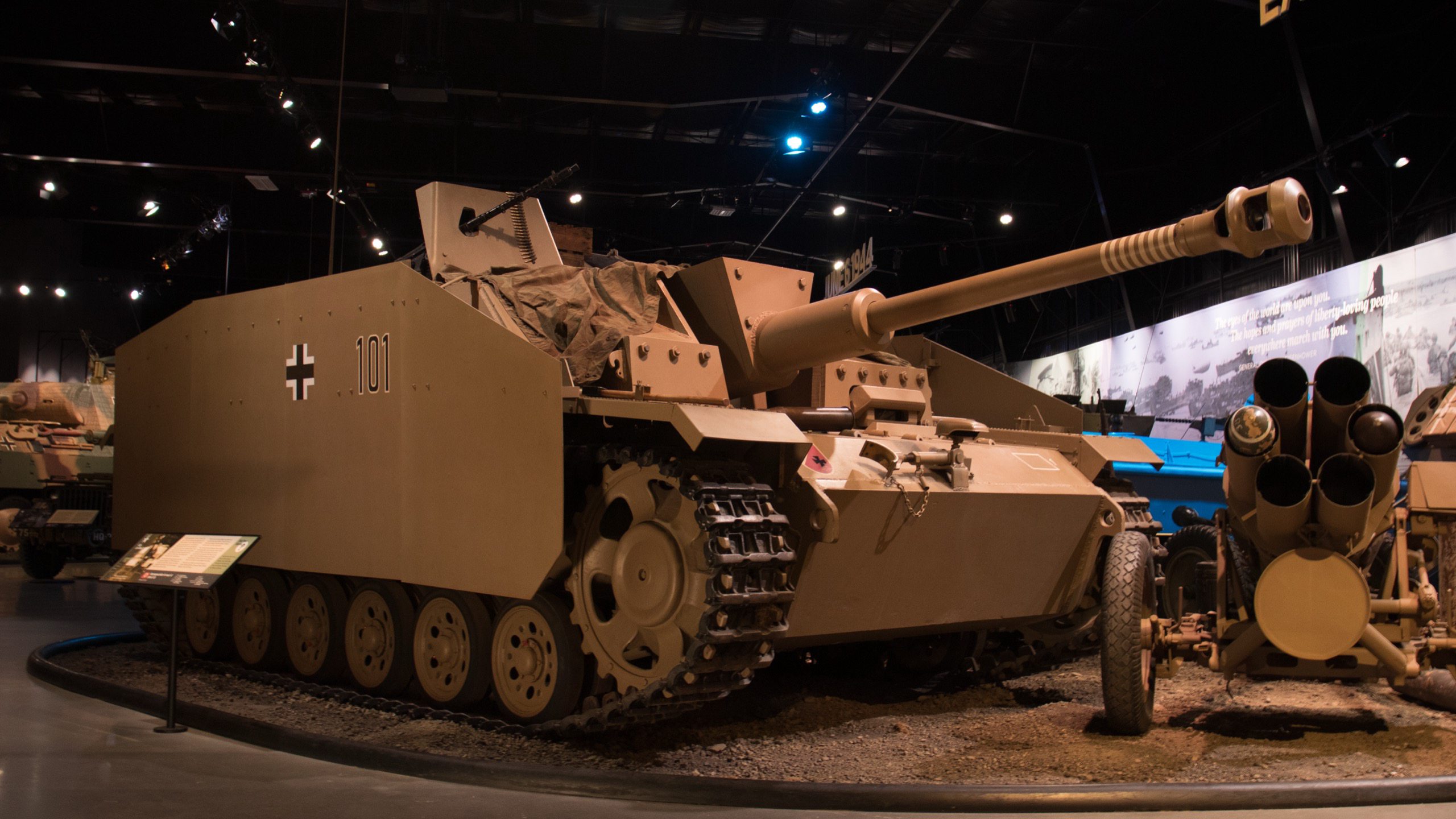
Sd.Kfz. 142/1 StuG III Ausf. G
German Assault Gun / Tank Destroyer | World War II (1942–1945)
| General Information | |
|---|---|
| Model | Sturmgeschütz Sd.Kfz. 142/1 StuG III Ausf. G |
| Class | Armor |
| Type | Self-Propelled Artillery |
| Use | Military |
| Era | 1940-1945 |
| Gallery Focus | WWII European Theater |
| Manufacturer | Alkett, MIAG |
| Year | 1943 |
| Country | Germany |
| Ownership | CF Inc. |
| Gallery Location | Eastern Front |
| Status | Operational, Offline |
Additional Photos
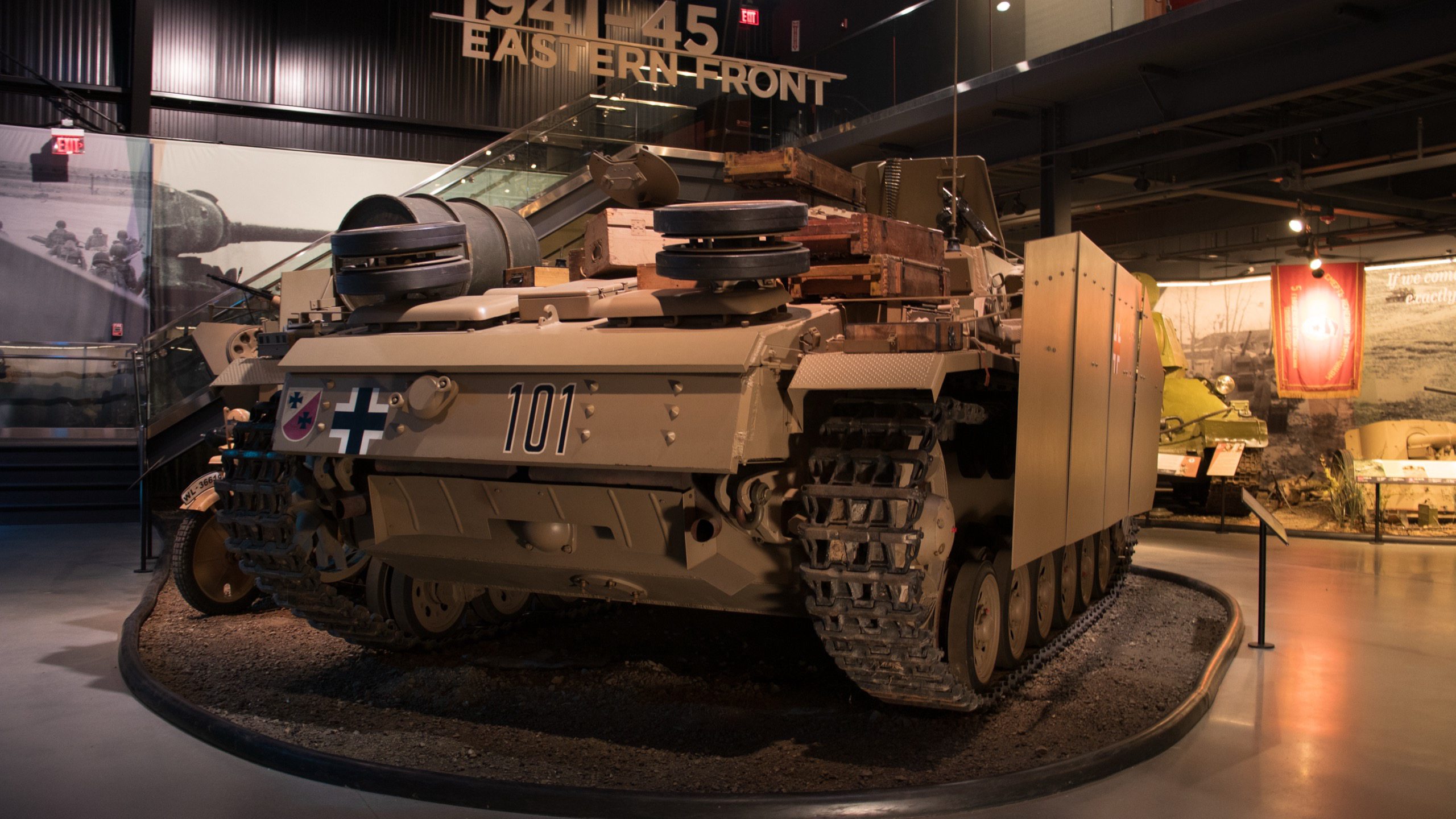
The Sturmgeschütz III (StuG III) was one of Germany’s most successful armored fighting vehicles of World War II, serving initially as a self-propelled assault gun before evolving into a formidable tank destroyer. Based on the chassis of the Panzer III medium tank, the StuG III combined a powerful cannon, effective armor protection, and a low silhouette that made it particularly dangerous in defensive combat.
Originally developed to provide close-range artillery support for German infantry, early StuG III models carried short-barreled 75mm guns designed to destroy fortifications and enemy strongpoints. However, encounters with heavily armored Soviet T-34 and KV-1 tanks on the Eastern Front prompted the introduction of more powerful anti-tank weapons. The definitive StuG III Ausführung G (Ausf. G), introduced in December 1942, featured a long-barreled 7.5cm StuK 40 L/48 cannon capable of penetrating the armor of many Allied tanks at considerable distances.
Unlike conventional tanks, the StuG III lacked a rotating turret. Its gun was mounted within a fixed, armored superstructure, limiting its horizontal traverse and requiring the crew to reposition the entire vehicle to engage targets outside the gun’s narrow firing arc. However, this simpler design reduced manufacturing costs and created an exceptionally low profile, making the StuG difficult to detect and ideal for ambush tactics.
Operated by a four-man crew, the approximately 24-metric-ton vehicle featured frontal armor up to 80mm thick and a 300-horsepower Maybach V12 engine, providing a maximum road speed of approximately 25 mph. Many Ausf. G vehicles incorporated additional protective side skirts, known as Schürzen, designed primarily to reduce the effectiveness of Soviet anti-tank rifle fire.
More than 7,800 StuG III Ausf. G vehicles were manufactured, making it the most numerous variant of Germany’s most-produced fully tracked armored fighting vehicle. The StuG III served extensively on the Eastern Front and was also supplied to Germany’s wartime partners, including Finland, Hungary, Romania, and Bulgaria.
The StuG III displayed at the American Heritage Museum was manufactured by Alkett in May 1943 and subsequently served with the Finnish Army during the Continuation War against the Soviet Union. Identified in Finnish service as Ps. 531-16, this particular vehicle served as a reserve assault gun during July 1944 and as a command vehicle in August.
Finnish crews affectionately nicknamed their StuGs “Sturmi.” During the fierce Soviet offensives of summer 1944, Finland’s StuG III units were credited with destroying 87 Soviet armored vehicles while losing just eight of their own, several deliberately destroyed by their crews to prevent capture.
The surviving StuG III Ausf. G displayed in the American Heritage Museum’s Eastern Front Gallery represents the evolution of German armored warfare and the intense fighting between German, Finnish, and Soviet forces during World War II. Its survival provides a rare connection to one of the most widely employed and effective tank destroyers of the conflict.