Artifacts
Soviet IS-2 Iosif Stalin
Soviet Union | 1944–1945 | World War II – Eastern Front & Battle of Berlin
| General Information | |
|---|---|
| Model | IS-2 Model 1944 Iosif Stalin II |
| Class | Armor |
| Type | Heavy Tank |
| Use | Military |
| Era | 1940-1945 |
| Gallery Focus | WWII European Theater |
| Manufacturer | Kirov Factory, Ural Heavy Machinery Factory (UZTM) |
| Year | 1944 |
| Country | Soviet Union |
| Ownership | CF Inc. |
| Gallery Location | Battle for Berlin |
| Status | Operational, Offline |
Additional Photos
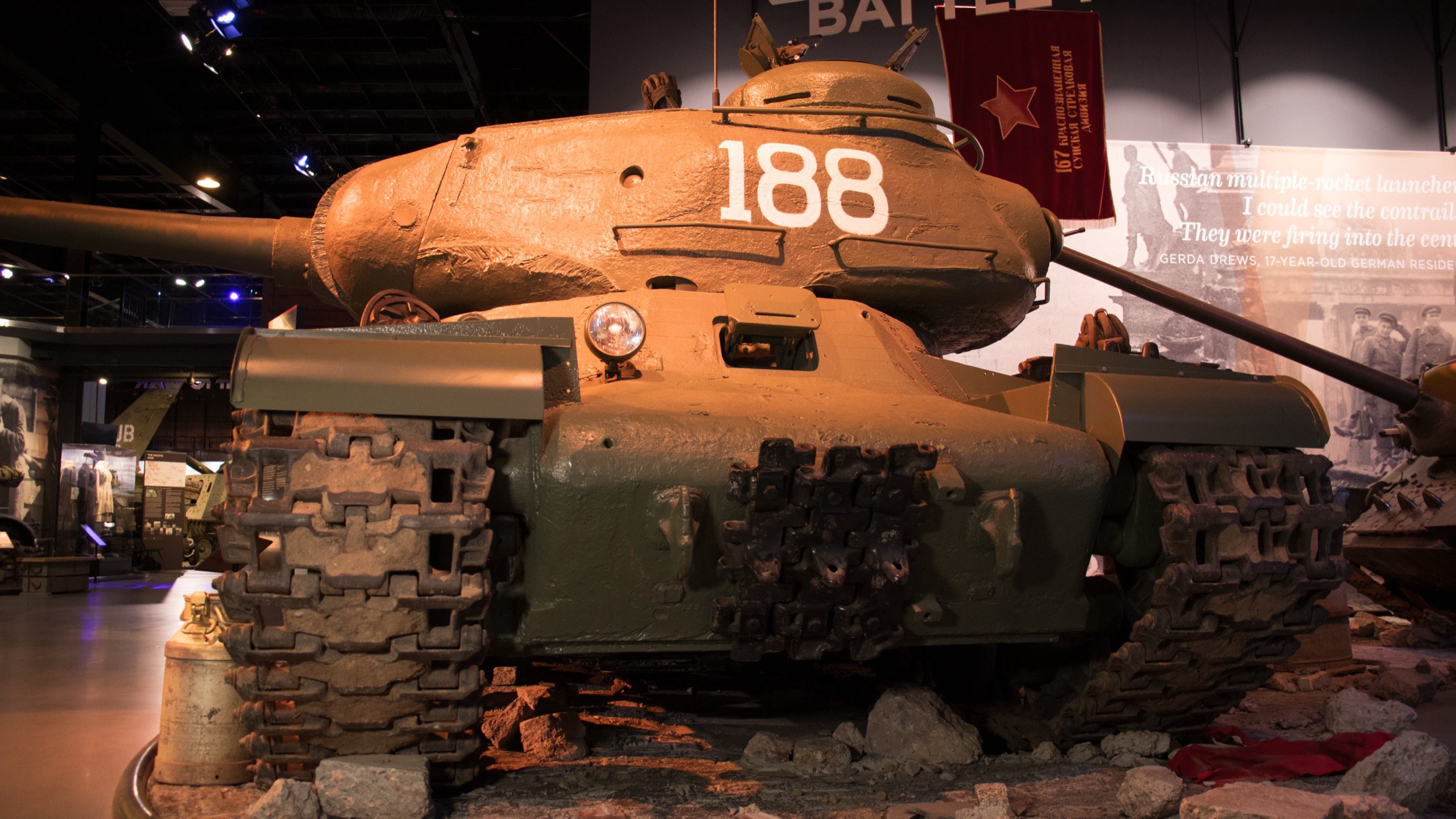
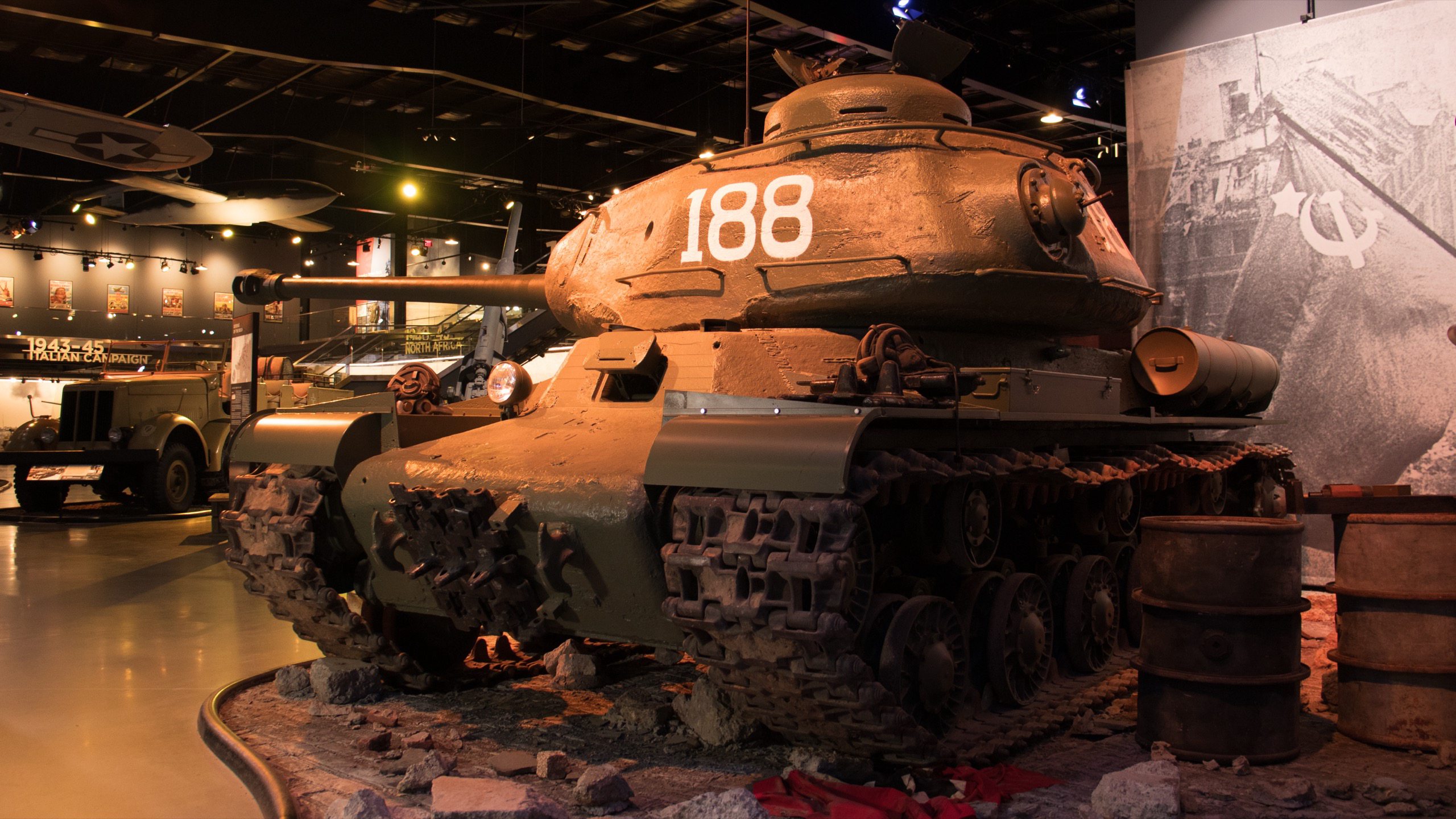
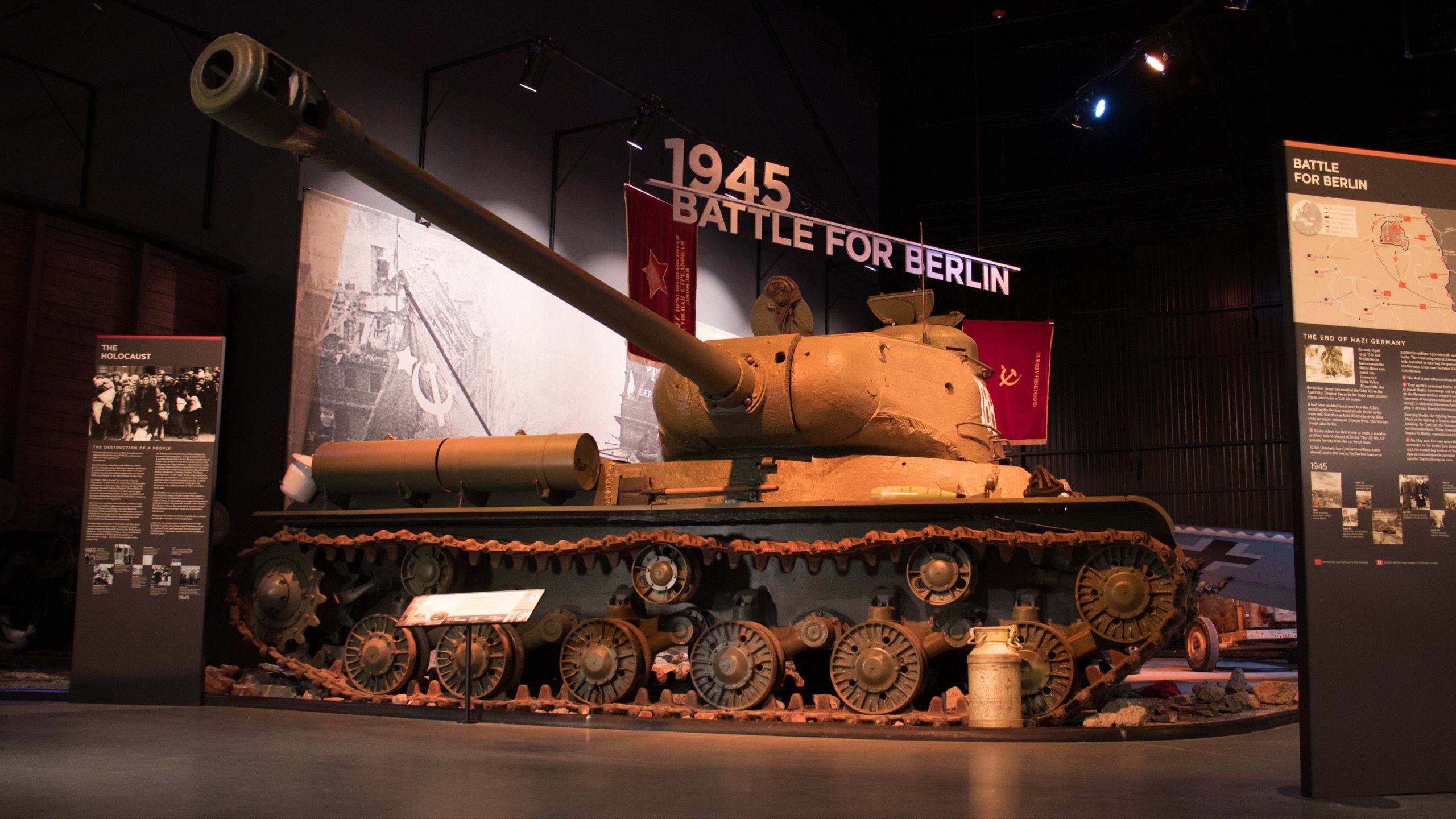
The Soviet IS-2 “Iosif Stalin” was one of the most powerful heavy tanks fielded during World War II, developed to confront Germany’s formidable Tiger and Panther tanks and provide devastating firepower during major Soviet offensives. Named after Soviet leader Joseph Stalin, the IS-2 represented an important evolution in Soviet armored warfare, combining heavy armor protection with a massive 122mm cannon.
Developed from the earlier KV and IS-1 heavy tank designs, the IS-2 entered combat in early 1944. Its principal armament was the powerful 122mm D-25T gun, capable of firing armor-piercing projectiles against enemy tanks and enormous high-explosive shells against fortified positions, bunkers, and buildings.
Unlike conventional medium tanks, the IS-2 was primarily intended as a breakthrough tank, spearheading assaults against heavily defended German positions. Its thick, sloped frontal armor offered substantial protection, while its powerful cannon could destroy fortifications and engage even the heaviest German armored vehicles.
Weighing approximately 46 metric tons, the IS-2 was powered by a 520-horsepower V-12 diesel engine, reaching speeds approaching 23 mph. Its four-man crew operated in a heavily armored fighting compartment carrying 28 rounds of 122mm ammunition.
Despite its formidable firepower, the IS-2 had limitations. Its enormous projectiles required separate loading of the shell and propellant charge, resulting in a relatively slow rate of fire. Consequently, Soviet crews relied upon coordinated tactics, supporting infantry, and other armored vehicles to protect them during combat.
The Final Assault on Berlin
The IS-2 played a significant role in the Soviet Union’s final offensive against Nazi Germany in April 1945. During the Battle of Berlin, heavy tank regiments advanced alongside Soviet infantry and self-propelled artillery, blasting through barricades, fortified buildings, and German defensive positions.
The tank’s 122mm high-explosive shells were particularly effective in urban combat, where German defenders occupied reinforced buildings and prepared strongpoints. However, the narrow streets and extensive rubble of Berlin also exposed IS-2 crews to close-range attacks by German soldiers armed with Panzerfaust anti-tank weapons.
By the time Berlin surrendered on May 2, 1945, Soviet armored forces had helped bring about the collapse of Nazi Germany. Approximately 3,850 IS-2 tanks were manufactured during World War II, and the design remained in service with several nations for decades afterward.
The Museum’s Combat-Veteran IS-2
The IS-2 displayed at the American Heritage Museum was manufactured in the Soviet Union in February 1944 and served with the Red Army’s 50th Guards Heavy Tank Regiment, including during the Battle of Berlin.
Following World War II, the tank remained in Germany and subsequently served with the East German military. It eventually entered the collection of the Overloon War Museum in the Netherlands.
In 2016, the Collings Foundation acquired this historically significant vehicle from Overloon and transported it to Massachusetts for preservation and restoration.
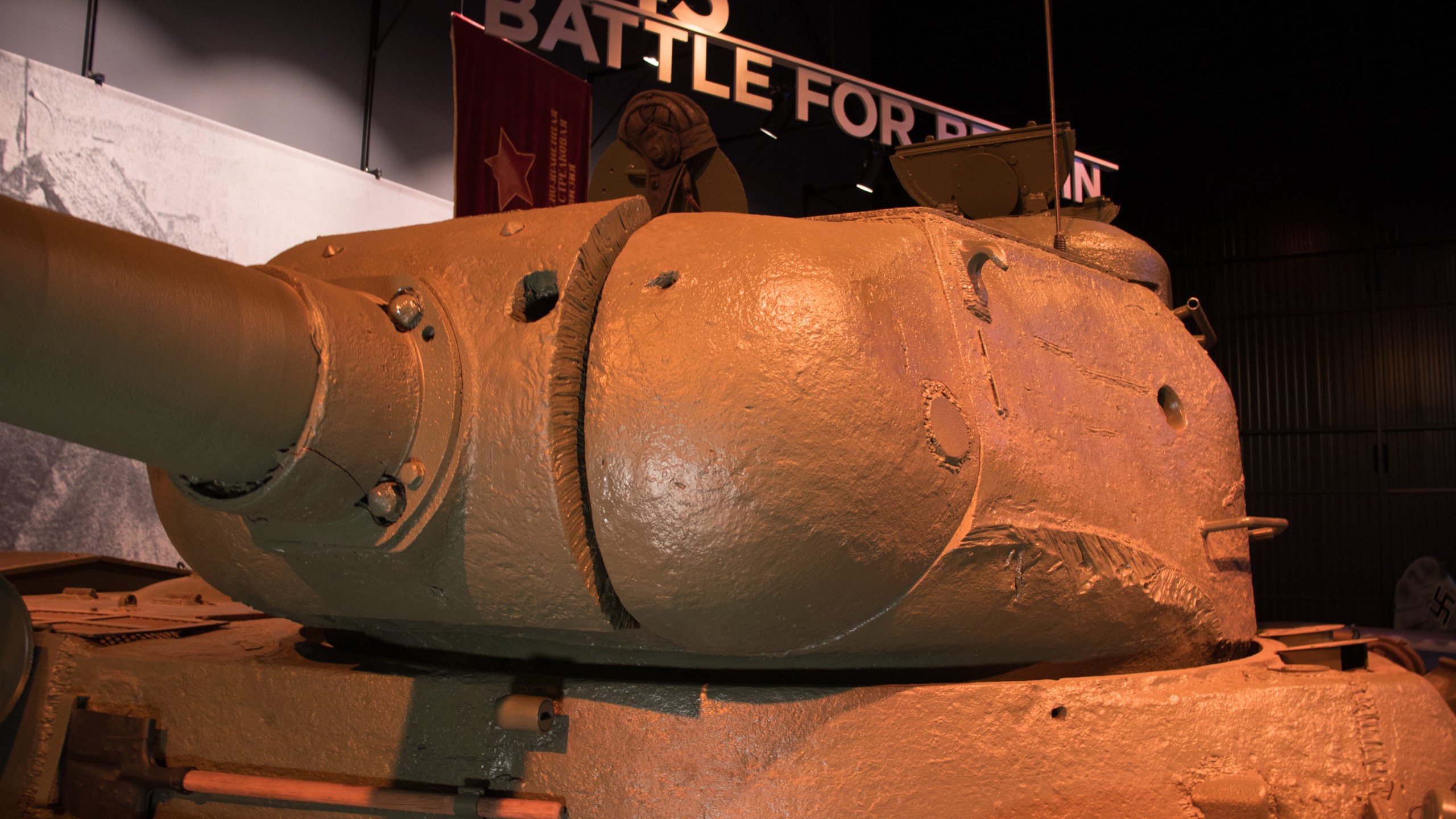
During the extensive restoration process, museum technicians discovered remarkable evidence of the tank’s violent past. Embedded projectile fragments, multiple armor penetrations, and a substantial opening in the turret revealed the punishment this heavily armored vehicle had endured. Although the precise origins of every impact remain uncertain, the damage provides a powerful reminder of the dangers faced by armored crews in combat.
The American Heritage Museum subsequently restored the IS-2 to operational condition, preserving both its mechanical systems and its extraordinary history.
Displayed in the museum’s Battle of Berlin Gallery, alongside the Soviet SU-100 tank destroyer, this rare surviving IS-2 offers visitors a direct connection to the final battles of World War II in Europe and the immense armored forces that helped bring about the defeat of Nazi Germany.