Artifacts
Soviet PT-76
Soviet Union | 1951–1975 | Vietnam War

| General Information | |
|---|---|
| Model | PT-76 |
| Class | Armor |
| Type | Light Tank, Amphibious |
| Use | Military |
| Era | 1956-1975 |
| Gallery Focus | Vietnam War |
| Manufacturer | VTZ, Kirov Factory |
| Year | 1965 |
| Country | North Vietnam (PAVN)Soviet Union |
| Ownership | CF Inc. |
| Gallery Location | Vietnam War |
| Status | Operational, Offline |
Additional Photos


The Soviet PT-76 was one of the most distinctive armored vehicles employed during the Vietnam War. Developed during the early Cold War and introduced into Soviet service in 1951, this amphibious light tank combined reconnaissance capabilities, mobile firepower, and the ability to cross rivers and waterways without bridges or specialized equipment.
The designation PT-76 derives from the Russian Plavayushchiy Tank, meaning “Floating Tank,” with “76” referring to its 76.2mm rifled cannon. Powered by a 240-horsepower diesel engine, the approximately 16-ton vehicle could reach speeds of 27 mph on roads and more than 6 mph in water. Its boat-shaped hull and twin water-jet propulsion system made it particularly valuable in Vietnam’s landscape of rivers, flooded fields, and difficult terrain.
Operated by a three-man crew, the PT-76 carried a 76.2mm D-56-series cannon and a coaxial 7.62mm machine gun. Although its relatively thin armor offered limited protection against modern anti-tank weapons, its mobility and amphibious capabilities made it effective for reconnaissance, infantry support, and surprise attacks.
During the Vietnam War, the PT-76 became an important component of the North Vietnamese Army’s growing armored forces. In February 1968, PT-76 tanks spearheaded an assault against the U.S. Special Forces camp at Lang Vei, near Khe Sanh. Supported by North Vietnamese infantry, the tanks penetrated the camp’s defenses, overwhelming its American and allied defenders. The battle demonstrated the increasing importance of armored vehicles in a conflict previously dominated by infantry and guerrilla warfare.
On March 3, 1969, North Vietnamese PT-76s attacked the American Special Forces camp at Ben Het in South Vietnam’s Central Highlands. During the ensuing nighttime engagement, American M48 Patton tanks confronted the advancing Soviet-built vehicles in one of the war’s few direct tank-versus-tank battles. Two PT-76s were destroyed, while an American M48 sustained a direct hit that killed two crewmen.
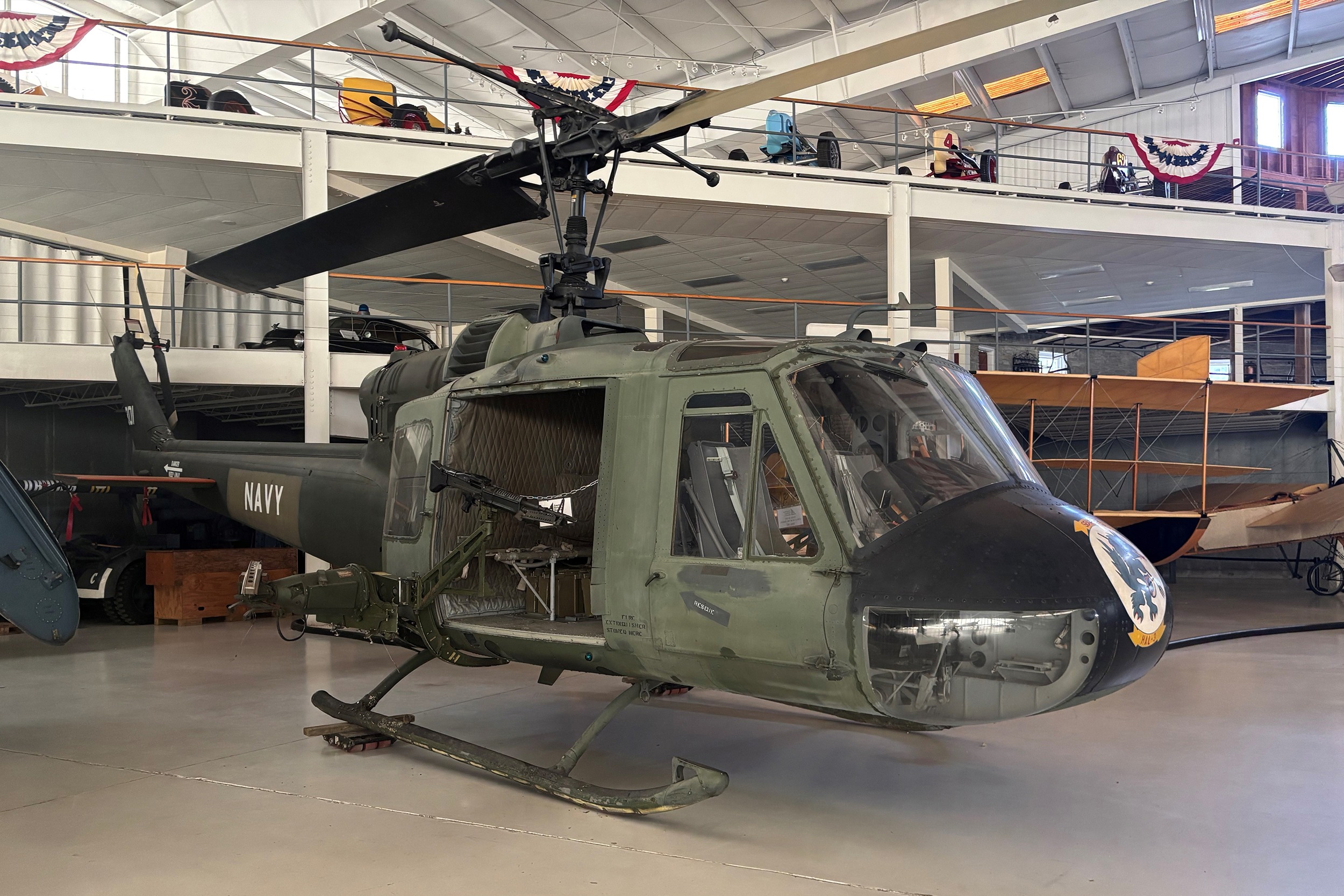
The PT-76 also played a role in another milestone of armored warfare. During North Vietnam’s 1972 Easter Offensive, American UH-1B helicopters equipped with the new BGM-71 TOW anti-tank missile engaged advancing enemy armor. On May 9, 1972, helicopter-launched TOW missiles destroyed three PT-76 tanks near Ben Het, demonstrating the emerging effectiveness of precision-guided anti-tank weapons.
The PT-76B displayed at the American Heritage Museum was manufactured in the Soviet Union in 1959. It was acquired from England in January 1994 by Jacques Littlefield’s Military Vehicle Technology Foundation, whose collection later became the foundation of the American Heritage Museum.
Displayed in the museum’s Vietnam War Gallery, the PT-76B illustrates the growing importance of armored warfare in Vietnam and the technological struggle between Soviet-supplied North Vietnamese equipment and American armored forces.