Artifacts
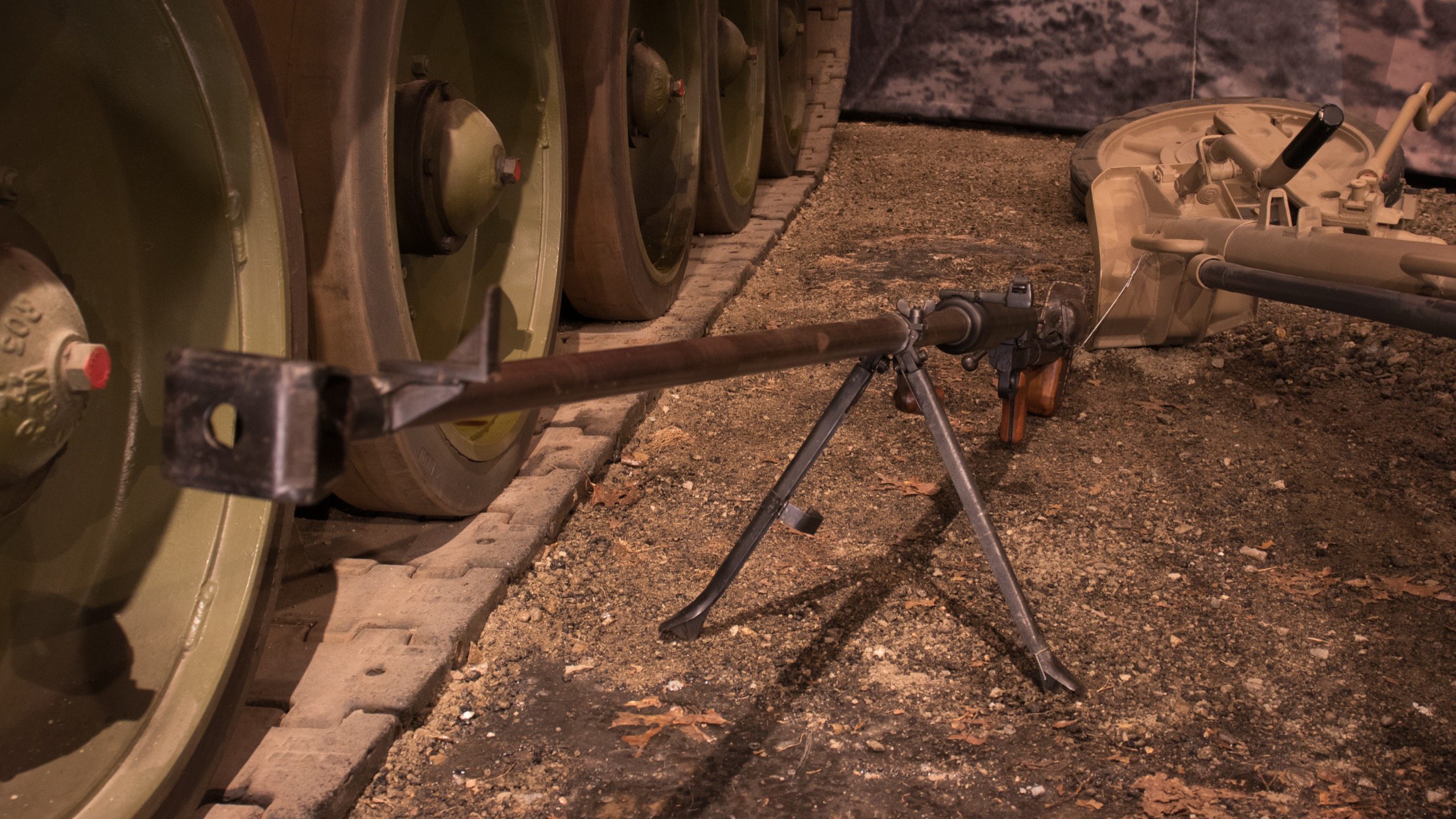
Soviet PTRD-41 Anti-Tank Rifle
Soviet Union | 1941–1945 | World War II – Eastern Front
| General Information | |
|---|---|
| Model | PTRD-41 |
| Class | Firearm |
| Type | Anti-Tank Rifle |
| Use | Military |
| Era | 1940-1945 |
| Gallery Focus | WWII European Theater |
| Manufacturer | Degtyaryov Plant / ZiD |
| Year | 1942 |
| Country | Soviet Union |
| Ownership | CF Inc. |
| Gallery Location | Eastern Front |
| Status | Operational, Offline |
The Soviet PTRD-41 Anti-Tank Rifle emerged during one of the most desperate periods of World War II. Following Germany’s invasion of the Soviet Union in June 1941, the Red Army urgently needed a weapon that infantrymen could use against German armored vehicles without relying on scarce anti-tank guns. Designed by Vasily Degtyaryov and adopted in August 1941, the PTRD-41 was deliberately simple, rugged, and suitable for rapid mass production.
Measuring nearly seven feet long and weighing approximately 38 pounds, the PTRD-41 fired a powerful 14.5mm armor-piercing cartridge capable of penetrating up to 40mm of armor at close range. Although a single-shot weapon, its recoil-operated mechanism automatically opened the bolt and ejected the spent cartridge, allowing a two-man crew to reload relatively quickly.
During the desperate defense of Moscow in late 1941, PTRD-41 teams provided Soviet infantry with an important defense against advancing German armored formations. The weapon proved effective against lightly armored vehicles and vulnerable areas of early Panzer III and Panzer IV tanks. Soviet soldiers frequently operated from concealed positions, targeting the thinner side armor of enemy vehicles.
As German tanks received increasingly heavy armor, the PTRD-41 became less effective against frontline tanks. Nevertheless, it remained valuable throughout the war for engaging armored cars, half-tracks, gun positions, and other lightly protected targets.
Hundreds of thousands of Soviet anti-tank rifles were manufactured during the conflict, demonstrating the importance of inexpensive, rapidly produced weapons in the Red Army’s struggle against Germany.
Displayed in the American Heritage Museum’s Eastern Front Gallery, the PTRD-41 represents the resourcefulness and determination of Soviet infantrymen facing heavily mechanized German forces during one of history’s most devastating military campaigns.