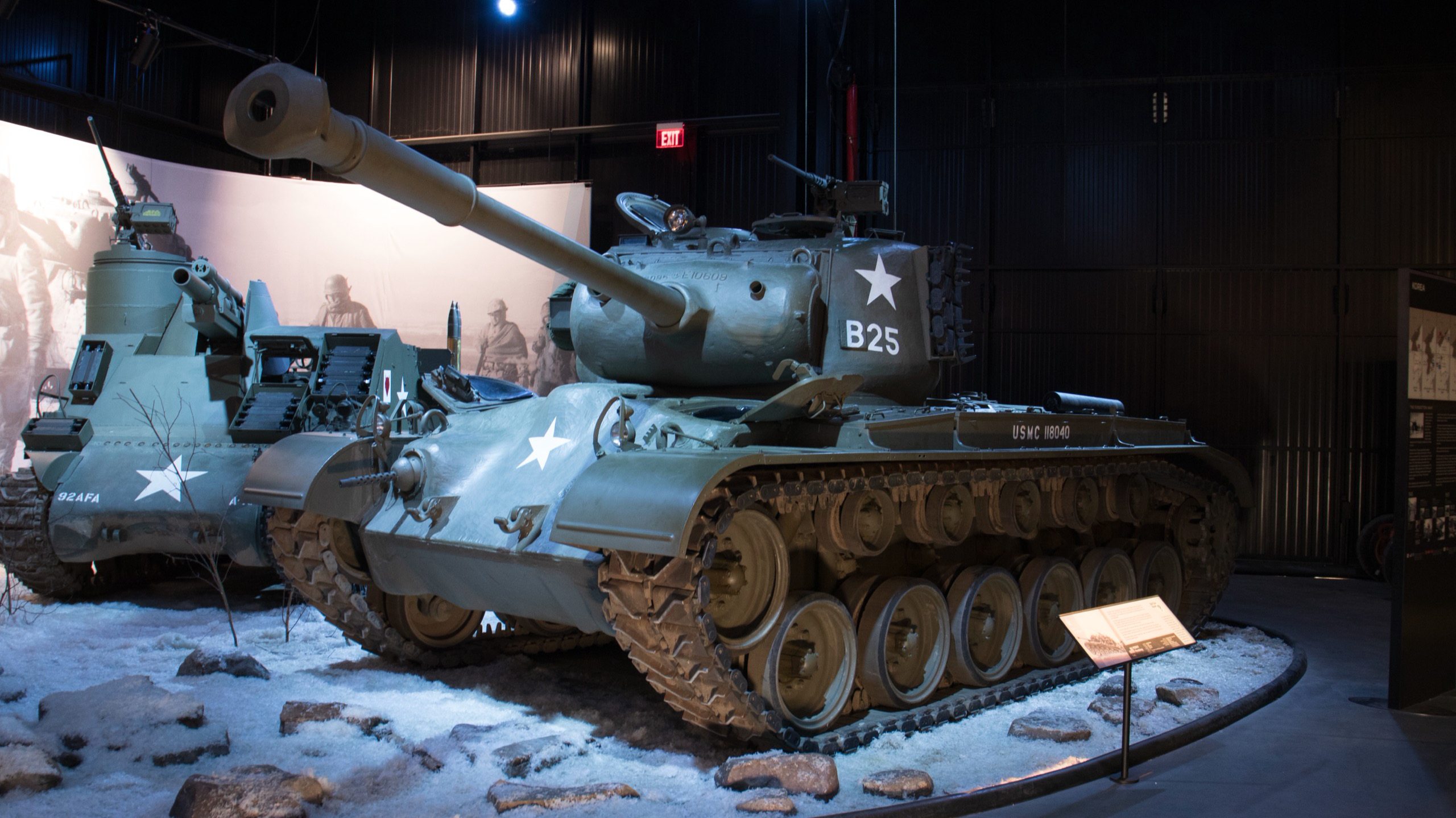
M26A1 Pershing
The M26 Pershing was a heavy/medium tank of the United States Army. The tank was named after General of the Armies John J. Pershing,…
At the end of World War II, the Soviet Union and the United States liberated Korea from imperial Japanese colonial control on August 15th, 1945. Korea was then divided at the 38th parallel into two zones of occupation — the Soviets administered the northern half and the Americans the southern half. With the border set at the 38th parallel in 1948, two sovereign states were established out of the geopolitical tensions of the Cold War: a socialist state in the north under the communist leadership of Kim Il-sung, and a capitalist state in the south under the anti-communist leadership of Syngman Rhee. Both governments claimed to be the sole legitimate government of all of Korea, and neither accepted the border as permanent.
The Korean War began on June 25, 1950, when some 75,000 soldiers from the North Korean People’s Army poured across the 38th parallel, the boundary between the Soviet-backed Democratic People’s Republic of Korea to the north and the pro-Western Republic of Korea to the south. This invasion was the first military action of the Cold War. By July, American troops had entered the war on South Korea’s behalf — as far as American officials were concerned, it was a war against the forces of international communism itself. After some early back-and-forth across the 38th parallel, the fighting stalled and casualties mounted with nothing to show for them. Meanwhile, American officials worked anxiously to fashion some sort of armistice with the North Koreans, fearing the alternative would be a wider war with Russia and China — or even, as some warned, World War III. Finally, in July 1953, the Korean War came to an end. In all, some 5 million soldiers and civilians lost their lives in what many in the U.S. refer to as “the Forgotten War” for the lack of attention it received compared to more well-known conflicts.
The Korean peninsula would remain caught in the Cold War rivalry, but the survival of the Republic of Korea kept alive the hope of civil liberties, democracy, economic development, and eventual unification.
The M26 Pershing was a heavy/medium tank of the United States Army. The tank was named after General of the Armies John J. Pershing,…
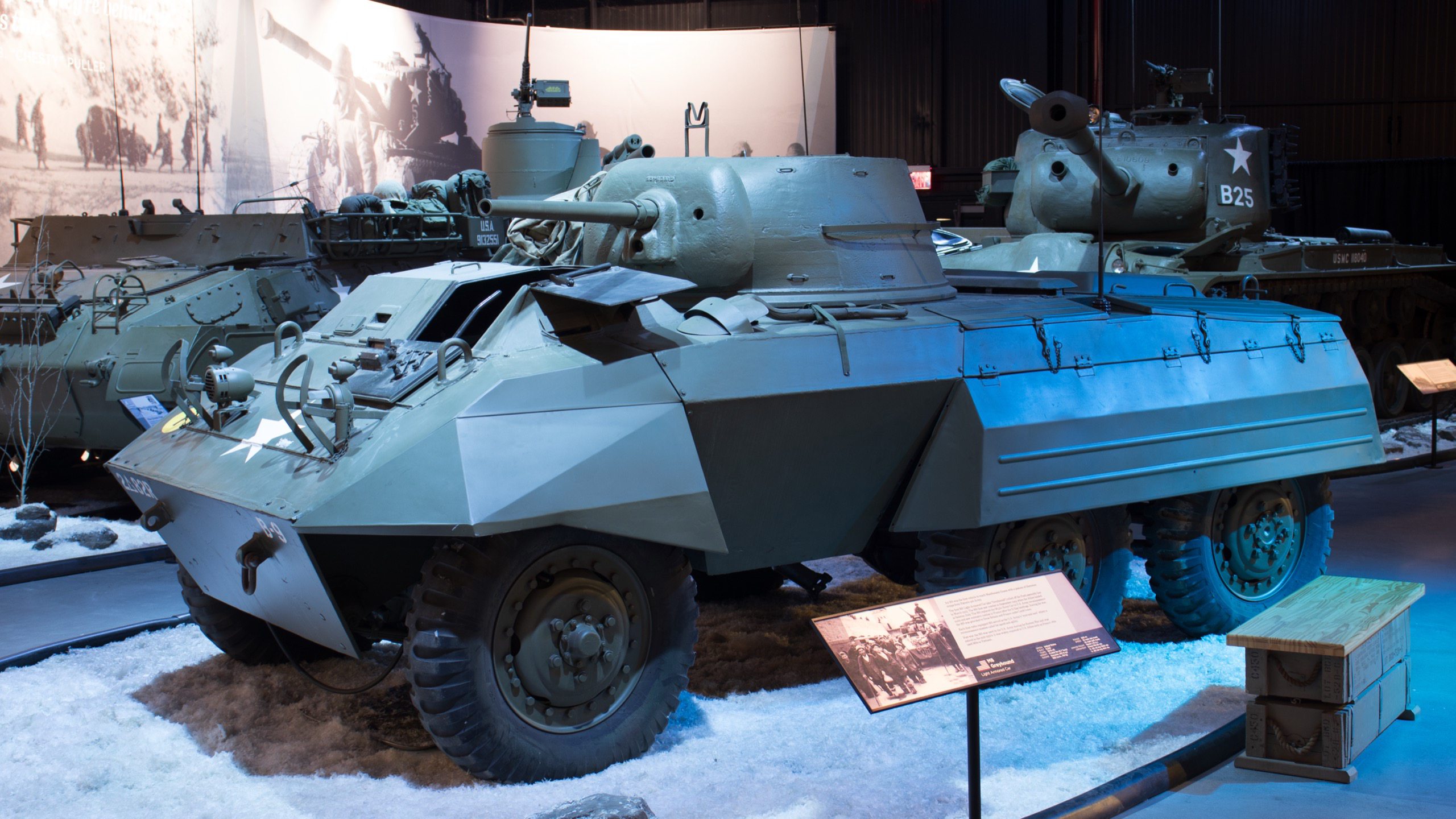
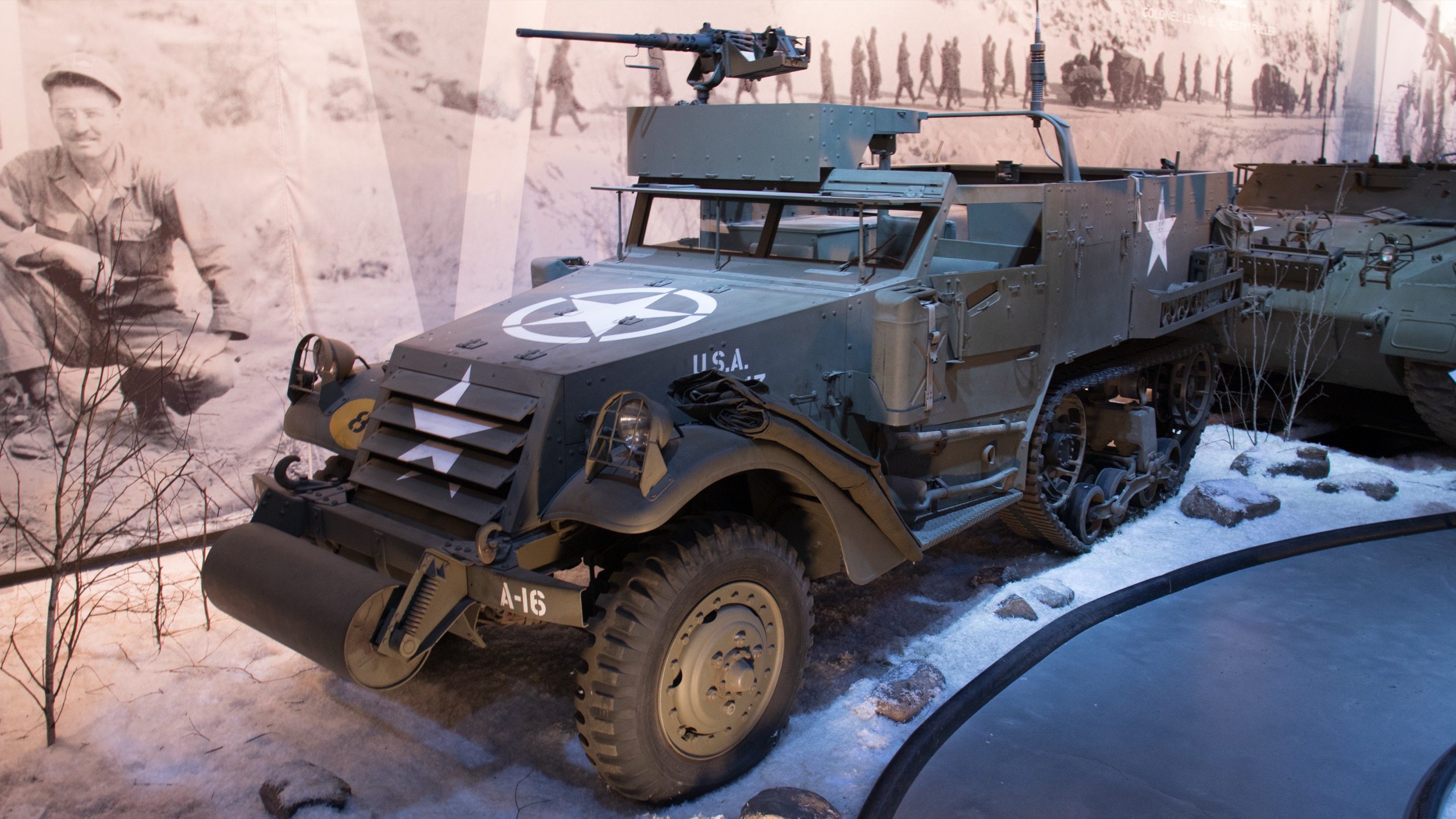
The M2, used by 20 countries, was designed to move artillery, transport machine gun squads, and conduct enemy reconnaissance. The M2 also possessed multiple…
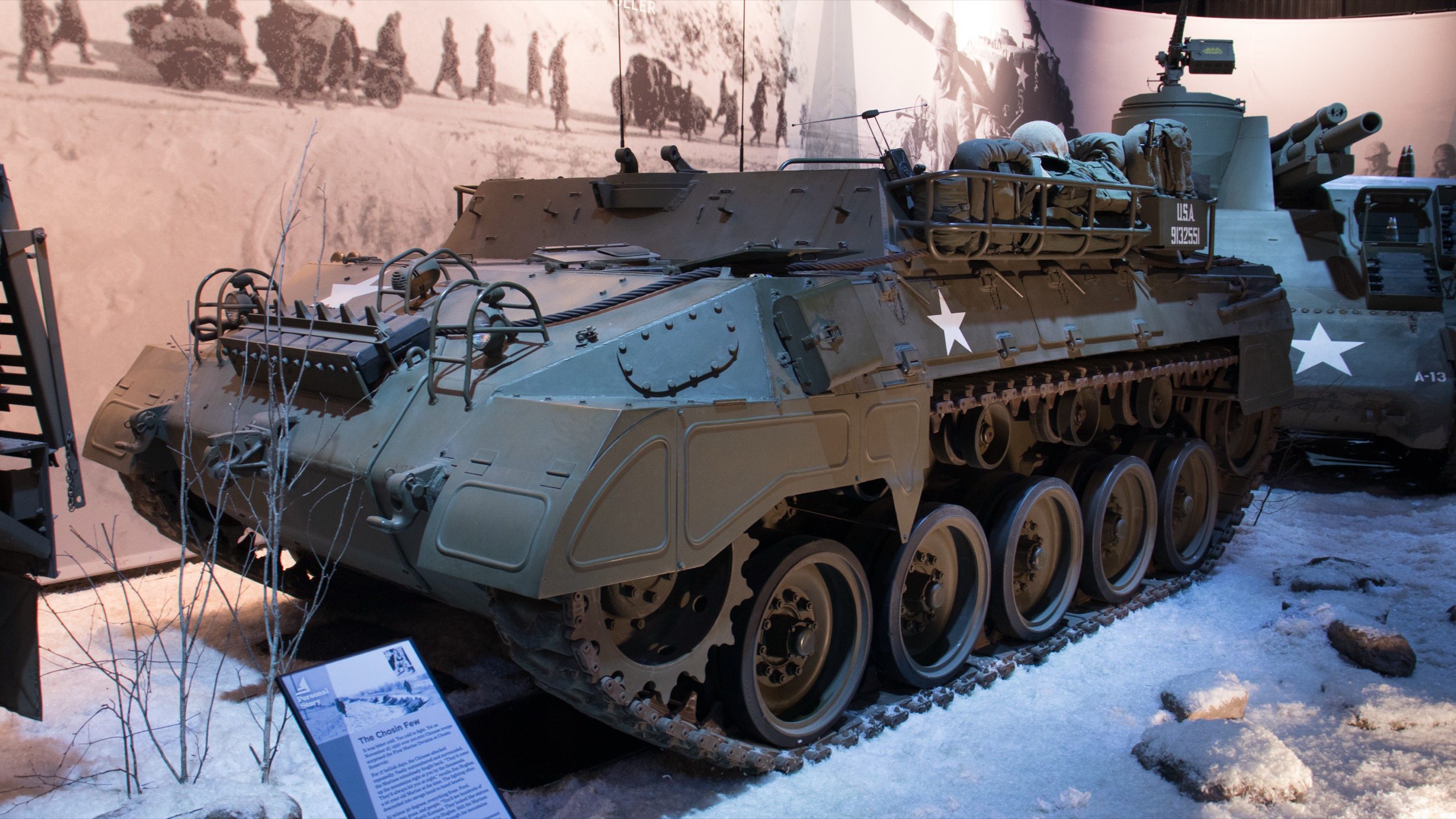
While only a few M39s saw combat in WWII, these armored utility vehicles became a workhorse for the U.S. Army in the Korean War.
Built…
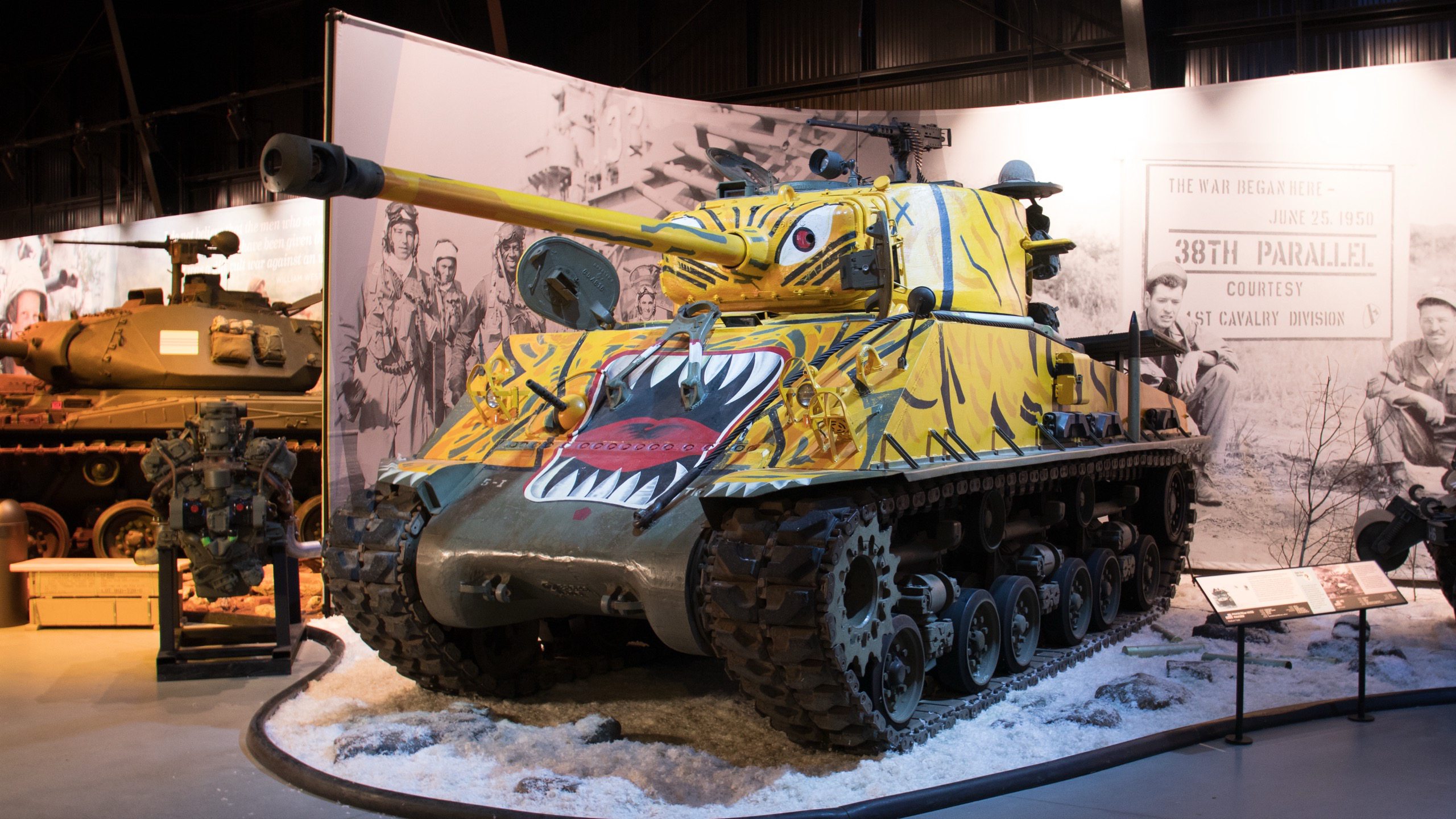
The M4A3(76)w HVSS Sherman was a medium tank built and used by the U.S. during WWII and in the Korean War. The M4A3(76)w entered…
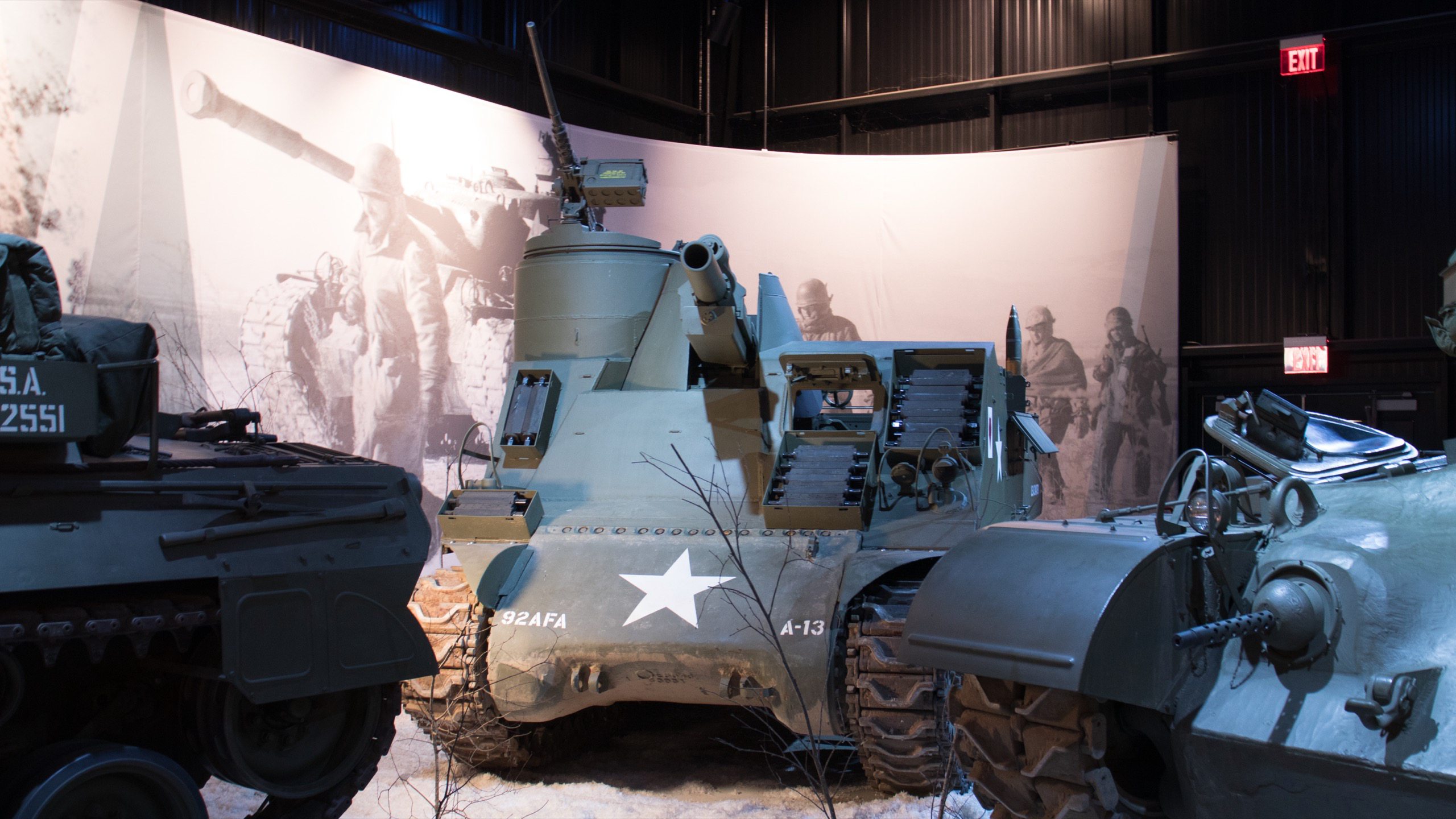
The M7 Priest tank, with its 105mm Howitzer cannon played an important combat role across North Africa, Europe and the Pacific during WWII. It…