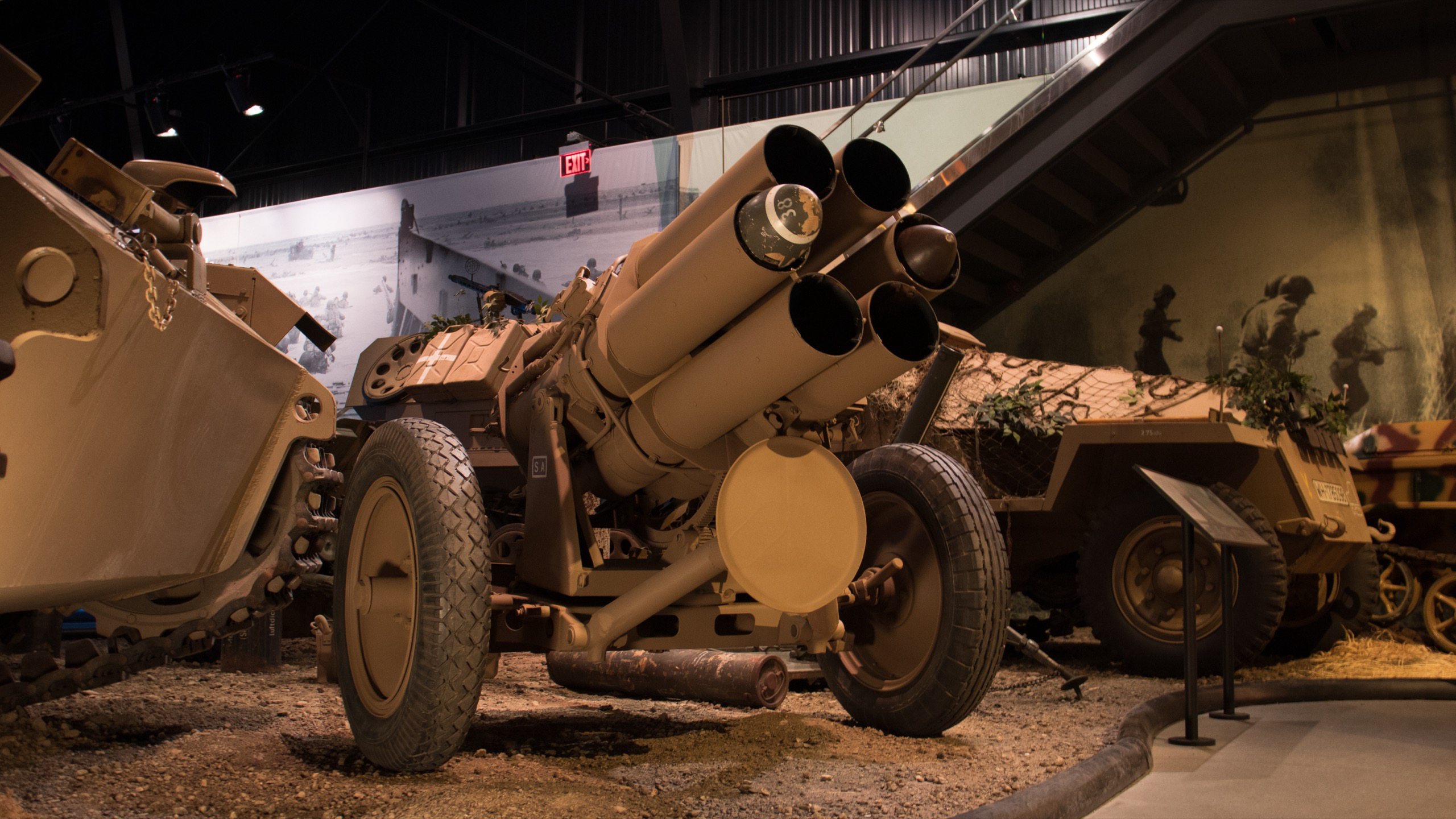
15 cm Nebelwerfer NbW 41
The German 15 cm Nebelwerfer 41 was one of the most distinctive and feared artillery weapons of World War II. This…


The battles on the Eastern Front constituted the largest military confrontations in history. They were characterized by unprecedented ferocity, destruction on a massive scale, mass deportations, and immense loss of life due to combat, starvation, exposure, disease, and massacres. Of the estimated 70–85 million deaths attributed to World War II, around 40 million occurred on the Eastern Front. The Eastern Front was decisive in determining the outcome in the European Theater of Operations in World War II, with the Red Army inflicting by far the most damage on the armies of Nazi Germany and the Axis nations. The two principal powers were Germany and the Soviet Union, along with smaller Axis allies like Finland, Romania, Bulgaria, Hungary, and Italy. Though never engaged in military action on the Eastern Front, the United States and the United Kingdom both provided substantial material aid to the Soviet Union.
Nazi Germany and the Soviet Union were essentially allied in the ruthless double invasion of Poland in September 1939, and their cooperative annexations of other small states, in whole or in part, in 1939–1940. However, in terms of ideology and imperial and territorial ambition they remained deeply at odds. Germany thus launched Operation Barbarossa, its invasion of the Soviet Union, on June 22nd, 1941, the summer solstice and hence true “longest day” of the war. From the first hours, Nazi death battalions (Einsatzgruppen) carried out mass murder campaigns. The fighting between the armies was brutal and merciless. In the first winter alone, 3.5 million Soviet POWs were starved to death or murdered by the Nazi regime. But the invasion slowed by December 1941, halting just miles from Moscow. Another effort by the Germans stalled in Stalingrad in late 1942, before the turning point came at Kursk in the summer of 1943, while the Western Allies landed in Sicily and stepped up their bombing campaign against Germany itself.
A strategic air offensive by the United States Army Air Force and Royal Air Force played a significant part in reducing German industry and tying up German air force and air defense resources, while the Red Army engaged by far the lion’s share of German forces on the ground.
The German 15 cm Nebelwerfer 41 was one of the most distinctive and feared artillery weapons of World War II. This…

The German 3.7cm Panzerabwehrkanone 35/36 (Pak 35/36) was the standard anti-tank gun of the German Army at the outbreak of World…

The German 7.5cm Panzerabwehrkanone 97/38 (Pak 97/38) was an ingenious adaptation of captured French artillery, developed to counter the increasingly powerful…

The Sturmgeschütz III (StuG III) was one of Germany’s most successful armored fighting vehicles of World War II, serving initially as…

The German Sonderkraftfahrzeug 2 (Sd.Kfz. 2), officially designated the Kleines Kettenkraftrad HK 101 and commonly known as the “Kettenkrad,” was one…

The Borgward IV was one of Germany’s most unusual armored vehicles of World War II, representing an early attempt to employ…

The German Sonderkraftfahrzeug 251/1 Ausführung D (Sd.Kfz. 251/1 Ausf. D), commonly known as the “Hanomag,” was one of the most recognizable armored personnel carriers…
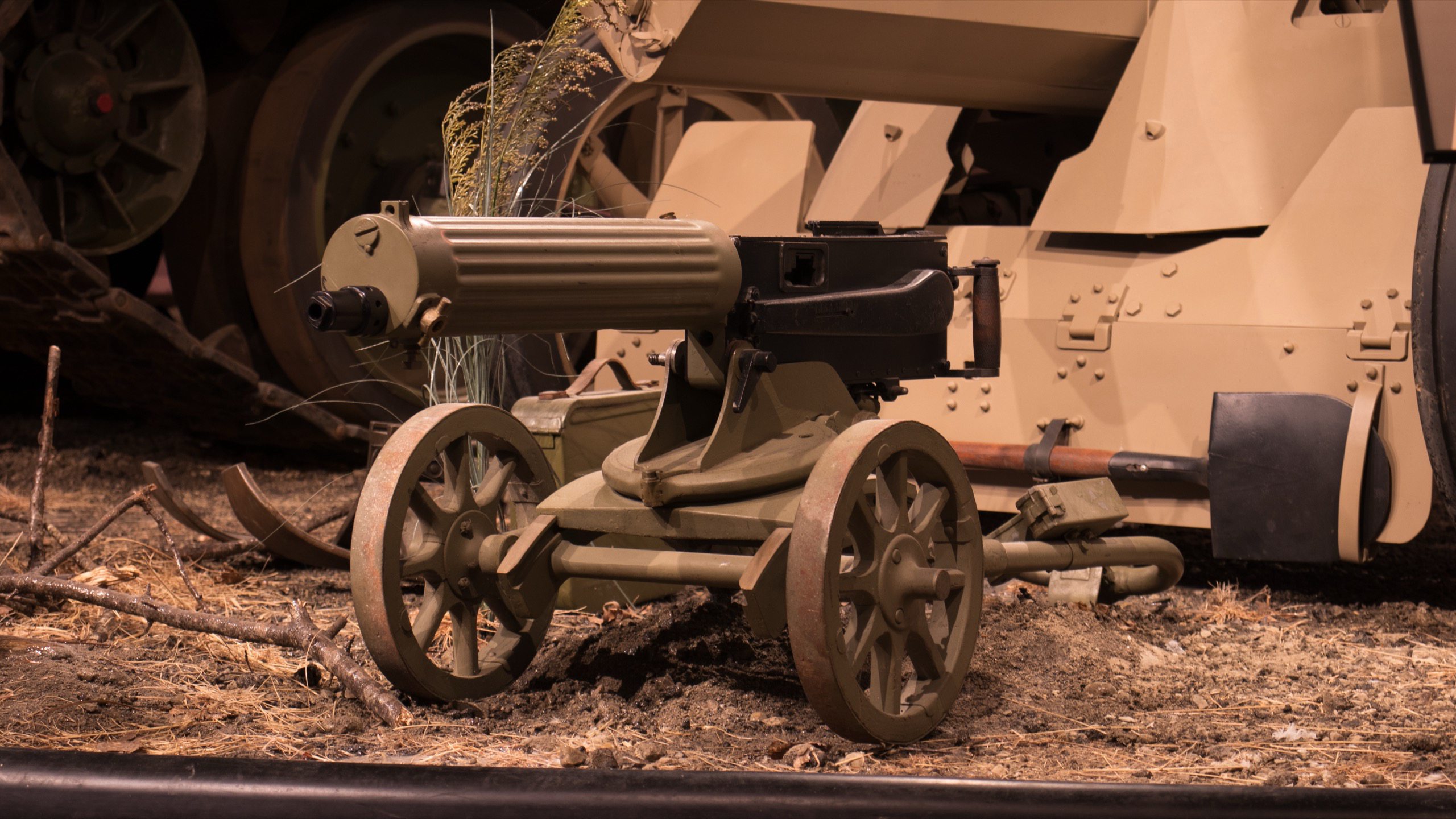
The Soviet PM M1910 Maxim Heavy Machine Gun was among the Red Army’s most important infantry support weapons during World War…

The Soviet PTRD-41 Anti-Tank Rifle emerged during one of the most desperate periods of World War II. Following Germany’s invasion of…

The Soviet T-34 was one of the most influential and successful tank designs of World War II, combining formidable firepower, innovative…